Capture of Seoul during the Korean War on January 4, 1951
1951 · Seoul, South Korea
During the Korean War, Chinese and North Korean forces captured Seoul.
November 26, 1950
Korean War: Troops from the People's Republic of China launch a massive counterattack in North Korea against South Korean and United Nations forces (the Battle of Chosin Reservoir), ending any hopes of a quick end to the conflict.
Chosin Reservoir, North Korea | People's Liberation Army
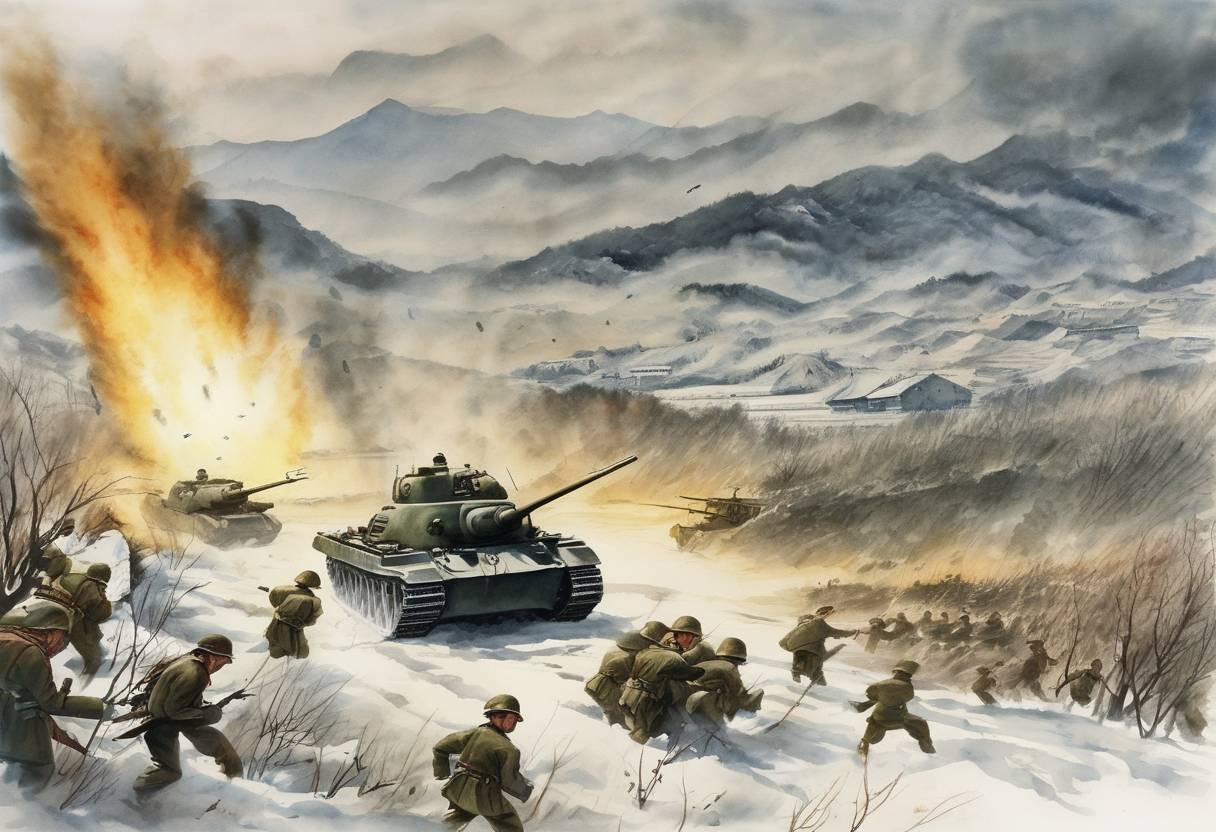
The Korean War, which began on June 25, 1950, when North Korean forces invaded South Korea, quickly escalated into a broader conflict involving international forces. The United Nations, led by the United States, intervened to support South Korea, while North Korea received backing from the Soviet Union and later, the People’s Republic of China.
By late 1950, UN forces had pushed North Korean troops back past the 38th parallel and were advancing towards the Yalu River, the border between North Korea and China. This advance prompted China to enter the war, fearing a hostile presence on its border.
On November 26, 1950, Chinese forces launched a massive counterattack against UN troops, primarily composed of U.S. Marines and Army units, at the Chosin Reservoir in North Korea. This battle marked a significant turning point in the Korean War.
Chinese Involvement: The Chinese People’s Volunteer Army, under the command of General Song Shilun, executed a surprise attack on the UN forces. The Chinese troops, adept at night fighting and familiar with the harsh terrain, took advantage of the element of surprise and the severe winter conditions.
UN Forces: The UN troops, led by Major General Edward Almond and Major General Oliver P. Smith, were caught off guard. Despite being outnumbered and facing extreme cold, the UN forces mounted a determined defense.
Harsh Conditions: The battle was fought in freezing temperatures, with reports of temperatures dropping as low as -30°F (-34°C). These conditions severely impacted both sides, leading to frostbite and equipment failures.
Tactical Withdrawal: Despite being encircled, the UN forces conducted a strategic withdrawal to the port of Hungnam. This maneuver, often referred to as a “fighting retreat,” allowed them to evacuate successfully while inflicting significant casualties on the Chinese forces.
Strategic Impact: The Battle of Chosin Reservoir ended any hopes of a quick resolution to the Korean War. The Chinese counteroffensive pushed UN forces southward, leading to a prolonged and bloody stalemate.
Human Cost: The battle resulted in heavy casualties on both sides. Estimates suggest that the UN forces suffered around 10,000 casualties, while Chinese casualties were significantly higher, though exact numbers remain uncertain.
Legacy: The battle is remembered for the resilience and tenacity of the UN forces, particularly the U.S. Marines, who demonstrated exceptional discipline and bravery under dire circumstances. It also highlighted the challenges of winter warfare and the complexities of international military engagements.
The Battle of Chosin Reservoir underscored the global dimensions of the Cold War, as the Korean Peninsula became a focal point for superpower rivalry. It also set the stage for a protracted conflict that would last until the armistice in 1953, shaping the geopolitical landscape of East Asia for decades to come.
Source: en.wikipedia.org