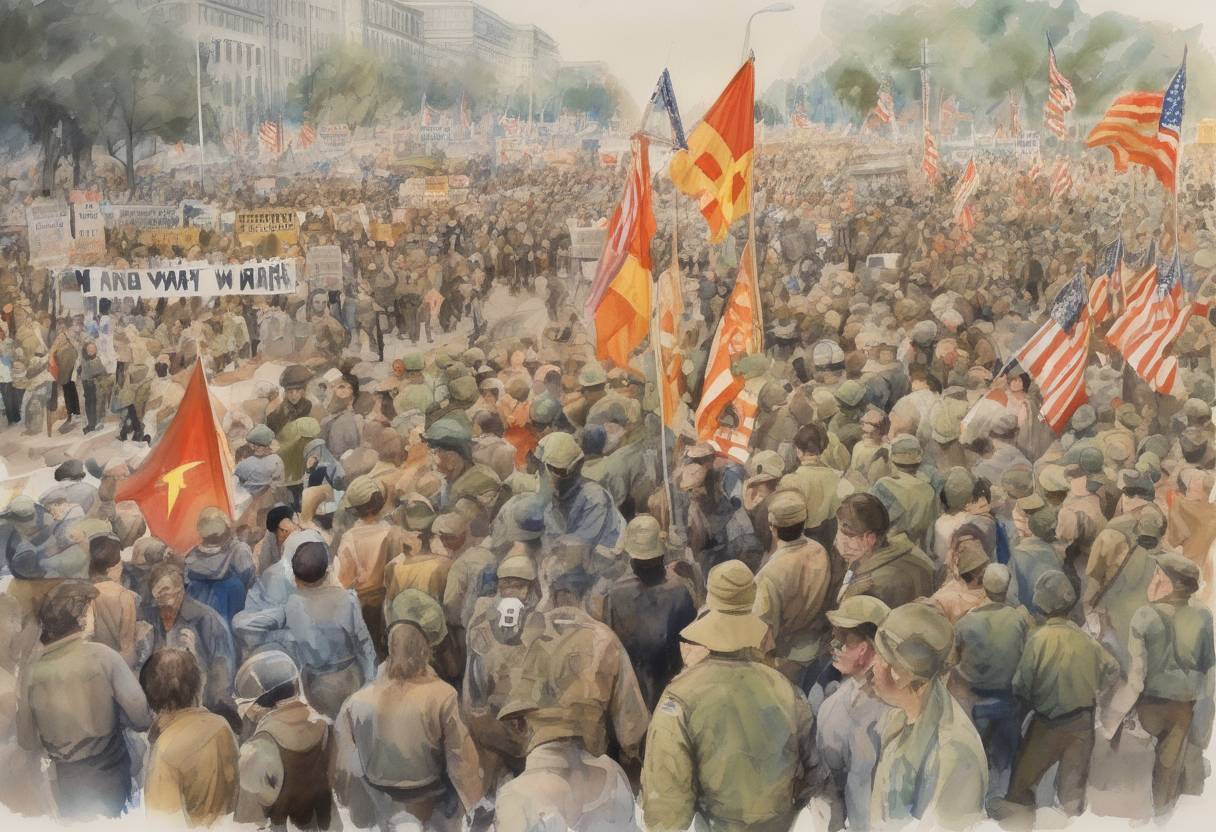
Vietnam War Protest in Washington, D.C. - October 21, 1967
On October 21, 1967, one of the most significant anti-Vietnam War demonstrations took place in Washington, D.C. This protest marked a pivotal moment in the anti-war movement in the United States, as thousands of demonstrators gathered to express their opposition to the ongoing conflict in Vietnam.
Context Leading Up to the Protest
The Vietnam War had been escalating since the early 1960s, with U.S. involvement intensifying under Presidents Kennedy and Johnson. By 1967, the war had become increasingly unpopular among the American public due to rising casualties, the draft, and extensive media coverage showing the brutal realities of the conflict. The anti-war movement gained momentum, drawing support from various segments of society, including students, civil rights activists, and religious groups.
The March on the Pentagon
The October 21 protest was organized by the National Mobilization Committee to End the War in Vietnam (often referred to as “the Mobe”). The demonstration began with a rally at the Lincoln Memorial, where prominent figures such as Dr. Benjamin Spock, a renowned pediatrician and outspoken critic of the war, addressed the crowd. Following the rally, the demonstrators marched across the Arlington Memorial Bridge to the Pentagon.
Key Events of the Protest
Rally at the Lincoln Memorial: The protest commenced with speeches and performances aimed at galvanizing the anti-war sentiment. The atmosphere was charged with a sense of urgency and determination to end U.S. involvement in Vietnam.
March to the Pentagon: After the rally, approximately 50,000 protesters marched to the Pentagon, symbolizing their demand for the government to cease military operations in Vietnam. The march was peaceful, but tensions rose as the demonstrators reached the Pentagon.
Confrontation at the Pentagon: Upon arrival, a smaller group of protesters attempted to enter the Pentagon, leading to a standoff with military police and federal marshals. The situation escalated into a tense confrontation, with some protesters engaging in acts of civil disobedience.
Arrests and Clashes: Over 600 protesters were arrested during the demonstration. The event was marked by sporadic clashes between demonstrators and law enforcement, highlighting the deep divisions within American society over the war.
Aftermath and Historical Significance
The October 21 protest was a watershed moment in the anti-war movement, drawing significant media attention and further polarizing public opinion on the Vietnam War. It demonstrated the growing power and organization of the anti-war movement and underscored the increasing discontent with U.S. foreign policy.
The protest also influenced future demonstrations and contributed to the broader cultural and political shifts of the late 1960s. It highlighted the role of grassroots activism in shaping public discourse and policy, ultimately contributing to the eventual withdrawal of U.S. forces from Vietnam.
In summary, the October 21, 1967, protest in Washington, D.C., was a defining moment in the history of the Vietnam War and the American anti-war movement, reflecting the deep societal divisions and the power of collective action in challenging government policies.