The End of the IRA's Armed Campaign: July 28, 2005
2005 · Belfast, United Kingdom
The Provisional Irish Republican Army (IRA) formally announced an end to its armed campaign, stating that it would pursue its objectives through peaceful means.
August 15, 1998
The Omagh bombing in Northern Ireland, carried out by the Real Irish Republican Army, killed 29 people and injured over 200.
Omagh, Northern Ireland | Real Irish Republican Army
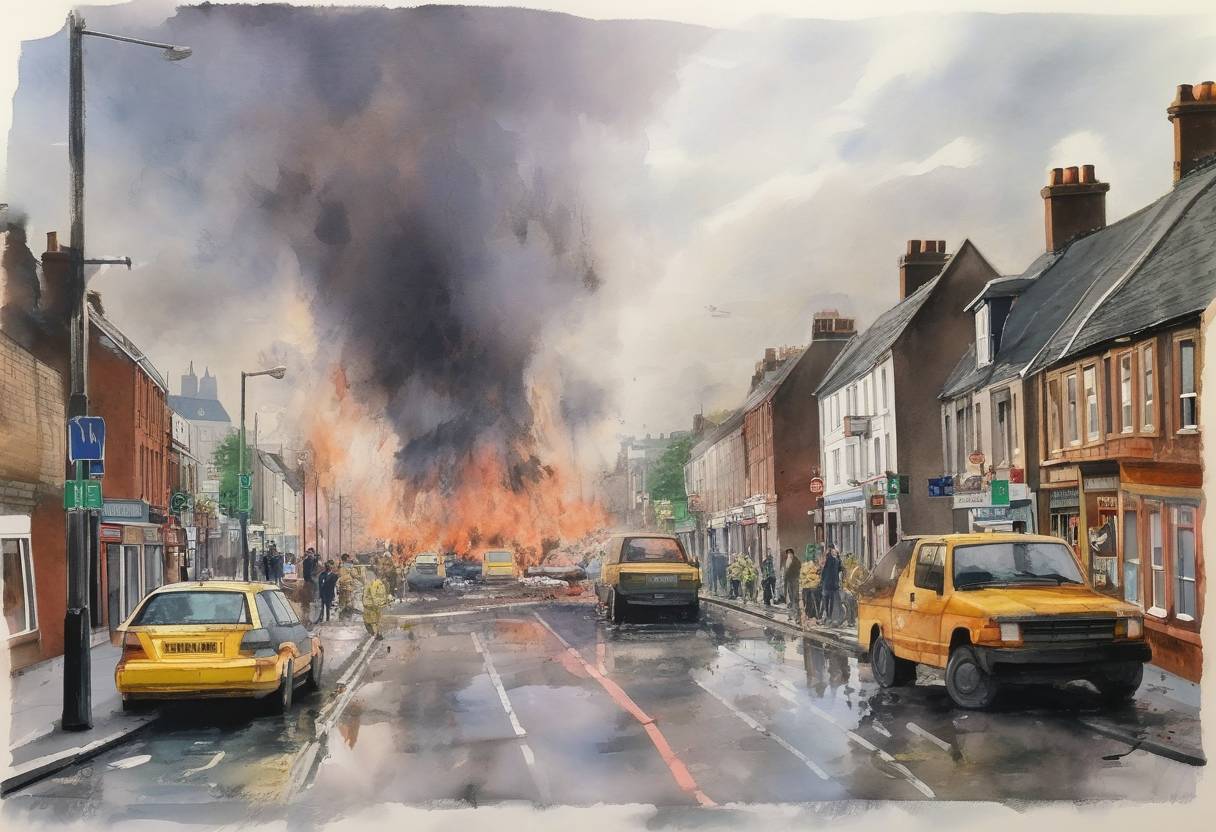
The Omagh bombing was a devastating terrorist attack that took place on August 15, 1998, in the town of Omagh, County Tyrone, Northern Ireland. This tragic event was orchestrated by the Real Irish Republican Army (Real IRA), a splinter group of the Provisional Irish Republican Army (IRA) that opposed the peace process and the Good Friday Agreement signed earlier that year.
The Good Friday Agreement: Signed on April 10, 1998, the Good Friday Agreement was a major political development aimed at bringing peace to Northern Ireland after decades of conflict known as “The Troubles.” It established a devolved government and set the framework for disarmament and cooperation between Northern Ireland and the Republic of Ireland.
The Real IRA: Formed in 1997, the Real IRA was composed of dissident republicans who rejected the peace process and sought to continue the armed struggle for a united Ireland. They viewed the Good Friday Agreement as a betrayal of republican ideals.
The Bombing: On August 15, 1998, a car bomb containing approximately 500 pounds of explosives was detonated in the crowded market area of Omagh. The attack occurred on a busy Saturday afternoon, maximizing the potential for casualties.
Casualties: The bombing resulted in the deaths of 29 people, including a woman pregnant with twins, and injured over 200 others. Victims included people from various backgrounds, including Catholics, Protestants, and tourists from Ireland, Spain, and other countries.
Warnings: Prior to the explosion, the Real IRA issued a series of misleading warnings about the bomb’s location, which led to confusion and inadvertently directed people towards the danger zone.
Public Outcry: The Omagh bombing was met with widespread condemnation from across the globe. It was one of the deadliest single incidents during The Troubles and galvanized public opinion against the Real IRA and other paramilitary groups.
Political Impact: The attack underscored the fragility of the peace process but also strengthened the resolve of political leaders to implement the Good Friday Agreement. It led to increased cooperation between British and Irish authorities in combating terrorism.
Legislative Response: In response to the bombing, the British and Irish governments introduced new anti-terrorism measures, including the Terrorism Act 2000 in the UK, which aimed to curb the activities of dissident groups.
Legacy: The Omagh bombing remains a poignant reminder of the human cost of conflict and the importance of peace. It has been commemorated annually, with memorials and services honoring the victims and promoting reconciliation.
The Omagh bombing highlighted the challenges faced in transitioning from conflict to peace and the persistent threat posed by dissident groups. It reinforced the necessity of dialogue and cooperation in achieving lasting peace in Northern Ireland. Despite the tragedy, the peace process continued, and the Good Friday Agreement remains a cornerstone of Northern Ireland’s political landscape.
Source: en.wikipedia.org