Nelson Mandela Sentenced to Life Imprisonment: June 12, 1964
1964 · Pretoria, South Africa
Nelson Mandela was sentenced to life imprisonment for sabotage against the apartheid government of South Africa.
August 5, 1962
Nelson Mandela was arrested by South African police near Howick and charged with inciting workers to strike and leaving the country without a passport.
Howick, South Africa | South African Police
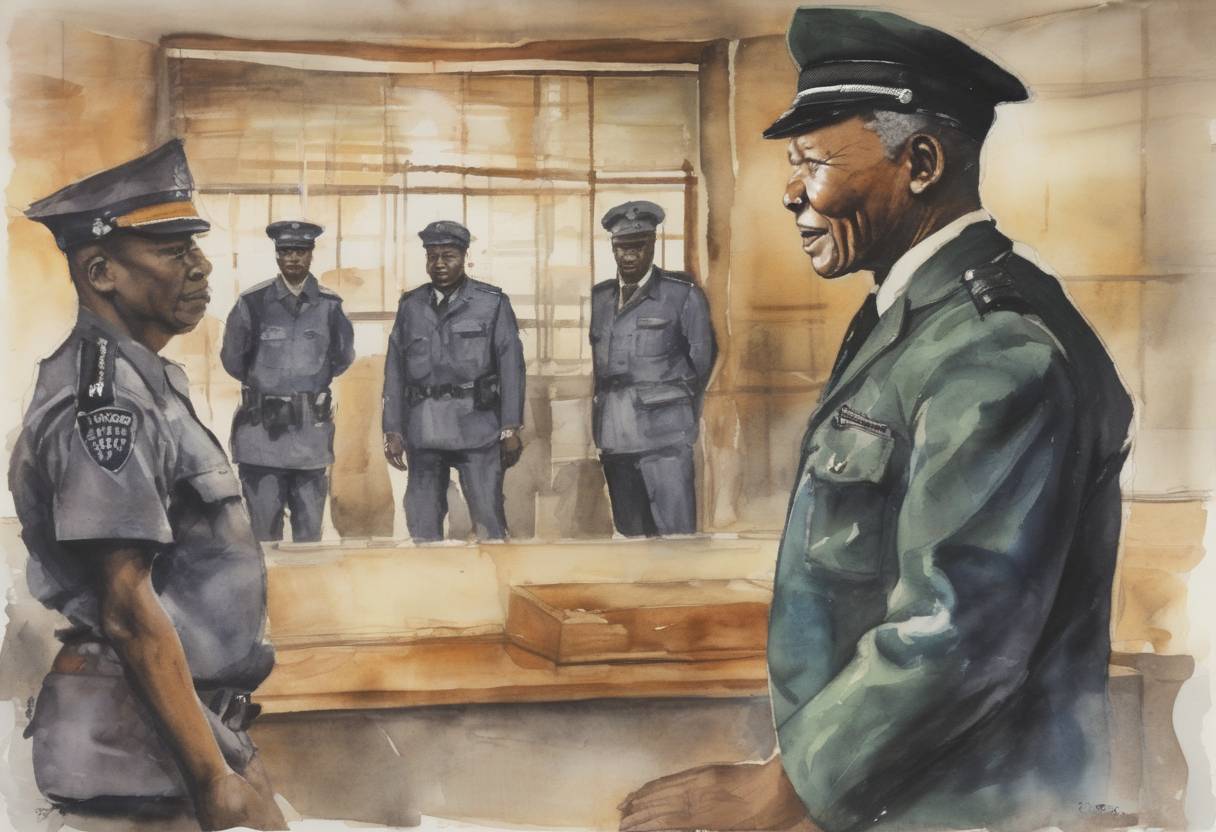
On August 5, 1962, Nelson Mandela, a prominent anti-apartheid activist and leader of the African National Congress (ANC), was arrested by South African police near Howick in the KwaZulu-Natal province. This arrest marked a pivotal moment in the struggle against apartheid, as Mandela was a key figure in the resistance movement.
Nelson Mandela had been actively involved in the fight against apartheid, a system of institutionalized racial segregation and discrimination in South Africa. By the early 1960s, Mandela had become a leading figure in the ANC, advocating for civil disobedience and other forms of protest against the oppressive regime.
In 1961, Mandela co-founded Umkhonto we Sizwe (“Spear of the Nation”), the armed wing of the ANC, which aimed to carry out sabotage against government infrastructure as a form of resistance. His activities made him a target for the South African government, which sought to suppress any opposition to apartheid.
On the day of his arrest, Mandela was traveling under the alias “David Motsamayi” and was disguised as a chauffeur. He had been on the run from authorities for 17 months, during which he traveled across Africa and to England to garner support for the anti-apartheid cause. His arrest occurred after a tip-off to the police, leading to a roadblock where he was apprehended.
Mandela was charged with inciting workers to strike and leaving the country without a valid passport. These charges were serious, as they were seen as direct challenges to the apartheid regime’s authority.
Following his arrest, Mandela was put on trial in what became known as the “Pretoria Trial.” He was convicted and sentenced to five years in prison. However, this was not the end of his legal battles. While serving this sentence, Mandela was brought to trial again in the infamous Rivonia Trial, where he faced even more severe charges, including sabotage and conspiracy to overthrow the government.
In 1964, Mandela was sentenced to life imprisonment and spent the next 27 years incarcerated, primarily on Robben Island. His imprisonment drew international attention and became a symbol of the broader struggle against apartheid.
Mandela’s arrest and subsequent imprisonment galvanized the anti-apartheid movement both within South Africa and internationally. It highlighted the repressive nature of the apartheid regime and drew widespread condemnation from the global community. Mandela’s resilience and leadership during his years in prison further solidified his status as a symbol of resistance and hope.
His eventual release in 1990 marked the beginning of the end for apartheid, leading to democratic elections in 1994, where Mandela was elected as South Africa’s first Black president. His legacy continues to inspire movements for justice and equality worldwide.
Source: en.wikipedia.org