The Battle of Mohi: April 11, 1241
1241 · Mohi, Hungary
The Battle of Mohi took place, where the Mongol Empire, led by Batu Khan and Subutai, defeated the Kingdom of Hungary. This battle was part of the Mongol invasion of Europe.
April 12, 1241
The Mongol Empire achieves a significant victory at the Battle of Mohi, also known as the Battle of the Sajo River. This battle was a decisive clash between the Mongol forces led by Batu Khan and Subutai, and the Kingdom of Hungary, led by King Béla IV. The victory allowed the Mongols to overrun the Hungarian plains and subsequently threaten Europe further west.
Mohi, Hungary | Mongol Empire
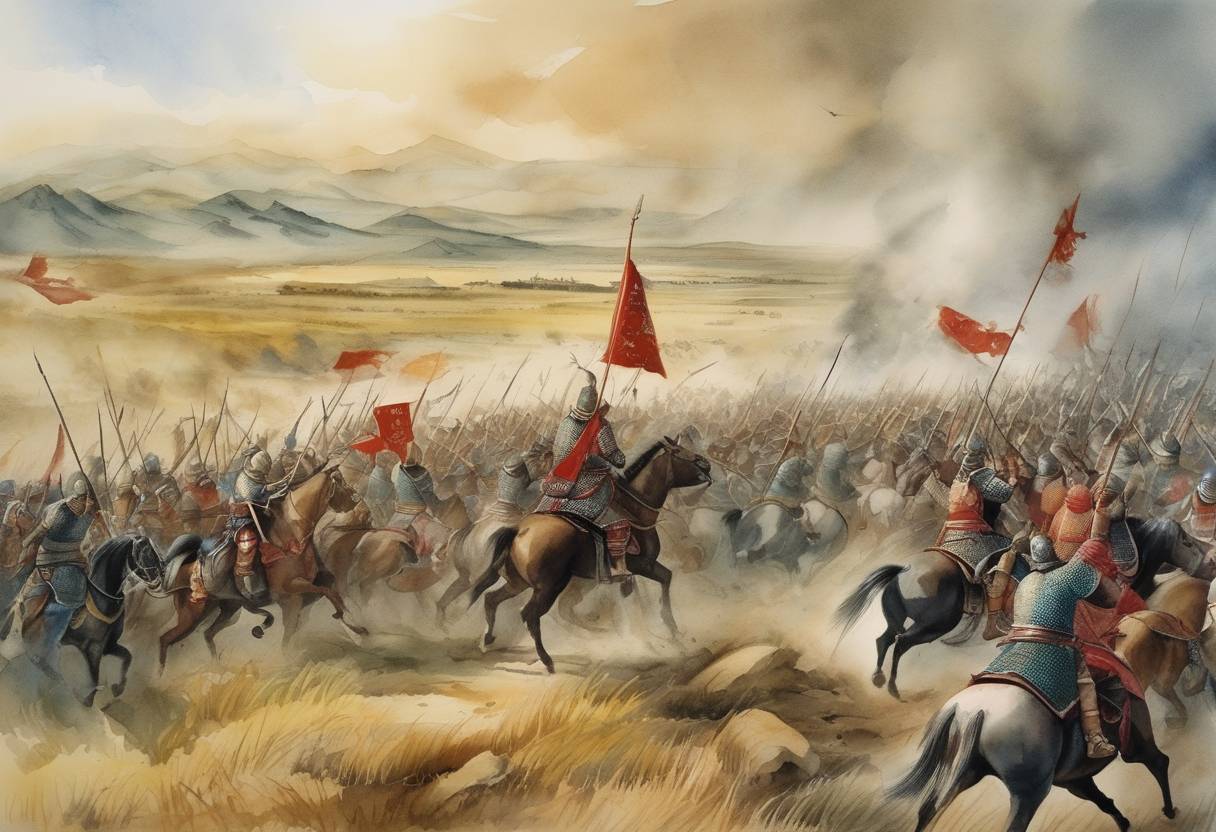
The Battle of Mohi, also known as the Battle of the Sajó River, took place on April 11, 1241, marking a significant victory for the Mongol Empire under the command of Batu Khan and his general Subutai against the forces of the Kingdom of Hungary, led by King Béla IV.
The Mongol invasion of Europe was part of a broader campaign of expansion initiated by Genghis Khan and continued by his successors. By the early 1240s, the Mongols had already achieved victories over several Russian principalities and were advancing westward into Central Europe. The strategic target at this phase was Hungary, a crucial gateway for further incursions into Western Europe.
The Mongols employed a clever tactic to lure the Hungarian forces into a vulnerable position. On the night before the main confrontation, Mongol forces constructed a makeshift bridge over the Sajó River to outflank the Hungarians.
Early Morning Ambush: Under the cover of darkness, Subutai led a contingent across the bridge and launched a surprise attack on the Hungarian camp at dawn. This caused significant chaos within the Hungarian ranks.
Main Assault: Once engaged, the Mongols executed a classic feigned retreat, drawing the Hungarian forces into a trap. As the Hungarians pressed the perceived advantage, the Mongols encircled and enveloped them using their superior cavalry maneuvers.
Decisive Mongol Charge: The Mongol forces used a combination of direct assaults, precision archery, and psychological warfare, leading to the disintegration of the Hungarian lines.
The defeat at Mohi was catastrophic for Hungary. King Béla IV barely escaped with his life, fleeing to Austria, and much of the Hungarian army was annihilated. The Mongols devastated the Hungarian plains, destroying settlements and infrastructure. Their victory allowed them to extend their reach into Eastern Europe and posed a significant threat to the rest of Europe, although the impending death of Ögedei Khan in 1241 eventually recalled the Mongol forces from further invasions.
The Battle of Mohi was a landmark in the Mongol invasions of Europe, demonstrating the unparalleled military prowess and strategic insight of the Mongol commanders. It highlighted the vulnerabilities of European feudal armies against the mobile and coordinated forces of the Mongol horsemen. The battle had long-term implications for European military strategies, spurring developments in military tactics and fortification designs in the years that followed.
Source: en.wikipedia.org