Polish Counter-Offensive in the Battle of Warsaw
1920 · Warsaw, Poland
Polish forces under Józef Piłsudski launched a counter-offensive during the Battle of Warsaw amidst the Polish-Soviet War.
January 25, 1831
The Polish uprising against Russian rule, known as the November Uprising or the Polish-Russian War 1830-31, saw significant military action as Polish forces engaged Russian troops at the Battle of Stoczek. The battle ended in a Polish victory and became a symbol of resistance despite the eventual suppression of the uprising by Russian forces.
Stoczek, Poland | Polish National Government
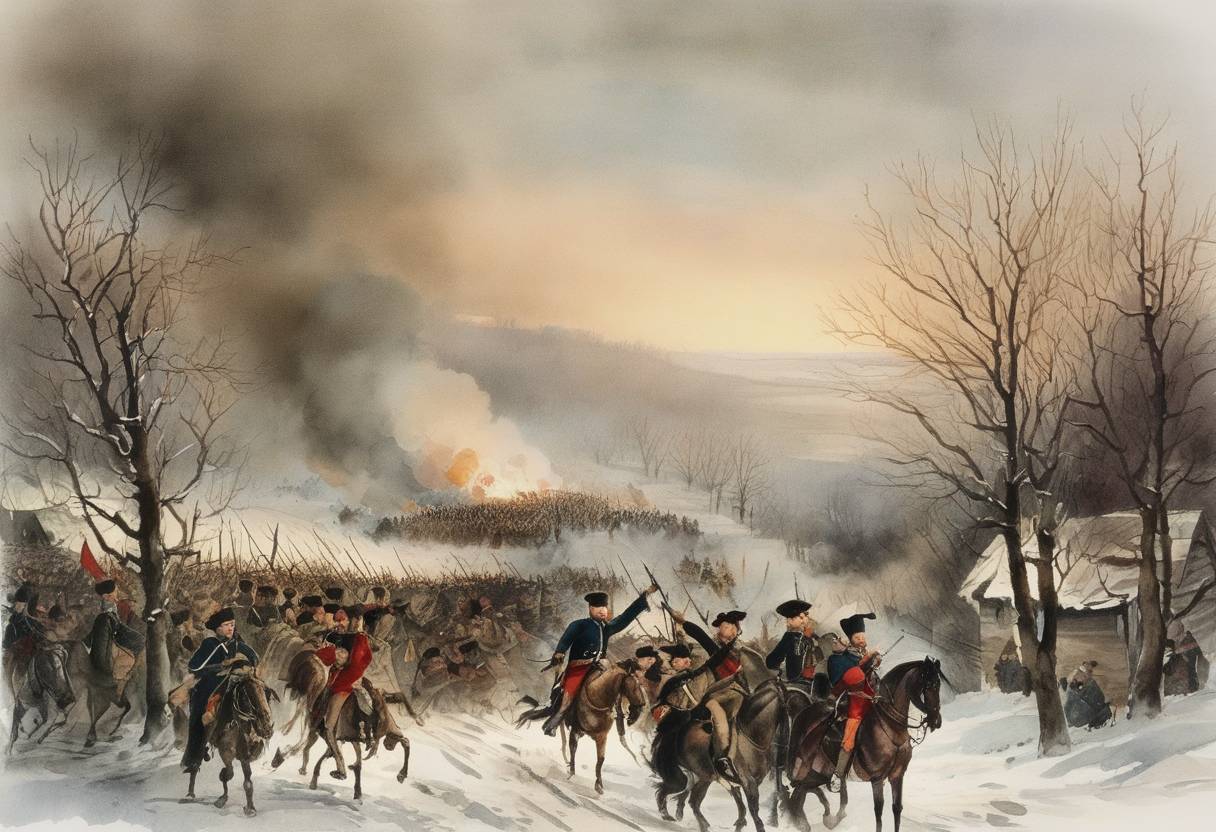
The Battle of Stoczek, fought on January 25, 1831, marked an early and significant engagement in the November Uprising, a Polish insurrection against Russian domination. This battle was crucial for Polish morale, as it demonstrated the capability and resolve of Polish forces early in the uprising.
The November Uprising began on November 29, 1830, as a response to increasing Russian influence and control over the Polish territories. The Polish national movement sought to restore Poland’s independence, which had been severely compromised since the partitions of Poland in the late 18th century. The insurrectionists faced the formidable Russian Empire, intent on maintaining its rule over Poland.
Location: The battle took place near the small village of Stoczek Łukowski, located in present-day eastern Poland.
Commanders: The Polish forces were commanded by General Józef Dwernicki, known for his leadership and tactical prowess. Opposing him, the Russian troops were under the command of General Theodor Geismar.
Forces: The Polish cavalry, approximately 6,000 strong, faced a Russian contingent of around 3,000 men. Despite being outnumbered in cavalry, the Polish utilized their forces effectively.
Tactics: General Dwernicki executed a swift and decisive attack. The Polish cavalry, divided into several brigades, charged the Russian positions before they could adequately form their defenses. The maneuver caught the Russians off guard, causing their lines to break.
Result: The Poles achieved a resounding victory, forcing the Russian troops to retreat. This success provided a substantial morale boost to the Polish forces and the National Government directing the uprising.
Symbolism: The victory at Stoczek became emblematic of Polish resistance against foreign domination. Though eventually, the November Uprising would be suppressed in 1831, battles like Stoczek played a critical role in fostering a sense of national identity and resistance.
Aftermath: General Dwernicki’s tactics and the bravery of his troops were celebrated, inspiring further resistance efforts. Despite the ultimate failure of the uprising due to Russia’s overwhelming military might and resources, episodes like the Battle of Stoczek reinforced the Polish commitment to independence, influencing later struggles for national sovereignty.
The Battle of Stoczek remains an enduring symbol in Polish history, commemorating the courage and determination of those who fought against Russian rule during the November Uprising.
Source: www.britannica.com