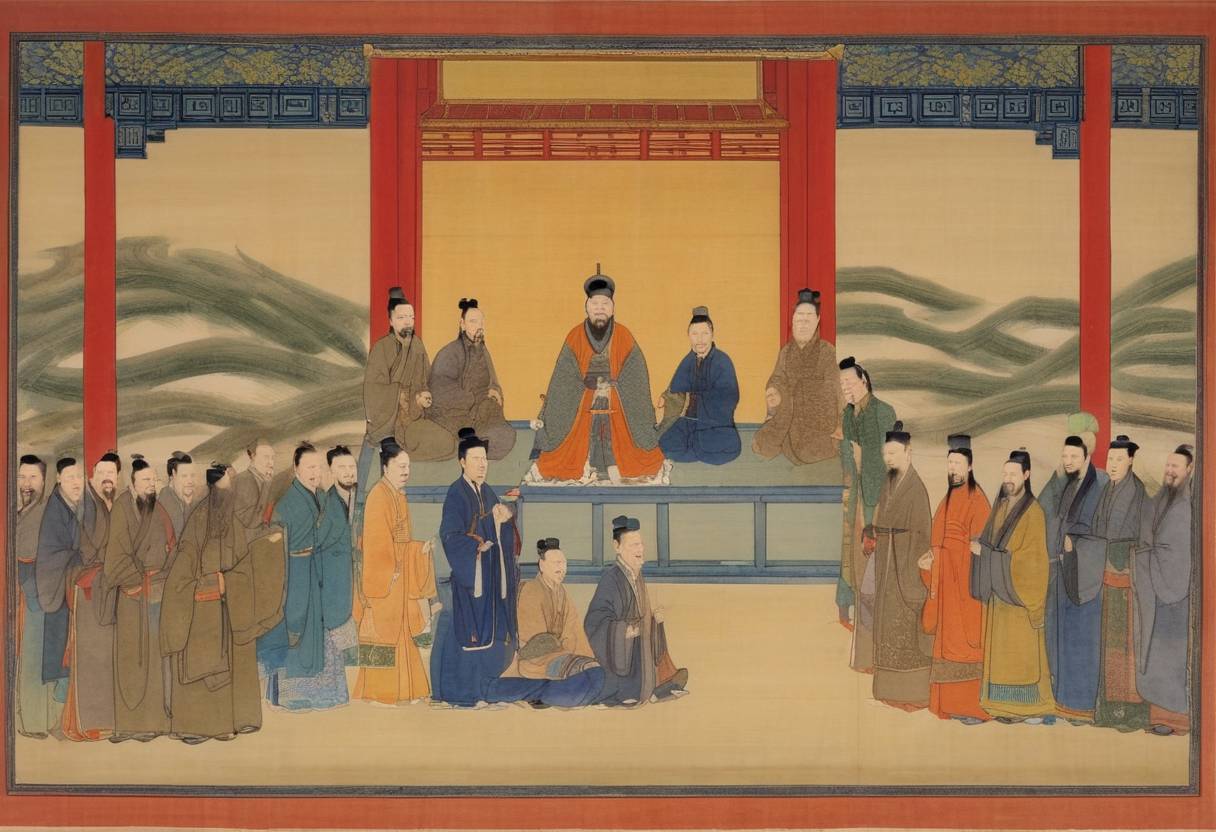
Emperor Huizong’s Abdication and the Jin–Song Wars
Date: February 10, 1126
Event: Abdication of Emperor Huizong in favor of Emperor Qinzong
Background
Emperor Huizong of Song, born Zhao Ji in 1082, ascended to the throne of the Song Dynasty in 1100, ruling as the eighth monarch until his abdication in 1126. His reign is often noted for its cultural achievements, particularly in the arts, but it is also marked by significant military and political turmoil, namely the Jin–Song Wars.
The Jin–Song Wars were a series of conflicts between the Northern Song Dynasty and the new Jin Dynasty of Jurchen origin. The Jurchens had overthrown the Liao Dynasty, which was one of the Song’s northern rivals, but soon turned their ambitions towards the Song territories themselves.
Events Leading to Abdication
By late 1125, the Jurchens launched a significant offensive against the Song, penetrating deeply into Song territory. The Jin forces captured key strategic locations, which posed a direct threat to the Song capital, Kaifeng.
In the face of imminent military disaster, Emperor Huizong decided to abdicate on February 10, 1126. He passed the throne to his son, Zhao Huan, who would become Emperor Qinzong. This move was part of an effort to stabilize the internal situation and deal more effectively with the external threat, as Huizong sought to manage affairs behind the scenes due to his perceived superior experience.
Aftermath
Emperor Qinzong inherited an extremely precarious situation. Unfortunately, the transfer of power did not lead to the anticipated stability or successful defensive strategies against the Jurchen invaders. The Jin forces continued their southward advance, and by early 1127, they successfully breached Kaifeng, capturing both Emperor Huizong and Emperor Qinzong along with members of the royal family in the infamous Jingkang Incident. This catastrophic event marked the fall of the Northern Song Dynasty and led to the establishment of the Southern Song, based in Hangzhou.
Historical Significance
The abdication of Emperor Huizong marks a significant turning point in Chinese history. It underscored the weaknesses of the Song military forces and the consequences of political mismanagement. The transition between the Northern and Southern Song periods also reflects the broader theme of fragmentation and resilience within Chinese imperial history, which would resonate in the centuries to follow.
The Jin–Song Wars and the collapse of Northern Song rule drastically altered the geopolitical landscape of East Asia, setting the stage for future interactions between northern and southern Chinese states and their neighbors.