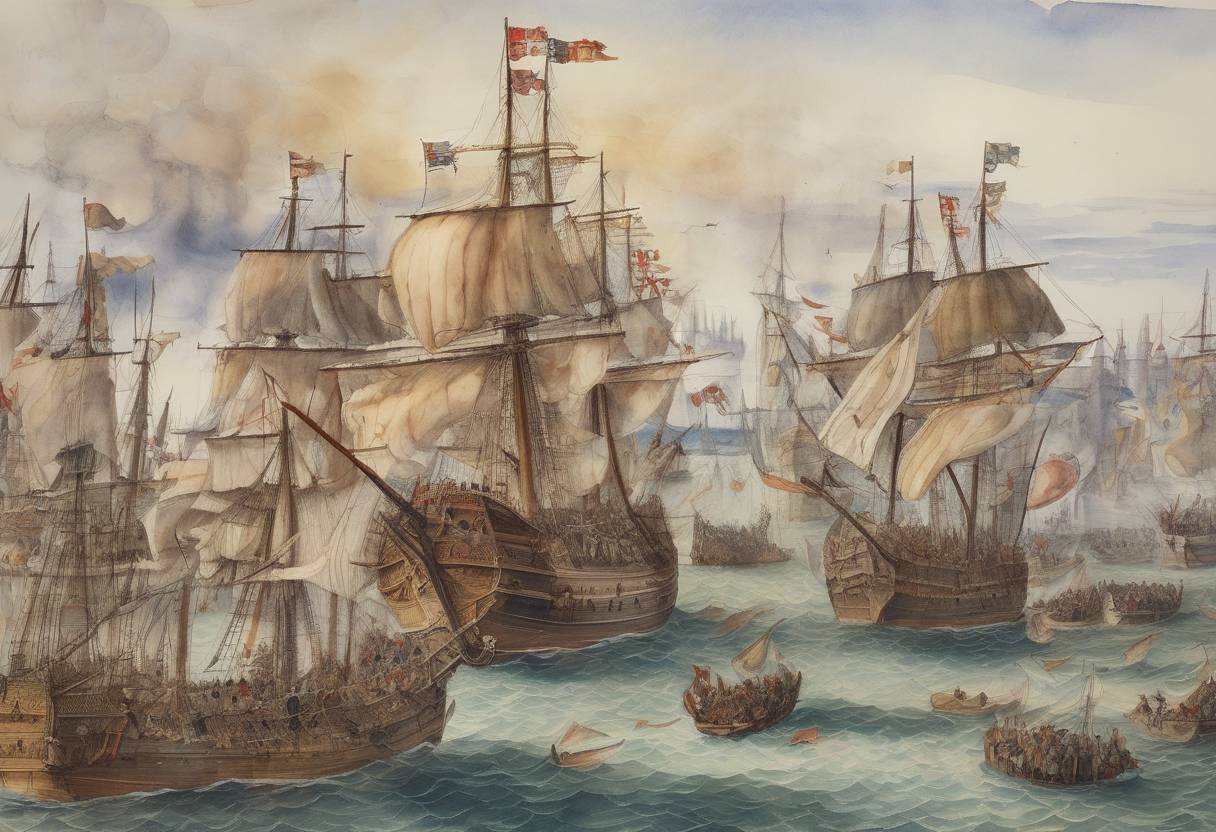
The Naval Battle of La Rochelle: June 22, 1372
The naval Battle of La Rochelle, fought on June 22, 1372, was a significant engagement during the Hundred Years’ War, marking a decisive victory for the Castilian fleet over the English. This battle had profound implications for naval power dynamics in the region and the broader conflict between England and France.
Context and Background
The Hundred Years’ War (1337-1453) was a protracted series of conflicts between the Kingdom of England and the Kingdom of France, primarily over claims to the French throne. By the late 14th century, the war had expanded to include various European powers, including Castile, which aligned with France against England.
La Rochelle, a strategic port on the western coast of France, was under English control. The English fleet, commanded by John Hastings, the Earl of Pembroke, was tasked with reinforcing and resupplying the garrison at La Rochelle. Meanwhile, the Castilian fleet, under the command of Admiral Ambrosio Boccanegra, sought to challenge English naval dominance and support their French allies.
The Battle
The battle commenced on June 22, 1372, when the English fleet, consisting of approximately 32 ships, encountered the larger and more heavily armed Castilian fleet, which numbered around 40 ships. The Castilians, known for their advanced naval tactics and formidable galleys, engaged the English in a fierce confrontation.
Key factors contributing to the Castilian victory included:
- Superior Naval Tactics: The Castilians employed innovative tactics, utilizing their galleys’ maneuverability and firepower to outflank and overpower the English ships.
- Technological Advantage: The Castilian fleet was equipped with more advanced weaponry, including crossbows and artillery, which proved decisive in the battle.
- Leadership and Morale: Admiral Boccanegra’s leadership and the high morale of the Castilian sailors played a crucial role in maintaining the offensive against the English.
The battle resulted in a catastrophic defeat for the English. The majority of their fleet was captured or destroyed, and the Earl of Pembroke was taken prisoner.
Aftermath and Significance
The defeat at La Rochelle had significant consequences for the English:
- Loss of Naval Supremacy: The battle marked the end of English naval dominance in the region, shifting the balance of power in favor of the Franco-Castilian alliance.
- Impact on the Hundred Years’ War: The loss weakened England’s ability to maintain its territories in France and contributed to the eventual decline of English influence on the continent.
- Strategic Repercussions: The victory bolstered the Franco-Castilian alliance, strengthening their position in subsequent military campaigns against England.
In summary, the Battle of La Rochelle was a pivotal moment in the Hundred Years’ War, underscoring the importance of naval power and alliances in medieval warfare. The Castilian victory not only reshaped the naval landscape but also influenced the broader course of the conflict between England and France.