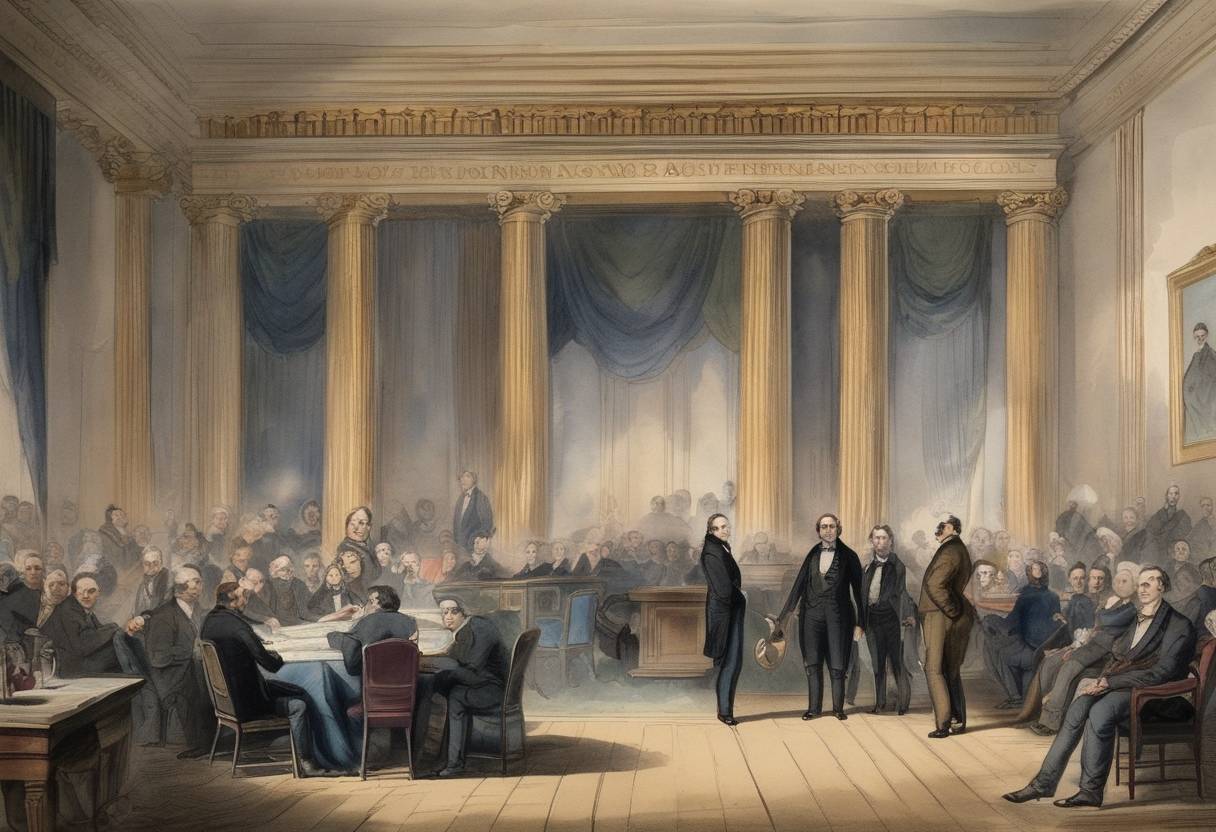
Compromise of 1850 and the Clay Resolutions
On January 14, 1850, the stage was set for the introduction of the Clay Resolutions in the United States Senate. These resolutions were part of the legislative package that came to be known as the Compromise of 1850. Introduced by Senator Henry Clay of Kentucky, the resolutions aimed to address the sectional conflicts triggered by the territorial gains from the Mexican-American War (1846-1848).
Historical Context
The Mexican-American War concluded with the Treaty of Guadalupe Hidalgo in 1848, which resulted in the United States acquiring vast new territories in the West, including present-day California, Nevada, Utah, and parts of several other states. The question of whether to permit slavery in these new territories intensified existing tensions between free and slave states.
By 1850, the nation was on the brink of disunion, with fiery debates occurring in Congress over the balance of power. The admission of California as a free state threatened to alter the delicate balance between free and slave-holding states in the Senate.
The Clay Resolutions
Henry Clay, known as the “Great Compromiser” for his ability to broker important political compromises, presented a series of measures intended to address these tensions:
- Admission of California: As a free state, thereby upsetting the equal balance of free and slave states.
- Organization of Remaining Territories: Allowing the residents of the territories of New Mexico and Utah to decide on the issue of slavery through popular sovereignty.
- Adjustments to the Texas-New Mexico boundary: Texas would cede its western land claims to the federal government in return for debt relief.
- Elimination of the Slave Trade in Washington D.C.: While permitting the continuation of slavery itself.
- Strengthening of the Fugitive Slave Law: Placing a greater onus on citizens and law enforcement in free states to apprehend and return escaped enslaved individuals to their owners in the South.
Aftermath and Significance
Although the Clay Resolutions were initially presented on January 29, 1850, Clay’s intent to propose them on January 14 marked the beginning of these crucial debates. The Compromise of 1850 would ultimately be passed in September, after intense discussions and modifications within Congress, thanks to efforts from other influential figures such as Senator Stephen A. Douglas.
The Compromise of 1850 temporarily quelled the sectional conflict and postponed the secession crisis. However, its measures, especially the Fugitive Slave Act, would intensify anti-slavery sentiment in the North and hasten the nation’s march towards the Civil War in 1861. The Compromise highlighted the profound regional divisions and set a historical precedent for the concept of popular sovereignty, deeply affecting the American political landscape in the decade that followed.