The Siege of Nicaea Ends - July 1, 1097
1097 · Nicaea, Byzantine Empire
The Siege of Nicaea ends as the city surrenders to the Crusaders during the First Crusade.
May 13, 1097
The First Battle of Dorylaeum takes place between the Seljuk forces and the Crusaders during the First Crusade.
Dorylaeum, Byzantine Empire
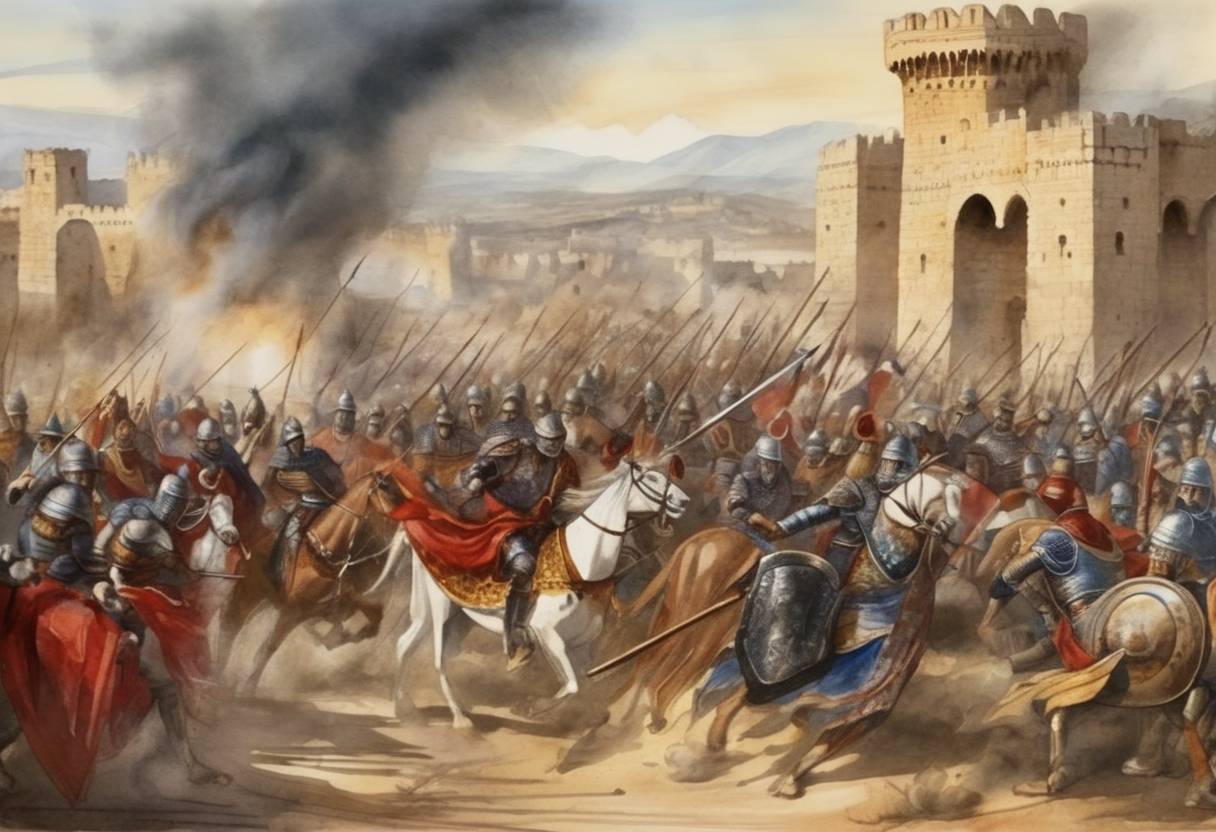
The First Battle of Dorylaeum was a pivotal encounter during the First Crusade, which was a military expedition initiated by Western Christendom to reclaim Jerusalem and holy sites under Islamic control. Having left Nicaea in late June, the Crusader armies were en route through Anatolia, intent on reaching their final destination, Jerusalem. The Seljuk Turks, led by Sultan Kilij Arslan I, were ill-disposed to let these forces travel unchallenged through their territory after their earlier defeat at the Siege of Nicaea.
On July 1, 1097, the Crusaders’ army, marching in two separate divisions to improve logistics and prevent being ambushed, met the Seljuk forces near the city of Dorylaeum, in modern-day Turkey. The vanguard, led by Bohemond of Taranto, consisted primarily of Norman knights, while the main force, led by Godfrey of Bouillon, Raymond IV of Toulouse, and other leaders, followed at a distance.
The Seljuk Turks attacked early in the morning, employing hit-and-run tactics with mounted archers, a specialty of their warfare that took advantage of their swift, maneuverable horses and skilled archers. Bohemond’s troops hastily set up a defensive circle to protect against the incessant volleys, though sustaining heavy casualties and pressure.
Under persistent assault, Bohemond sent riders to alert the second Crusader division of their predicament. As afternoon approached, the main contingent, including Godfrey, Raymond, and Hugh of Vermandois, arrived to bolster their beleaguered allies. Their combined forces effectively outmaneuvered the Seljuk cavalry by launching a counter-offensive that took advantage of the terrain.
The timely reinforcement turned the tide, forcing the Seljuk troops to withdraw, conceding victory to the Crusaders. This battle demonstrated the effectiveness of cooperation among the diverse European factions within the Crusader army, showcasing the strength of heavily armored knights against swift cavalry.
The triumph at Dorylaeum solidified the Crusaders’ position in Anatolia, allowing them further passage towards Antioch and eventually Jerusalem. The battle underscored the challenges the Crusaders would face in maintaining unity among their ranks and adapting to the guerrilla tactics characteristic of their adversaries throughout the campaign.
The victory at Dorylaeum boosted the morale of the Crusader forces and served as a strategic reassurance of their capability to face the skilled and numerically superior Muslim forces. It disrupted Seljuk attempts to halt the Crusader march and marked a significant step towards the success of the First Crusade.
The First Battle of Dorylaeum and its outcome highlighted the importance of communication, coordination, and the adoption of flexible tactics in medieval warfare, setting precedents for subsequent military engagements during the Crusades.