Inauguration of Benjamin Harrison
1889 · Washington, D.C., United States
Benjamin Harrison was inaugurated as the 23rd President of the United States.
April 6, 1841
John Tyler is inaugurated as the 10th President of the United States, following the death of President William Henry Harrison.
Washington, D.C., United States | United States Government
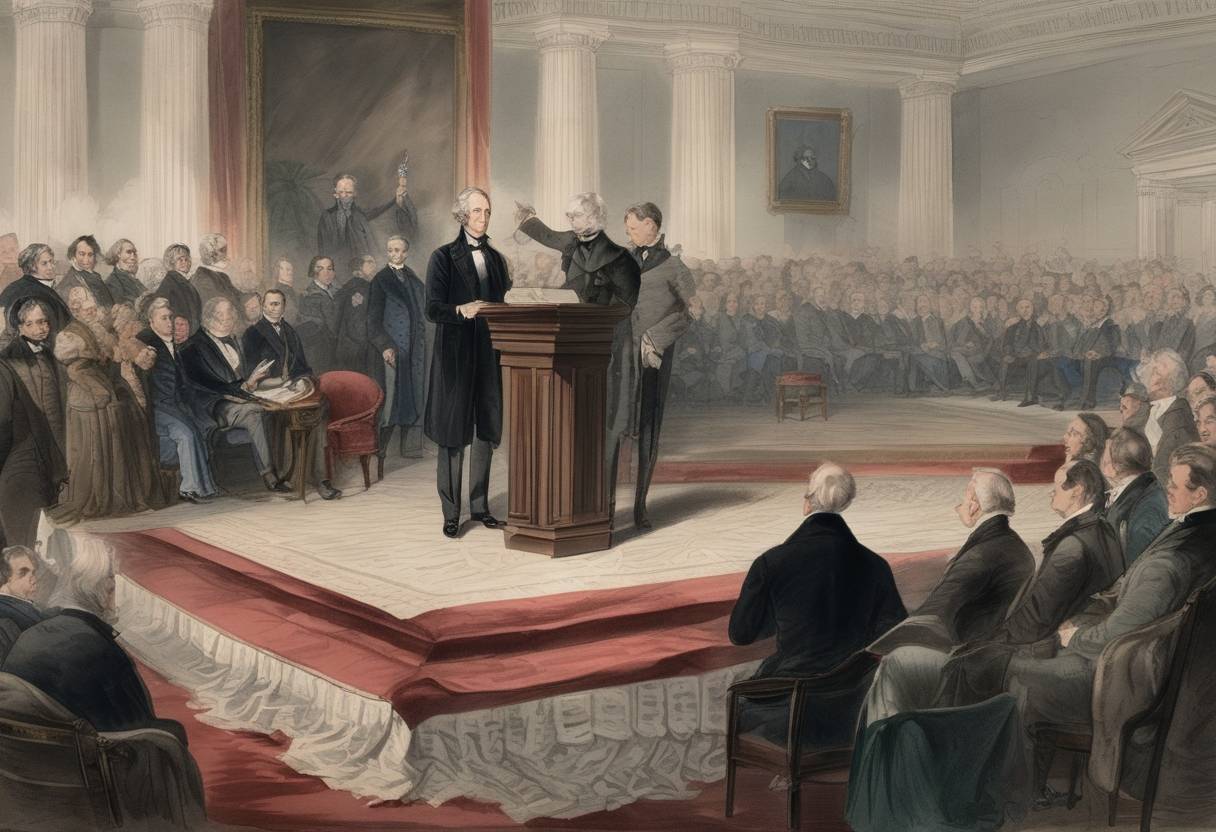
On April 4, 1841, William Henry Harrison, the 9th President of the United States, died just 31 days into his term, the shortest presidency in U.S. history. His death marked the first time a sitting American president passed away while in office, leading to an unprecedented constitutional predicament regarding presidential succession.
Upon President Harrison’s death, Vice President John Tyler assumed the presidency. This moment marked the first application of the presidential succession process. Tyler was inaugurated as the 10th President of the United States on April 6, 1841, taking the presidential oath in the presence of a select group at his residence in Washington, D.C.
The United States Constitution initially lacked explicit instructions on presidential succession beyond the Vice President assuming duties as “Acting President” in the event of a president’s incapacitation or death. Tyler’s decision to take the presidential oath and fully assume the office set a critical precedent that was later codified in the 25th Amendment, establishing a clear line of succession.
Tyler’s ascendancy demonstrated the resilience of the U.S. constitutional system, managing to navigate an uncharted situation without political upheaval. By firmly asserting his role as president, John Tyler established an enduring precedent for the seamless transfer of power in the American political system.
Source: www.loc.gov