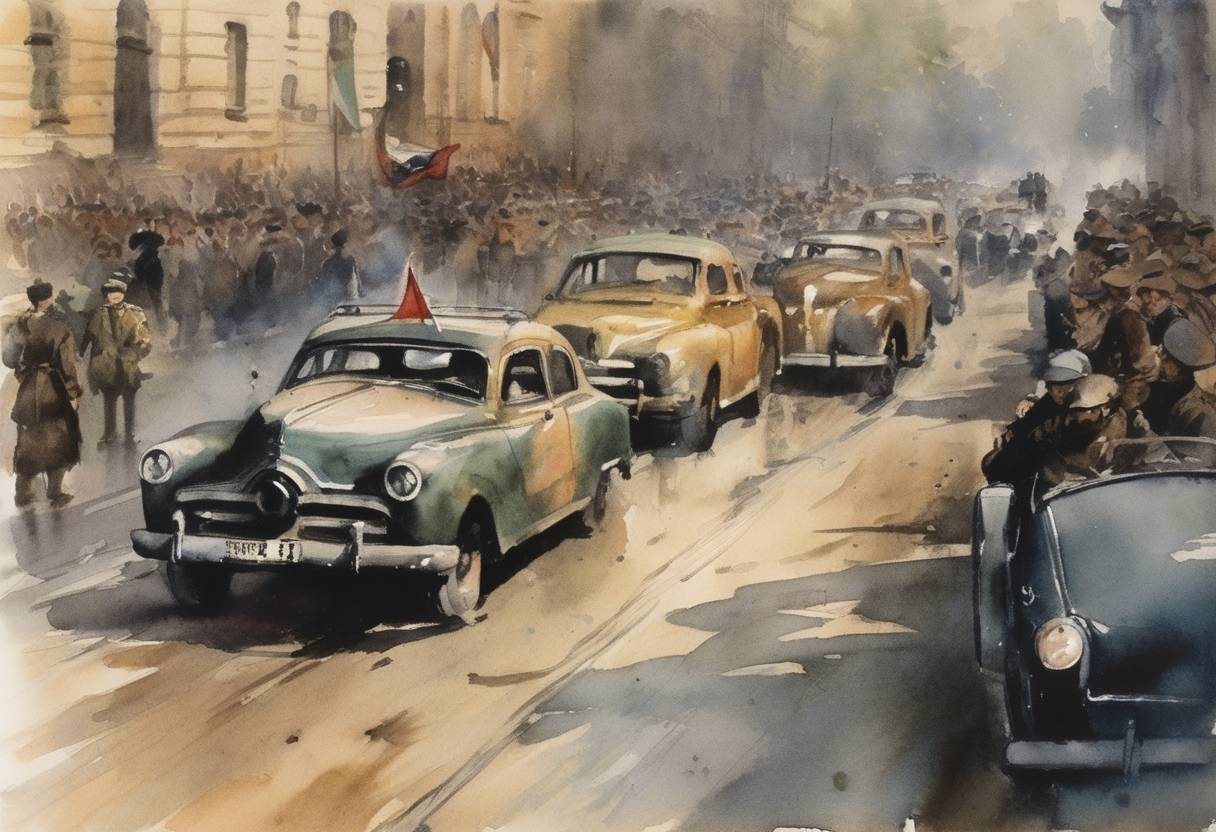
The Defeat of the Hungarian Revolution of 1956
On November 5, 1956, the Hungarian Revolution of 1956 was effectively crushed by Soviet forces, marking a decisive moment in Cold War history. This national uprising began in late October as a spontaneous revolt against the government of the Hungarian People’s Republic and its Soviet-imposed policies.
Context and Lead-Up
In the years following World War II, Hungary, like many Eastern European countries, fell within the Soviet sphere of influence. The Hungarian government was a satellite of the USSR, enforcing strict communist doctrines, which led to widespread dissatisfaction. On October 23, 1956, peaceful student demonstrations in Budapest called for political reform and the withdrawal of Soviet troops. These protests quickly escalated into a nationwide revolt, leading to the formation of a new government under reformist leader Imre Nagy.
Key Events
- October 24 - November 1, 1956: Initial Soviet interventions failed to quell the uprising. In response, Nagy’s government declared Hungary’s neutrality and sought support from the West, specifically withdrawing from the Warsaw Pact.
- November 4, 1956: The Soviet Union launched a major military intervention with the deployment of thousands of troops and tanks to Budapest and other parts of Hungary under Operation Whirlwind.
November 5, 1956: The Crushing of the Revolution
By November 5, Soviet forces had crushed most organized resistance in Budapest and other cities. The brutal crackdown involved heavy artillery and aerial bombardment aimed at remaining anti-Soviet strongholds. The Hungarian forces and civilian militias, with limited resources, were unable to withstand the Soviet onslaught.
Aftermath
- Casualties: Thousands of Hungarians were killed, and many more were injured during the Soviet assault.
- Political Repression: In the weeks following the suppression, Soviet-appointed János Kádár established a pro-Moscow government. Thousands were arrested, and hundreds were executed or imprisoned during a wave of retribution against revolutionaries.
Broader Historical Significance
The immediate quelling of the revolution reaffirmed Soviet dominance in Eastern Europe and dissuaded other satellite states from attempting similar revolts during the Cold War era. Additionally, it highlighted the limitations of Western intervention, as calls for support went unheeded due to geopolitical strategies.
The defeat of the Hungarian Revolution is often cited as a notable instance of Cold War tension, emphasizing the extent of Soviet influence over Eastern Bloc countries and the immense challenges faced by anti-Communist movements during the mid-20th century.