The Murder of Edward the Martyr and the Succession of Æthelred the Unready
978 · Corfe Castle, England
Edward the Martyr, King of England, is murdered at Corfe Castle, leading to the succession of Æthelred the Unready.
June 10, 0978
In England, King Edward the Martyr's body is reburied in Shaftesbury Abbey with great ceremony, attended by many dignitaries, considered one of the first instances of popular sainthood in England.
Shaftesbury, England | Anglo-Saxon Kingdom
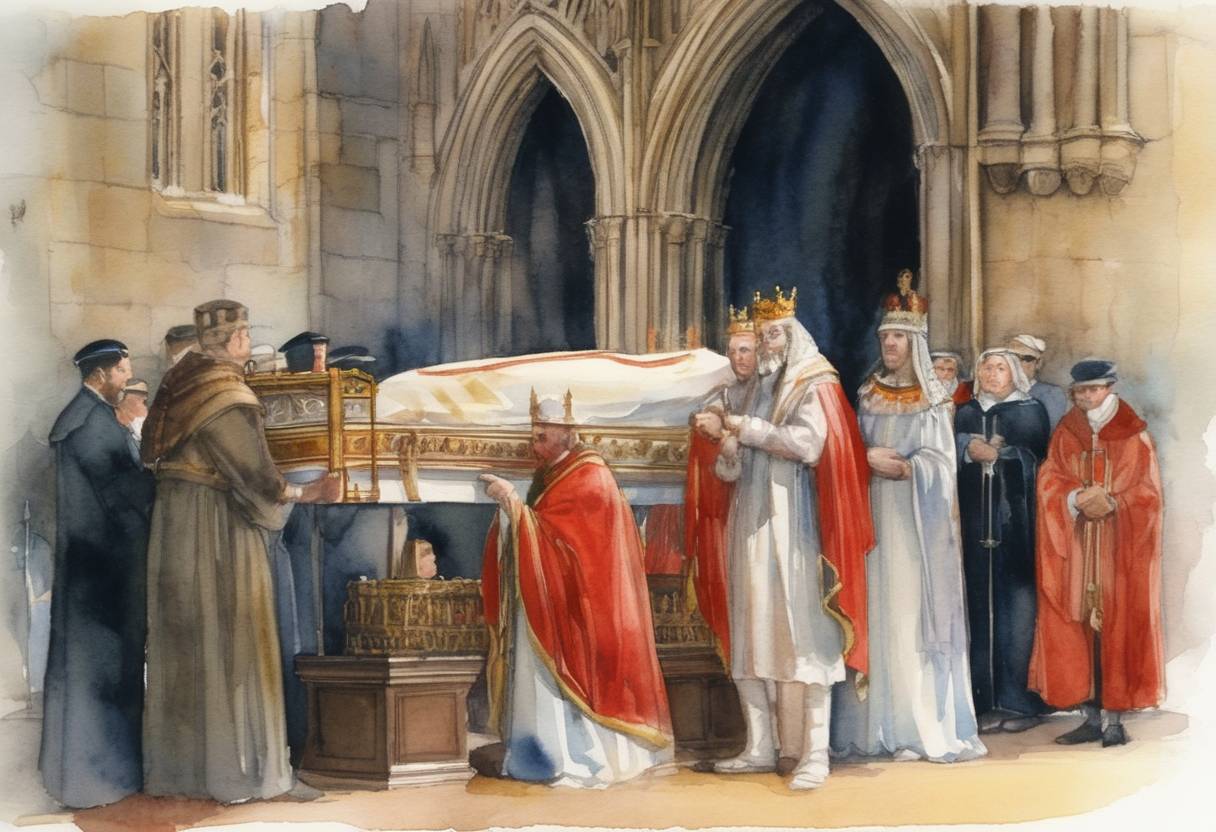
On June 10, 978, the body of King Edward the Martyr was ceremonially reburied at Shaftesbury Abbey in Dorset, England. This event marked a significant moment in early English religious history and is one of the earliest documented instances of popular sainthood in the region.
Edward the Martyr was the King of England from 975 until his untimely death in 978. His reign followed the death of his father, King Edgar the Peaceful. Edward’s kingship was marked by internal turbulence, as he faced challenges to his legitimacy and position primarily within the court and from his stepmother, Ælfthryth, who favored her own son, Æthelred, for the throne.
Edward’s murder on March 18, 978, at Corfe Castle, is shrouded in mystery, with historical accounts suggesting it was orchestrated by political rivals. Following his assassination, Edward was initially buried without significant ceremony at Wareham.
The reburial of King Edward at Shaftesbury Abbey was a key moment in the transformation of his legacy. His remains were moved to the abbey, a place of significant religious importance, founded by his grandfather, King Alfred the Great. This event was attended by many dignitaries and religious figures, highlighting the shift in perception towards Edward.
His reburial was orchestrated due to the growing veneration of Edward, who was seen by many as a martyr for the cause of rightful kingship and the Christian faith. Miracles were reported at his gravesite, and he became an object of popular sainthood. The widespread devotion to Edward helped solidify his status as both a martyr and a saint, with the Church officially recognizing his sainthood later in history.
Edward’s reburial is significant for several reasons. It underscores the role of political power struggles in medieval English kingship, where issues of legitimacy and succession often resulted in conflict and assassination. It also illustrates the burgeoning tradition of sainthood in England, where popular sentiment and reported miracles could elevate individuals to revered status.
The event reflects the intertwining of religious belief and royal authority, as Edward’s sainthood lent religious legitimacy to his supporters and diminished the standing of his political rivals over time. In this context, the ceremony held at Shaftesbury Abbey on June 10, 978, stands as a poignant moment in the tapestry of English medieval history.
Source: en.wikipedia.org