The Great Vancouver Fire of June 13, 1886
1886 · Vancouver, Canada
A fire devastated much of Vancouver, British Columbia, shortly after its incorporation as a city, leading to significant rebuilding efforts.
March 7, 1765
A prominent fire destroyed approximately 30% of the buildings in Montreal, a significant event in the city's history that had a considerable impact on the local population and economy.
Montreal, Canada
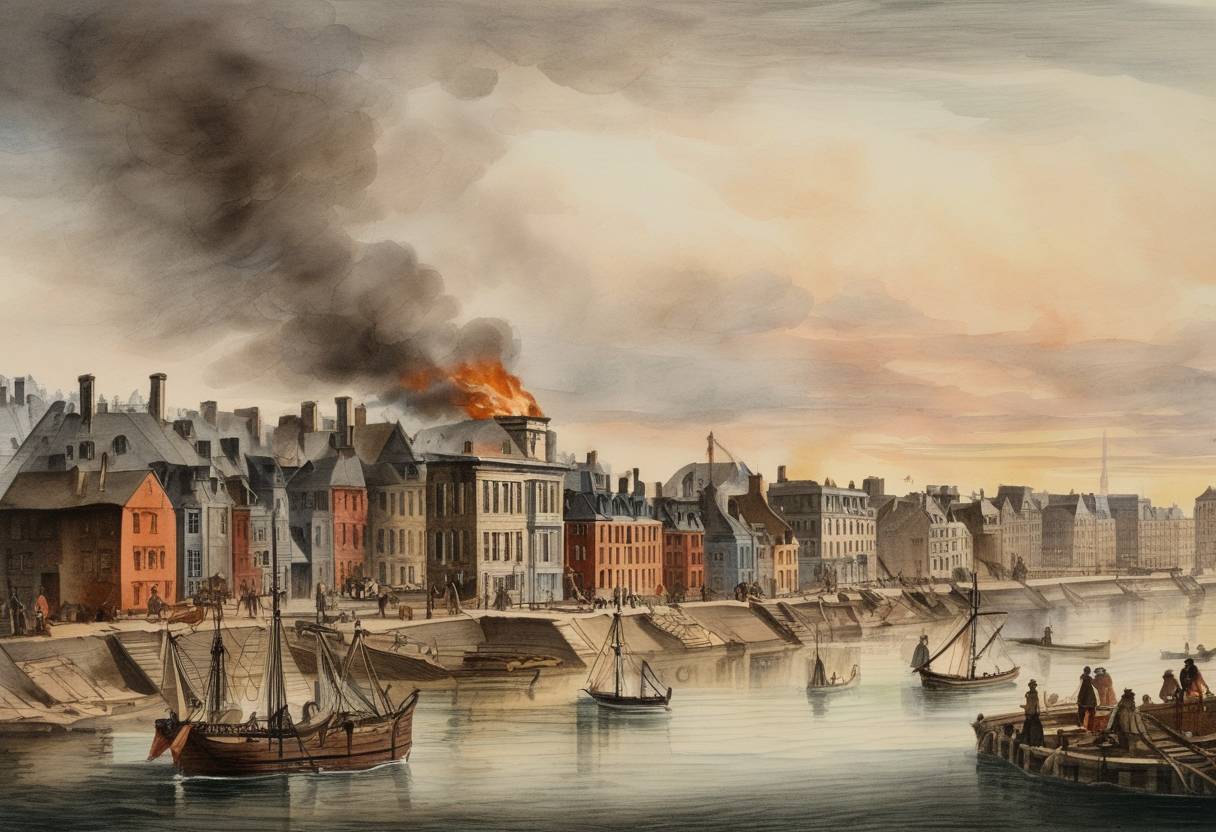
On March 7, 1765, Montreal experienced a devastating fire that engulfed approximately 30% of its buildings, marking it as one of the most significant events in the city’s colonial history. This catastrophic event had profound effects on the local population and economy, reshaping the urban landscape and leading to substantial changes in urban planning and fire prevention.
In the mid-18th century, Montreal was a burgeoning colonial settlement under British control, following the end of the Seven Years’ War and the Treaty of Paris in 1763. The city had a population of approximately 5,000 residents, a mix of British and French Canadians, and consisted mostly of wooden buildings that were highly susceptible to fire.
Details about the exact cause of the fire are scarce, but it is widely believed to have started in a residential area. The wooden construction, combined with the densely packed buildings and narrow streets, allowed the fire to spread rapidly. Windy conditions exacerbated the situation, fueling the blaze and making it difficult for the population to contain the fire quickly.
Destruction of Property: The fire destroyed nearly one-third of Montreal’s buildings, leaving many residents homeless. Key infrastructural and residential areas were lost, which had an immediate effect on the city’s ability to function and support its population.
Economic Consequences: The destruction disrupted trade and businesses. Montreal was a vital trade hub, and the loss of goods, warehouses, and commercial establishments set back the local economy significantly.
Human Impact: While exact casualty numbers are not well-documented, the social toll was severe. Many families lost their homes, and community support structures were strained as Montreal struggled to cope with the disaster’s aftermath.
The Great Fire of 1765 prompted authorities to reconsider urban planning and fire prevention. Several measures were implemented in response to the disaster:
Rebuilding Efforts: Reconstruction efforts emphasized more robust building materials. Stone and brick began to replace wood as primary construction materials to better withstand potential future fires.
Regulatory Changes: New regulations aimed at improving fire safety standards were introduced, including mandates for firewalls and more strategic urban planning to reduce the risk of wide-scale fires.
Cultural and Policy Shifts: The fire highlighted the vulnerability of colonial settlements to natural disasters, leading to a more proactive approach to urban development and emergency preparedness.
The Great Fire of 1765 was a pivotal moment in Montreal’s history, serving as a catalyst for change that influenced the city’s growth and development. It underscored the need for more sustainable building practices and influenced other North American cities facing similar challenges during that era. This event also contributed to the evolving identity of Montreal, reinforcing its resilience and adaptability in the face of adversity.
Source: www.mcgill.ca