Dedication of the United States Holocaust Memorial Museum
1993 · Washington, D.C., United States
The Holocaust Memorial Museum is dedicated in Washington, D.C., to honor the victims of the Holocaust.
April 29, 2004
The World War II Memorial was dedicated in Washington, D.C., to honor Americans who served in the armed forces and as civilians during World War II.
Washington, D.C., United States | National Park Service
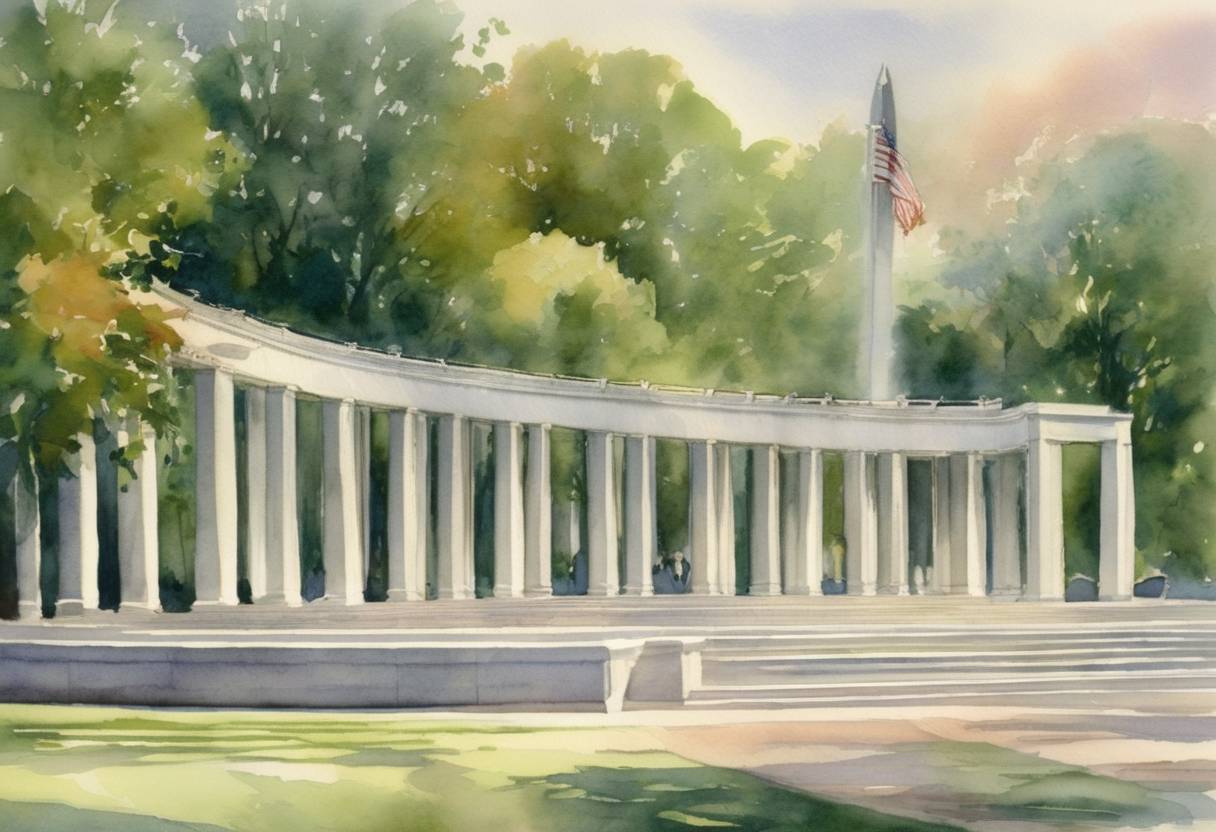
On April 29, 2004, the World War II Memorial was dedicated in Washington, D.C. This significant event honored the 16 million people who served in the United States Armed Forces during World War II, along with the millions of others who supported the war effort on the home front.
The memorial is prominently located on the National Mall, positioned on the east end of the Reflecting Pool between the Lincoln Memorial and the Washington Monument. Its design includes 56 granite pillars, symbolizing unity among the 48 states, seven federal territories, and the District of Columbia during the war. Additionally, a pair of triumphal arches represents the Atlantic and Pacific theaters of operations.
The journey to establish the World War II Memorial began with authorizing legislation in 1993. The design, approved in 1997, was crafted by architect Friedrich St. Florian. After several years of approvals and site preparations, construction began in September 2001. The memorial was partially funded through private donations raised by the American Battle Monuments Commission, with additional support from federal funds.
The dedication ceremony on April 29, 2004, was attended by thousands of World War II veterans, government officials, and members of the public. The event featured speeches from prominent figures, including then-President George W. Bush, who acknowledged the sacrifices made by “The Greatest Generation” to secure victory during the war.
The World War II Memorial stands as a national testament to the spirit, courage, and resolve of the American people during a period of unprecedented global conflict. It serves as a place of reflection and remembrance for those who lost their lives and those who contributed to the Allied victory.
Since its dedication, the memorial has become a place of pilgrimage for veterans and their families, enhancing awareness about the war’s historical impact and ensuring that the sacrifices made by the wartime generation continue to be remembered by future generations.
Source: www.nps.gov