August 22, 1849

The English Act of Parliament known as Nye Chartism, formally the Metropolitan Police Act, reorganizes and standardizes police functions, principally in London, and lays foundations for modern policing methods.


London, United Kingdom | British Parliament
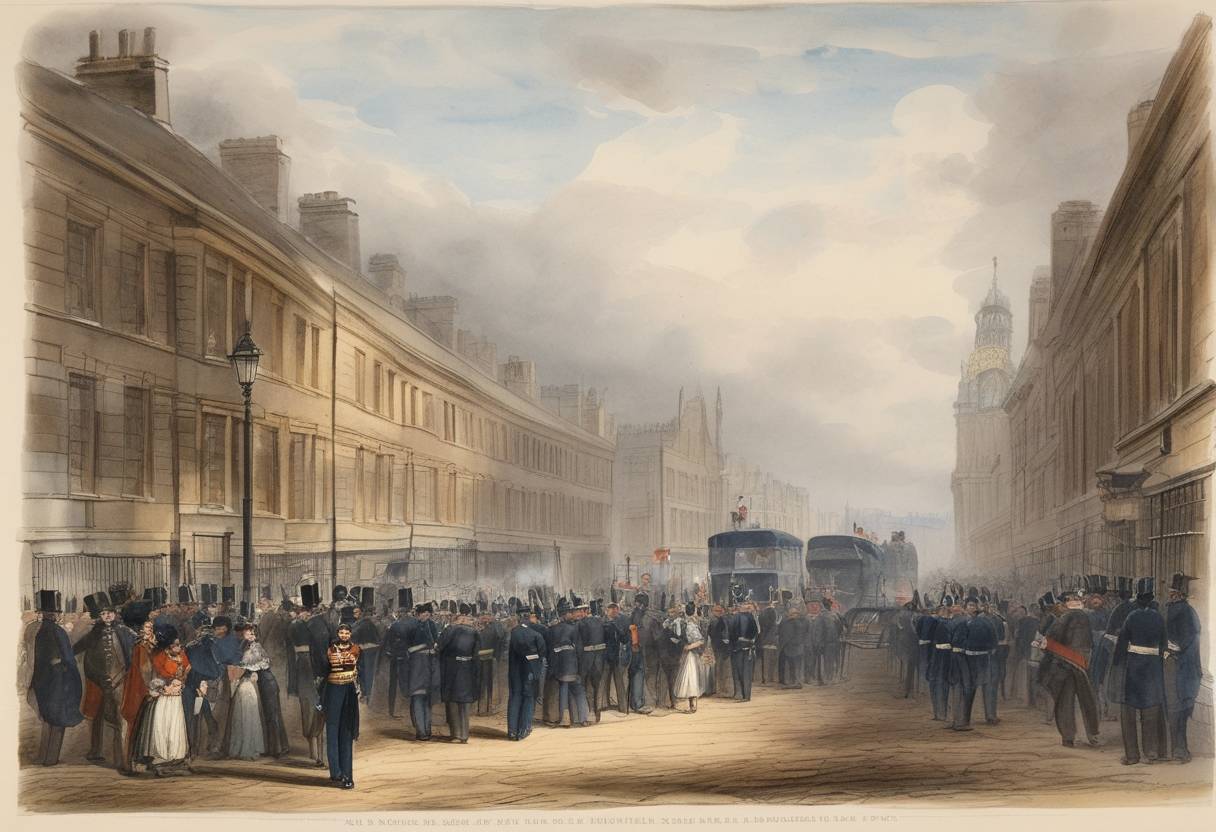
Watercolor painting based depiction of The English Act of Parliament known as Nye Chartism, formally the Metropolitan Police Act, reorganizes and standardizes police functions, principally in London, and lays foundations for modern policing methods. (1849)

Metropolitan Police Act of 1849

The Metropolitan Police Act of 1849, also referred to as part of the broader Nye Chartism movement, was a significant legislative act passed by the English Parliament on August 22, 1849. This Act played a critical role in reorganizing and standardizing police functions, particularly in London, and laid the fundamental foundations for modern policing methods.

Context

  • Industrial Revolution Impact: The rapid growth of cities during the Industrial Revolution had led to increased crime rates and disorder in urban areas. London, the burgeoning heart of the British Empire, was particularly affected.
  • Pre-existing Police Forces: The first steps towards organized policing in Britain began with the establishment of the Metropolitan Police in 1829 by then Home Secretary Sir Robert Peel. However, by 1849, various policing bodies operated inconsistently across different jurisdictions.

Key Provisions

  • Standardization: The Act sought to standardize police procedures across districts, allowing for more cohesive and efficient law enforcement.
  • Centralized Control: It placed the responsibility for policing under centralized control, reducing the influence of local governments and various other private entities that previously maintained separate constabularies.
  • Administrative Reforms: The Act introduced systems for recruitment, training, and accountability, ensuring a more professional police force.

Significance

  • Foundation of Modern Policing: The 1849 Act is considered foundational in the development of modern policing. It introduced principles of organization and accountability that are still in use today.
  • Influence on Global Policing: The model set by the Metropolitan Police Act influenced policing systems worldwide, particularly in the British colonies and eventually in other countries looking to reform or establish their own police forces.

Aftermath

The reforms initiated by the Metropolitan Police Act of 1849 fostered public trust and established a framework for progressive law enforcement characterized by its emphasis on crime prevention and community involvement. Over time, these reforms not only enhanced the efficacy of policing in London but also propelled similar changes in cities throughout the United Kingdom and beyond.