King Juan Carlos I Announces Abdication
2014 · Madrid, Spain
King Juan Carlos I of Spain announced his intention to abdicate the throne in favor of his son, Felipe VI.
January 31, 1578
The cornerstone of the El Escorial, a historical residence of the King of Spain, was laid. This magnificent architectural complex, which consists of a monastery, royal palace, museum, and library, is considered one of the most important architectural monuments of the Spanish Renaissance.
San Lorenzo de El Escorial, Spain | Spanish Monarchy
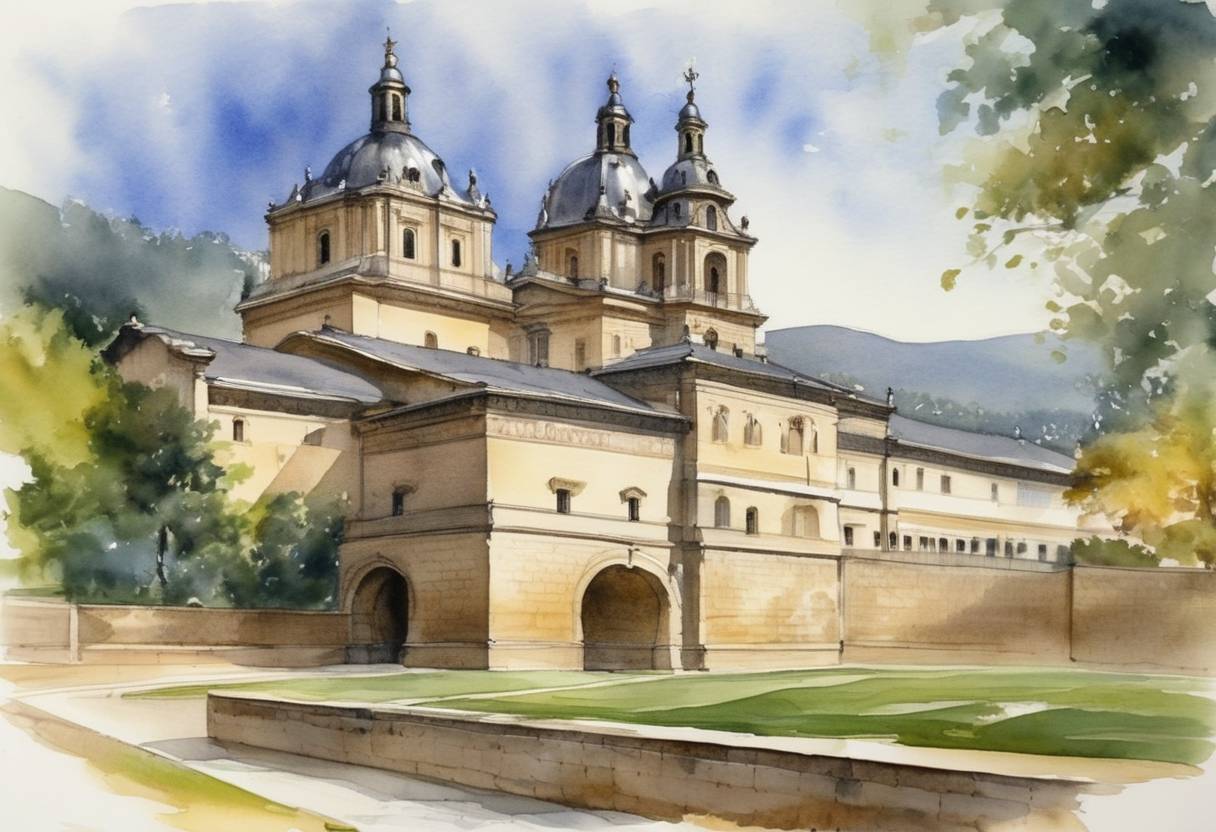
On January 31, 1578, the cornerstone for El Escorial, a grand architectural complex near Madrid, Spain, was laid. This event marked a significant moment in the architectural and cultural history of the Spanish Renaissance. Conceived by King Philip II, El Escorial was envisioned both as a palace and a monastery, embodying the dual nature of his reign—both secular and spiritual.
El Escorial was designed in the wake of Spain’s ascension as a preeminent European power during the reign of Philip II. The king wanted to commemorate the 1557 Spanish victory at the Battle of Saint Quentin against France. It was also intended as a family burial site, reflecting Philip’s deep religious commitment and desire to leave a lasting legacy.
Design and Construction: The project brought together elements of Italian Renaissance and Spanish architectural styles, featuring austere and geometrical facades. The primary architects included Juan Bautista de Toledo, an associate of Michelangelo, and later, Juan de Herrera, who introduced the innovative Herrerian style distinguished by simple, geometric lines and monumental scale.
Components of the Complex: El Escorial consists of a monastery, a royal palace, an impressive library, and a basilica, all organized around a grid-like layout reflecting the classical ideals of order and symmetry. Renowned for its grand hallways and elaborate frescoes, the basilica’s high altar and library are especially noted for their richly detailed decorations.
The construction of El Escorial bolstered Spain’s cultural and religious prominence during the Renaissance period. It became not only a symbol of the Spanish monarchy’s power but also an intellectual hub due to its extensive library collection, which included important scientific, religious, and classical texts.
Today, El Escorial is recognized as a UNESCO World Heritage site. It remains a testament to Philip II’s vision and continues to draw visitors for its historical importance and architectural splendor. Its influence extended beyond architecture, setting a precedence for future royal building projects in Europe and reinforcing Spain’s cultural dominance in the 16th century.
Source: whc.unesco.org