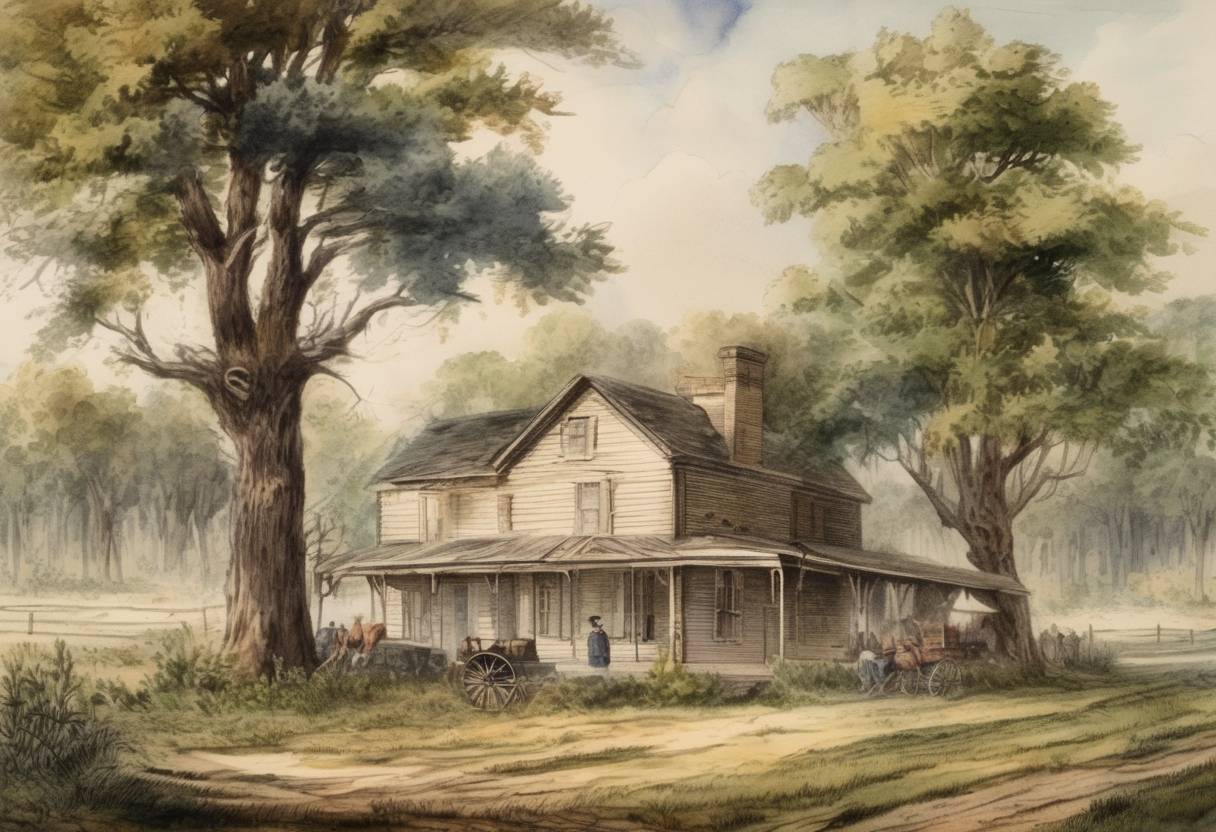
The Homestead Act of 1862
On May 20, 1862, President Abraham Lincoln signed the Homestead Act into law, a landmark piece of legislation that significantly influenced the westward expansion of the United States. This act was designed to encourage the settlement and development of the American frontier by providing 160 acres of public land to settlers for a nominal fee, provided they met certain conditions.
Context and Background
The idea of distributing public land to encourage settlement had been a topic of debate for decades. The concept was particularly popular among Northern politicians and settlers who saw it as a means to promote agriculture and expand the nation’s territory. However, Southern states, which relied heavily on slave labor, opposed the act, fearing it would lead to the creation of more free states.
The outbreak of the Civil War and the secession of Southern states from the Union removed much of the opposition to the legislation. This allowed the Republican-controlled Congress to pass the Homestead Act, aligning with their vision of a nation of independent farmers.
Key Provisions of the Act
Eligibility: The act was open to any adult citizen, or intended citizen, who had never borne arms against the U.S. government. This included freed slaves after the passage of the 13th Amendment.
Land Allocation: Each applicant could claim 160 acres of surveyed government land.
Requirements: To secure ownership, settlers were required to “improve” the land by building a dwelling and cultivating crops. They had to reside on the land for a minimum of five years.
Fee: A small registration fee was required, making land ownership accessible to many who could not afford to purchase land outright.
Impact and Consequences
The Homestead Act had a profound impact on the expansion and development of the American West. It led to the distribution of approximately 270 million acres of land, about 10% of the total area of the United States, to over 1.6 million homesteaders.
Positive Outcomes
Agricultural Development: The act contributed significantly to the agricultural development of the Great Plains and other regions.
Population Growth: It spurred population growth in the western territories, eventually leading to the admission of new states into the Union.
Challenges and Criticisms
Environmental and Practical Challenges: Many settlers faced harsh conditions, including difficult weather and poor soil quality, which made farming challenging.
Displacement of Indigenous Peoples: The act accelerated the displacement of Native American tribes, as settlers encroached on their lands, leading to numerous conflicts.
Speculation and Fraud: Some individuals and companies exploited the act, acquiring large tracts of land through fraudulent means.
Historical Significance
The Homestead Act of 1862 is considered a pivotal moment in American history, symbolizing the nation’s commitment to westward expansion and the ideal of self-sufficiency. It played a crucial role in shaping the demographic and economic landscape of the United States, fostering a spirit of opportunity and growth that characterized much of the 19th century. However, it also highlighted the complexities and consequences of expansion, particularly regarding the treatment of Native American populations and the environmental challenges of frontier life.