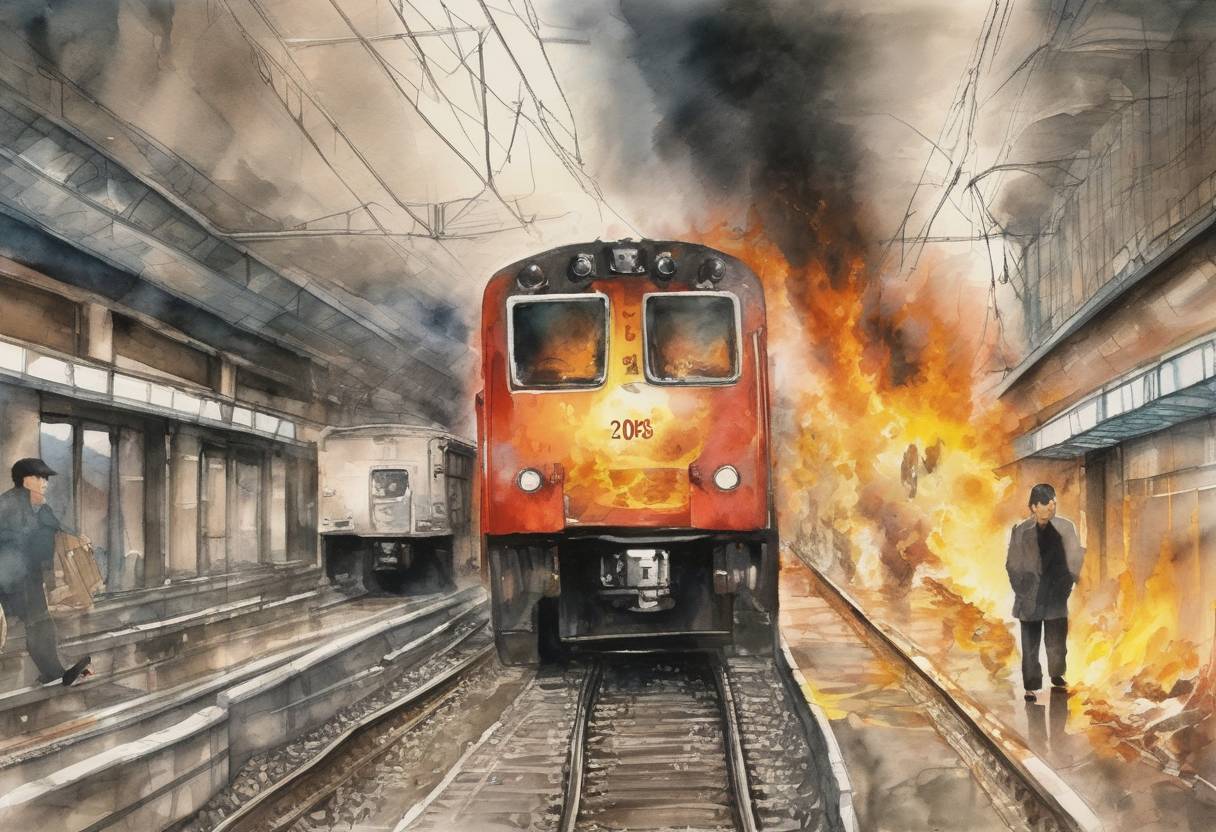
Daegu Subway Fire: February 18, 2003
On February 18, 2003, a tragic arson attack occurred on a subway train in Daegu, South Korea, resulting in the deaths of 192 people and injuring 151 others. This catastrophic event is one of the deadliest subway disasters in history and had profound implications for public safety and emergency response protocols in South Korea.
Background
Daegu, South Korea’s fourth-largest city, was in the midst of expanding its public transportation infrastructure to accommodate its growing population. The Daegu Metropolitan Subway was a crucial component of this expansion, providing efficient and affordable transit options for the city’s residents.
The Incident
- Location: The fire took place at the Jungangno Station, a busy hub in the Daegu subway system.
- Perpetrator: The attack was carried out by a 56-year-old man named Kim Dae-han, who was reportedly suffering from mental health issues. He boarded a train carrying a milk carton filled with a flammable liquid.
- Sequence of Events: Shortly after the train departed from the station, Kim ignited the liquid, causing a massive fire that quickly engulfed the train. The fire spread to another train that had entered the station, exacerbating the disaster.
Consequences
- Casualties: The fire resulted in the deaths of 192 people, with many victims succumbing to smoke inhalation. An additional 151 individuals were injured, some severely.
- Emergency Response: The incident exposed significant deficiencies in the emergency response and safety protocols of the subway system. Many passengers were trapped due to a lack of effective evacuation procedures and inadequate fire suppression systems.
- Public Outcry: The tragedy led to widespread public outrage and demands for accountability. It highlighted the need for improved safety measures and better mental health support systems.
- Safety Improvements: In response to the disaster, South Korean authorities implemented comprehensive reforms to enhance subway safety. These included the installation of fire-resistant materials, improved ventilation systems, and the development of more effective emergency evacuation plans.
- Legal and Social Repercussions: Kim Dae-han was arrested and later sentenced to life imprisonment. The incident also prompted a national conversation about mental health care and the importance of preventive measures to avert similar tragedies.
Historical Significance
The Daegu subway fire serves as a somber reminder of the potential consequences of inadequate safety measures and the importance of addressing mental health issues. It led to significant changes in public transportation safety standards in South Korea and underscored the need for vigilance in protecting public spaces from similar threats.
This tragic event remains a pivotal moment in South Korea’s history, shaping policies and public attitudes towards safety and mental health for years to come.