The Exposition Universelle of 1889
1889 · Paris, France
The Exposition Universelle opened in Paris, France, marking the completion of the Eiffel Tower and showcasing technological advancements of the era.
June 29, 1880
France annexed Tahiti, solidifying its control over the island and marking a significant expansion of French colonial influence in the Pacific.
Papeete, Tahiti | French government
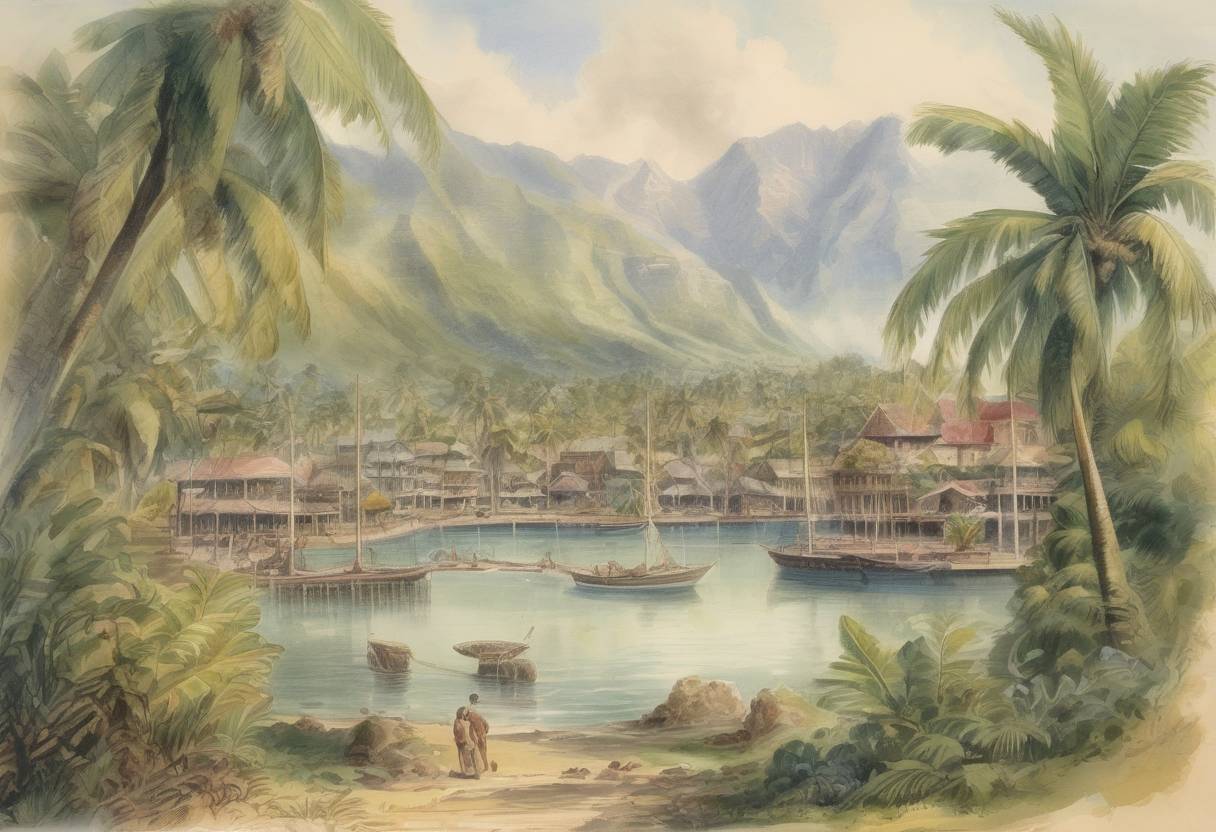
On June 29, 1880, France officially annexed Tahiti, marking a pivotal moment in the expansion of French colonial influence in the Pacific region. This event was the culmination of a series of interactions between France and the indigenous Polynesian kingdom that had begun decades earlier.
Tahiti, the largest island in French Polynesia, had been a point of interest for European powers since the late 18th century. The island was first visited by European explorers such as Samuel Wallis in 1767 and James Cook in the following years. By the early 19th century, missionaries from the London Missionary Society had established a presence on the island, influencing local politics and culture.
France’s interest in Tahiti intensified in the 1830s. In 1842, France established a protectorate over Tahiti and its dependencies, following a series of conflicts and negotiations with the local monarchy, led by Queen Pomare IV. The protectorate status allowed France to exert significant influence over the island’s external affairs while leaving internal governance largely in the hands of the Tahitian monarchy.
The road to full annexation was marked by tensions and conflicts, both internal and external. The French faced resistance from local leaders and occasional skirmishes with British interests in the region, who were also vying for influence. Over time, France strengthened its control, and the Tahitian monarchy’s power waned.
In 1880, King Pomare V, the last reigning monarch of Tahiti, was persuaded to cede his kingdom to France. On June 29, 1880, the formal annexation was declared, and Tahiti became a French colony. This transition was part of a broader French strategy to expand its colonial empire in the Pacific, which included other territories such as New Caledonia and the Marquesas Islands.
The annexation of Tahiti had several significant consequences:
Cultural Impact: The imposition of French colonial rule brought about changes in the social, cultural, and political landscape of Tahiti. French became the official language, and French laws and customs were introduced, leading to a gradual erosion of traditional Tahitian culture and governance.
Economic Changes: Under French rule, Tahiti’s economy was increasingly integrated into the global market, with an emphasis on the export of copra and other local products. Infrastructure development, such as roads and ports, was undertaken to support these economic activities.
Strategic Importance: For France, Tahiti and its surrounding islands served as a strategic outpost in the Pacific, enhancing its naval presence and securing trade routes.
Legacy: The annexation laid the groundwork for the modern political status of French Polynesia, which remains an overseas collectivity of France. The legacy of colonialism is still a topic of discussion and reflection in the region today.
In summary, the annexation of Tahiti by France on June 29, 1880, was a significant event in the history of the Pacific, reflecting the broader trends of European colonial expansion during the 19th century. It had lasting impacts on the cultural and political landscape of the region, effects that continue to be felt in contemporary times.
Source: en.wikipedia.org