1958 · Washington, D.C., United States
President Dwight D. Eisenhower signed the Alaska Statehood Act into law, which paved the way for Alaska to become the 49th state of the United States.
March 30, 1867
The United States purchased Alaska from Russia for $7.2 million, a deal negotiated by Secretary of State William H. Seward, later known as 'Seward's Folly.'
Washington, D.C., United States | United States Department of State
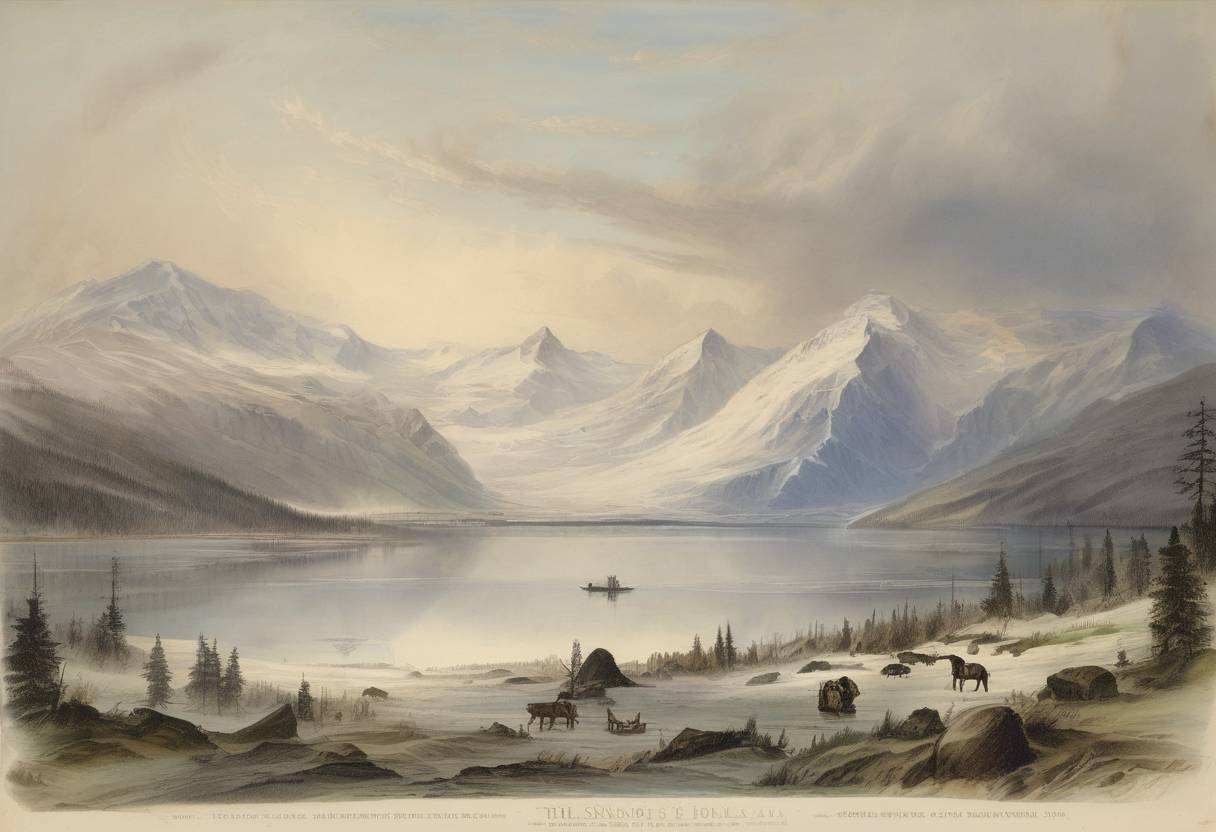
On March 30, 1867, the United States finalized the purchase of Alaska from the Russian Empire for $7.2 million, a transaction orchestrated by U.S. Secretary of State William H. Seward. This acquisition, often referred to at the time as “Seward’s Folly,” marked a significant expansion of U.S. territory and had lasting implications for the nation’s development.
Russian Interests: By the mid-19th century, Russia found its North American territories increasingly difficult to manage and defend, particularly in the face of potential British expansion from Canada. Additionally, the financial strain on Russia following the Crimean War made the sale of Alaska an appealing option.
American Expansionism: The United States, driven by the ideology of Manifest Destiny, was interested in expanding its territory. Seward, an ardent expansionist, saw the acquisition of Alaska as an opportunity to increase American influence in the Pacific and to access potential resources.
Initial Discussions: Negotiations began in earnest in March 1867, with Russian Minister to the United States, Eduard de Stoeckl, playing a key role in discussions with Seward.
Agreement Reached: The treaty was signed in the early hours of March 30, 1867. The agreed price of $7.2 million amounted to roughly two cents per acre for the vast territory.
Criticism: The purchase was met with skepticism and ridicule by many Americans, who viewed Alaska as a barren and frozen wasteland. The term “Seward’s Folly” was coined to mock the perceived imprudence of the acquisition.
Support: Despite the criticism, some recognized the strategic and economic potential of Alaska, including its natural resources and strategic location.
Ratification: The U.S. Senate ratified the treaty on April 9, 1867, and the formal transfer took place on October 18, 1867, a day now celebrated as Alaska Day.
Long-term Benefits: Over time, the value of Alaska became evident, particularly with the discovery of gold in the late 19th century and oil in the 20th century. The region’s vast natural resources and strategic military importance during World War II and the Cold War further underscored the wisdom of the purchase.
Statehood: Alaska eventually became the 49th state of the United States on January 3, 1959.
The purchase of Alaska exemplified the United States’ expansionist policies in the 19th century and highlighted the complexities of international diplomacy. It also set a precedent for future territorial acquisitions and underscored the importance of strategic foresight in national policy-making. Despite initial skepticism, the acquisition proved to be a pivotal moment in American history, contributing significantly to the nation’s economic and strategic strength.
Source: en.wikipedia.org