The Prohibition of Slavery in U.S. Territories: June 19, 1862
1862 · Washington D.C., United States
The U.S. Congress prohibits slavery in United States territories, nullifying the Dred Scott decision.
March 6, 1857
The U.S. Supreme Court delivers its decision in the Dred Scott v. Sandford case, ruling that African Americans cannot be American citizens and that Congress cannot prohibit slavery in the territories.
Washington D.C., United States | U.S. Supreme Court
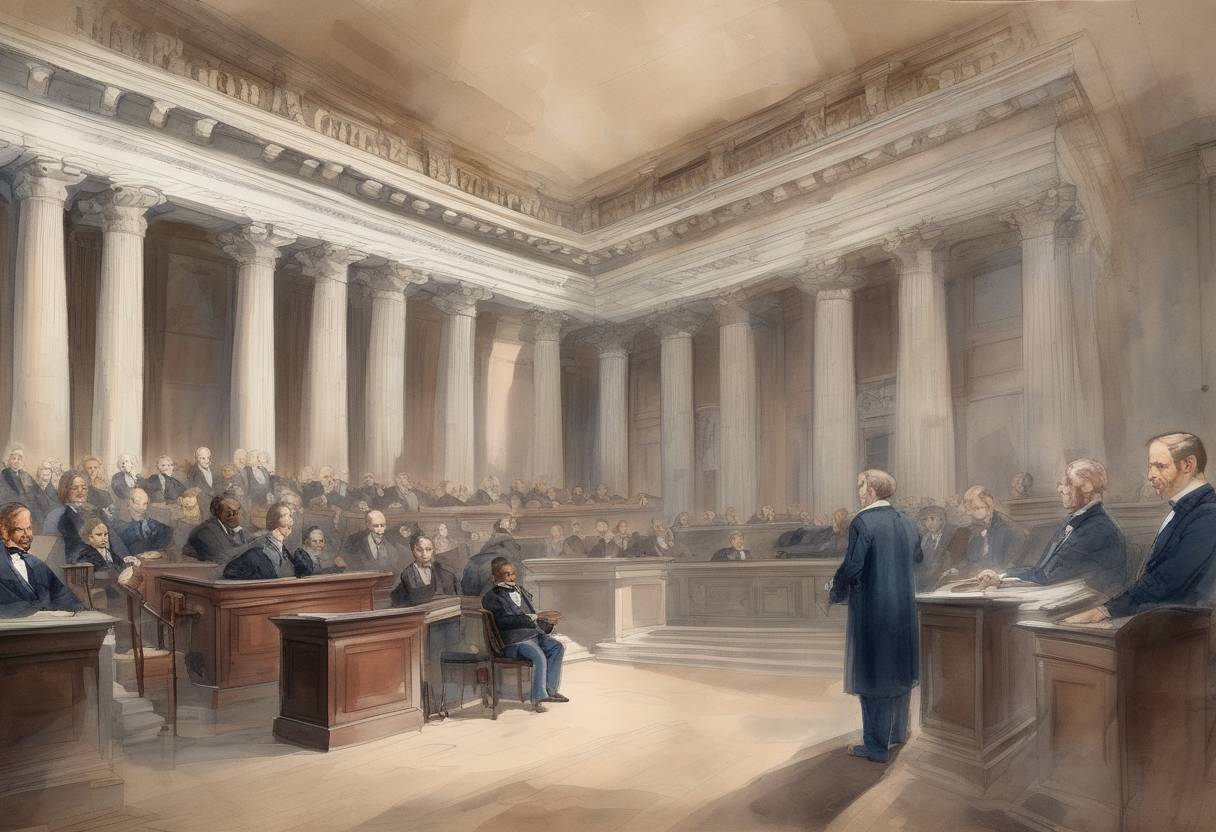
On March 6, 1857, the United States Supreme Court delivered its decision in the landmark case of Dred Scott v. Sandford. This decision is widely regarded as one of the most infamous rulings in the history of the U.S. Supreme Court due to its profound implications on the status of African Americans and the expansion of slavery in the United States.
Dred Scott was an enslaved African American man who had been taken by his owner, an army surgeon named Dr. John Emerson, from Missouri (a slave state) to Illinois and the Wisconsin Territory (both free regions). After Emerson’s death, Scott sued for his freedom on the grounds that his residence in free territories had made him a free man.
The Supreme Court, led by Chief Justice Roger B. Taney, ruled against Dred Scott in a 7-2 decision. The key points of the ruling were:
Citizenship: The Court declared that African Americans, whether enslaved or free, could not be considered American citizens and therefore had no right to sue in federal court. This decision effectively denied citizenship rights to all African Americans.
Congressional Power: The Court also ruled that Congress lacked the authority to prohibit slavery in the U.S. territories. This invalidated the Missouri Compromise of 1820, which had restricted slavery in certain territories.
Property Rights: The decision emphasized the protection of property rights, stating that enslaved people were property and that the Fifth Amendment protected slave owners from being deprived of their property without due process.
The Dred Scott decision had far-reaching consequences:
Political Tensions: The ruling exacerbated sectional tensions between the North and South, contributing to the polarization that eventually led to the American Civil War.
Impact on African Americans: It further entrenched the institution of slavery and denied African Americans any legal standing or protection under the Constitution.
Legal and Political Backlash: The decision was met with outrage in the North and among abolitionists, who viewed it as a grave injustice and a step backward for civil rights. It galvanized anti-slavery forces and played a significant role in the rise of the Republican Party.
Overturning the Decision: The Dred Scott decision was effectively overturned by the Civil War and the subsequent adoption of the 13th and 14th Amendments to the Constitution, which abolished slavery and established citizenship and equal protection under the law for all persons born or naturalized in the United States.
The Dred Scott v. Sandford case remains a pivotal moment in American history, illustrating the deep divisions over slavery and citizenship that plagued the nation in the 19th century.
Source: en.wikipedia.org