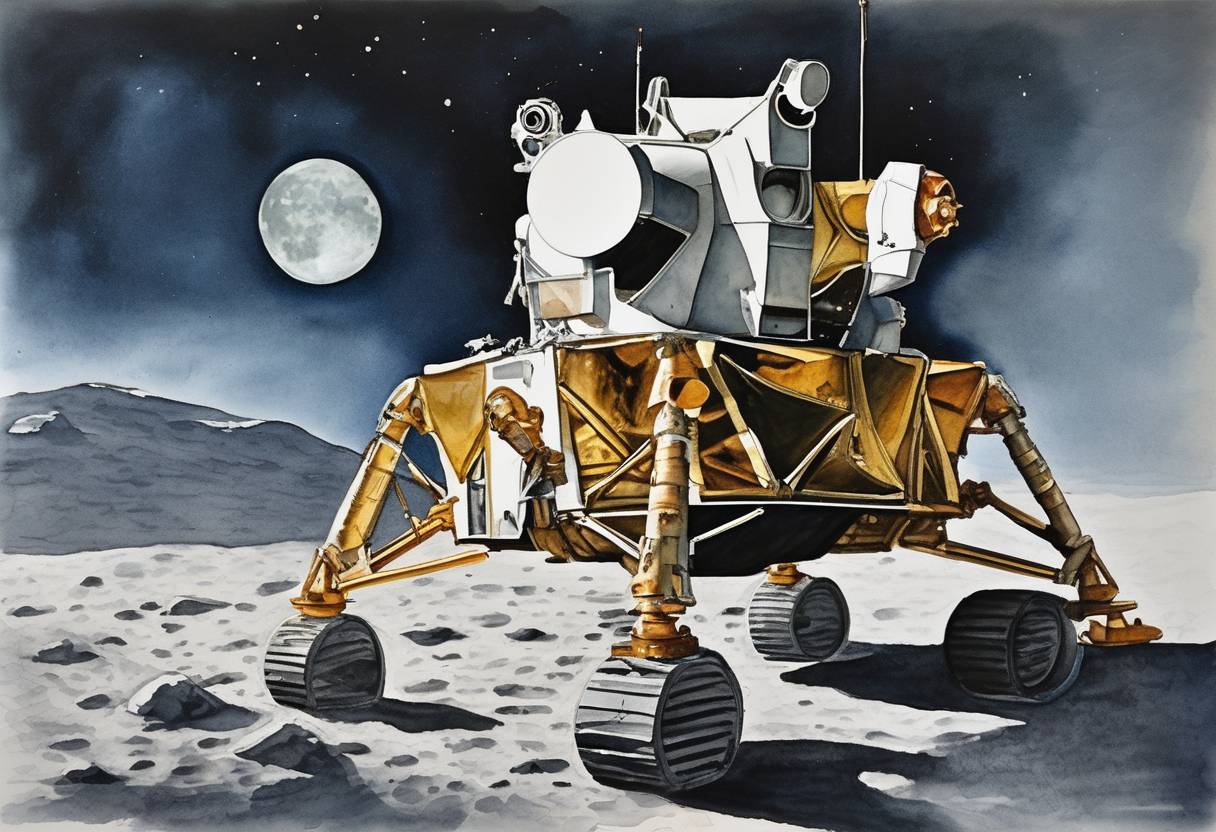
Apollo 11 Lunar Module “Eagle” Landing on the Moon
Overview
On July 20, 1969, the Apollo 11 mission achieved a monumental milestone in human history when the Lunar Module, known as “Eagle,” successfully landed on the Moon. This event marked the first time humans set foot on another celestial body, with astronaut Neil Armstrong becoming the first person to walk on the lunar surface.
Key Events Leading Up to the Landing
Apollo Program: Initiated by NASA in the early 1960s, the Apollo program aimed to land humans on the Moon and ensure their safe return to Earth. This ambitious goal was set by President John F. Kennedy in 1961.
Launch: Apollo 11 was launched from Kennedy Space Center in Florida on July 16, 1969, aboard a Saturn V rocket. The crew consisted of Commander Neil Armstrong, Command Module Pilot Michael Collins, and Lunar Module Pilot Edwin “Buzz” Aldrin.
Journey to the Moon: After a three-day journey, the spacecraft entered lunar orbit on July 19, 1969. The crew prepared for the descent to the Moon’s surface.
The Lunar Landing
Descent: On July 20, 1969, the Lunar Module “Eagle,” piloted by Armstrong and Aldrin, separated from the Command Module, “Columbia,” where Collins remained in orbit. The descent to the Moon’s surface was challenging, with Armstrong manually piloting the module to avoid a boulder-strewn area.
Landing: At 20:17 UTC, the Eagle landed in the Sea of Tranquility. Armstrong reported the successful landing with the words, “Houston, Tranquility Base here. The Eagle has landed.”
First Steps on the Moon
Neil Armstrong’s Historic Step: At 02:56 UTC on July 21, 1969, Neil Armstrong descended the ladder of the Lunar Module and set foot on the Moon, declaring, “That’s one small step for [a] man, one giant leap for mankind.” This moment was broadcast live to an estimated 600 million people on Earth.
Buzz Aldrin Joins: Shortly after Armstrong, Buzz Aldrin joined him on the lunar surface. The two astronauts spent approximately 2 hours and 15 minutes outside the module, conducting experiments, collecting samples, and taking photographs.
Aftermath and Significance
Return to Earth: After their historic moonwalk, Armstrong and Aldrin rejoined Collins in the Command Module. The crew safely returned to Earth, splashing down in the Pacific Ocean on July 24, 1969.
Historical Impact: The Apollo 11 mission fulfilled President Kennedy’s goal and demonstrated the technological prowess of the United States during the Cold War era. It inspired generations and marked a significant achievement in space exploration.
Legacy: The success of Apollo 11 paved the way for subsequent lunar missions and contributed to our understanding of the Moon. It remains a symbol of human ingenuity and the spirit of exploration.
The Apollo 11 mission stands as a testament to human ambition and the pursuit of knowledge, forever marking July 20, 1969, as a pivotal date in the annals of history.