October Revolution: The Bolshevik Assault on the Winter Palace
1917 · Petrograd, Russia
The October Revolution begins in Russia with the Bolshevik-led assault on the Winter Palace, marking a crucial turn in the Russian Revolution.
April 16, 1917
Vladimir Lenin returned to Petrograd from exile in Switzerland, a pivotal moment in the Russian Revolution. His return was facilitated by the Germans, who hoped he would create further instability in Russia.
Petrograd, Russia | Bolshevik Party
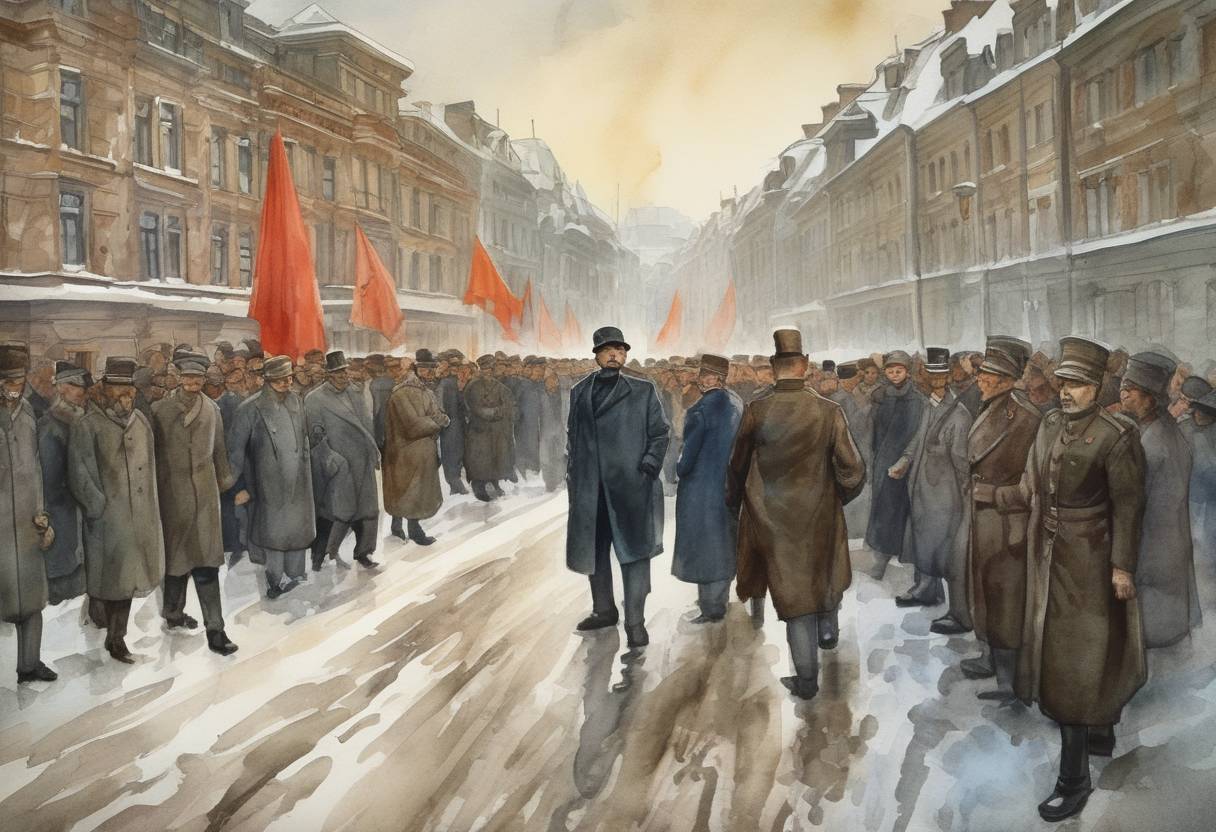
On April 16, 1917, Vladimir Lenin, a key figure in the Russian Revolution, returned to Petrograd (now St. Petersburg) from exile in Switzerland. This event marked a pivotal moment in the Russian Revolution, significantly influencing the course of Russian and world history.
Russian Revolution of 1917: The revolution began in February 1917, leading to the abdication of Tsar Nicholas II and the establishment of a provisional government. However, this government struggled to address the demands of the Russian populace, including ending Russia’s involvement in World War I and addressing severe economic hardships.
Lenin’s Exile: Lenin had been living in exile in Switzerland since 1900, with brief returns to Russia. During his time in exile, he developed his revolutionary theories and maintained communication with other Bolshevik leaders.
German Facilitation: Lenin’s return was facilitated by the German government, which hoped that his presence in Russia would exacerbate political instability and hasten Russia’s withdrawal from World War I. The Germans provided Lenin and his entourage with a sealed train to travel through Germany to Sweden, from where they continued to Russia.
Arrival in Petrograd: Lenin arrived at the Finland Station in Petrograd on April 16, 1917. His arrival was met with enthusiasm by Bolshevik supporters, who saw him as a leader capable of steering the revolution towards their goals.
April Theses: Shortly after his return, Lenin delivered the “April Theses,” a series of directives calling for the overthrow of the provisional government, the transfer of power to the Soviets (workers’ councils), and the withdrawal of Russia from World War I. These theses became a blueprint for the Bolshevik strategy.
Bolshevik Influence: Lenin’s return energized the Bolshevik Party, which began to gain significant influence among the working class and soldiers. His leadership and ideas played a crucial role in the Bolshevik seizure of power during the October Revolution later that year.
Historical Consequences: Lenin’s return and subsequent actions set the stage for the establishment of a communist government in Russia, leading to the creation of the Soviet Union. This had profound implications for global politics throughout the 20th century, influencing the spread of communism and the dynamics of the Cold War.
In summary, Lenin’s return to Petrograd on April 16, 1917, was a turning point in the Russian Revolution, catalyzing the events that led to the Bolshevik rise to power and the eventual formation of the Soviet Union. His strategic leadership and revolutionary vision were instrumental in shaping the future of Russia and the world.
Source: en.wikipedia.org