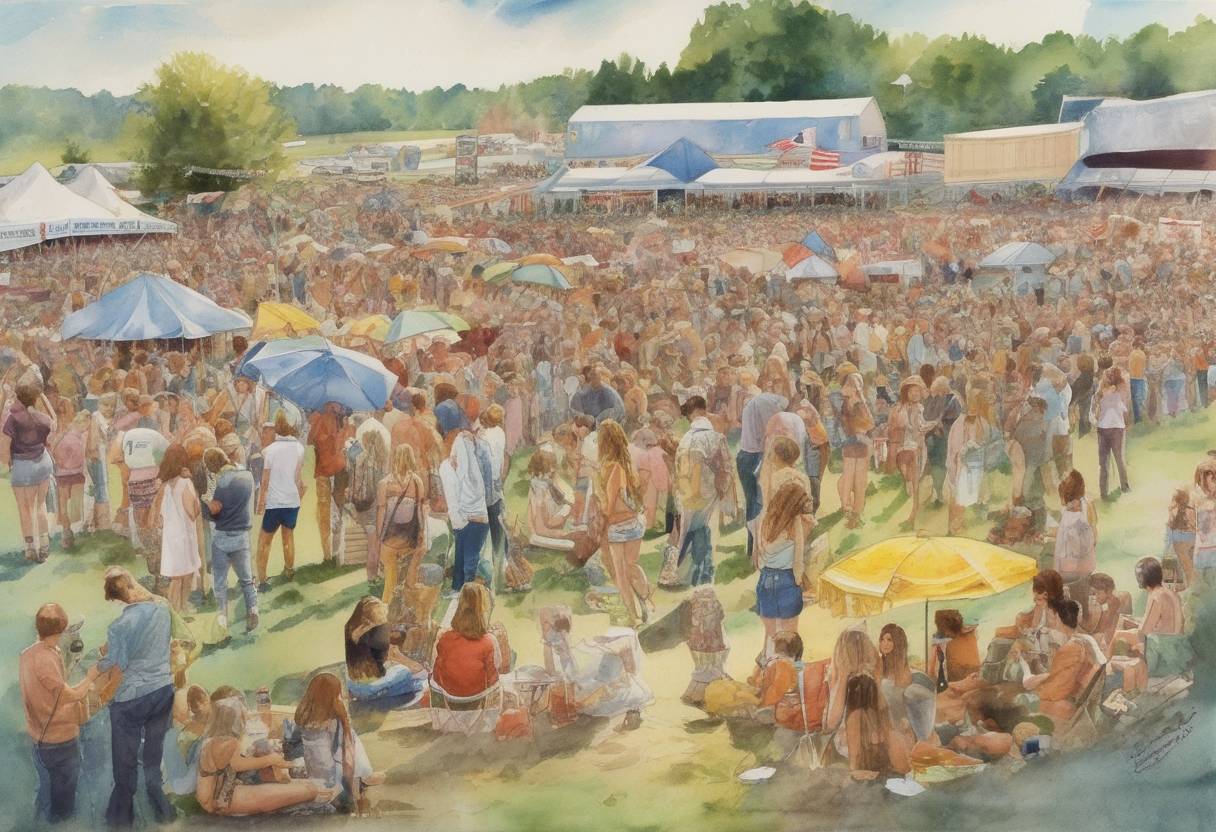
The Conclusion of the Woodstock Music & Art Fair: August 18, 1969
The Woodstock Music & Art Fair, commonly referred to simply as Woodstock, concluded on August 18, 1969. This iconic event took place on a 600-acre dairy farm in Bethel, New York, and has since become a symbol of the 1960s counterculture movement. Here is a detailed account of the festival’s conclusion and its broader historical significance.
Background
- Planning and Location: Originally intended to be held in Wallkill, New York, the festival faced local opposition and was relocated to Max Yasgur’s farm in Bethel, New York. The event was organized by Michael Lang, Artie Kornfeld, Joel Rosenman, and John P. Roberts.
- Dates: Woodstock was scheduled to run from August 15 to August 17, 1969, but extended into the morning of August 18 due to delays and the sheer number of performances.
The Event
- Attendance: Although organizers anticipated around 50,000 attendees, the festival drew an estimated 400,000 people, far exceeding expectations and transforming it into a free event due to the overwhelming crowd.
- Performances: The festival featured 32 acts, including legendary performances by artists such as Jimi Hendrix, Janis Joplin, The Who, and Santana. Jimi Hendrix’s rendition of “The Star-Spangled Banner” became one of the most memorable moments of the festival.
- Challenges: The event faced numerous logistical challenges, including traffic jams, food shortages, and inclement weather. Despite these issues, the festival maintained a peaceful atmosphere, embodying the ideals of peace and love.
Conclusion on August 18, 1969
- Final Performances: The festival concluded with performances by artists such as Crosby, Stills, Nash & Young and Jimi Hendrix, who played to a significantly smaller crowd as many attendees had already begun their journey home.
- Legacy: Woodstock is often hailed as a pivotal moment in music history and a defining event of the 1960s counterculture. It demonstrated the power of music as a unifying force and highlighted the era’s social and political movements.
Aftermath and Significance
- Cultural Impact: Woodstock became a symbol of the peace and music movement, influencing future music festivals and the broader cultural landscape.
- Documentary and Album: The festival was immortalized in the 1970 documentary film “Woodstock” and its accompanying soundtrack, both of which helped cement its legendary status.
- Anniversaries and Tributes: Over the years, Woodstock has been commemorated through various anniversary events and tributes, reflecting its enduring legacy in popular culture.
In conclusion, the Woodstock Music & Art Fair’s conclusion on August 18, 1969, marked the end of a historic gathering that celebrated music, peace, and the spirit of the 1960s. Its impact continues to resonate, symbolizing a unique moment in American cultural history.