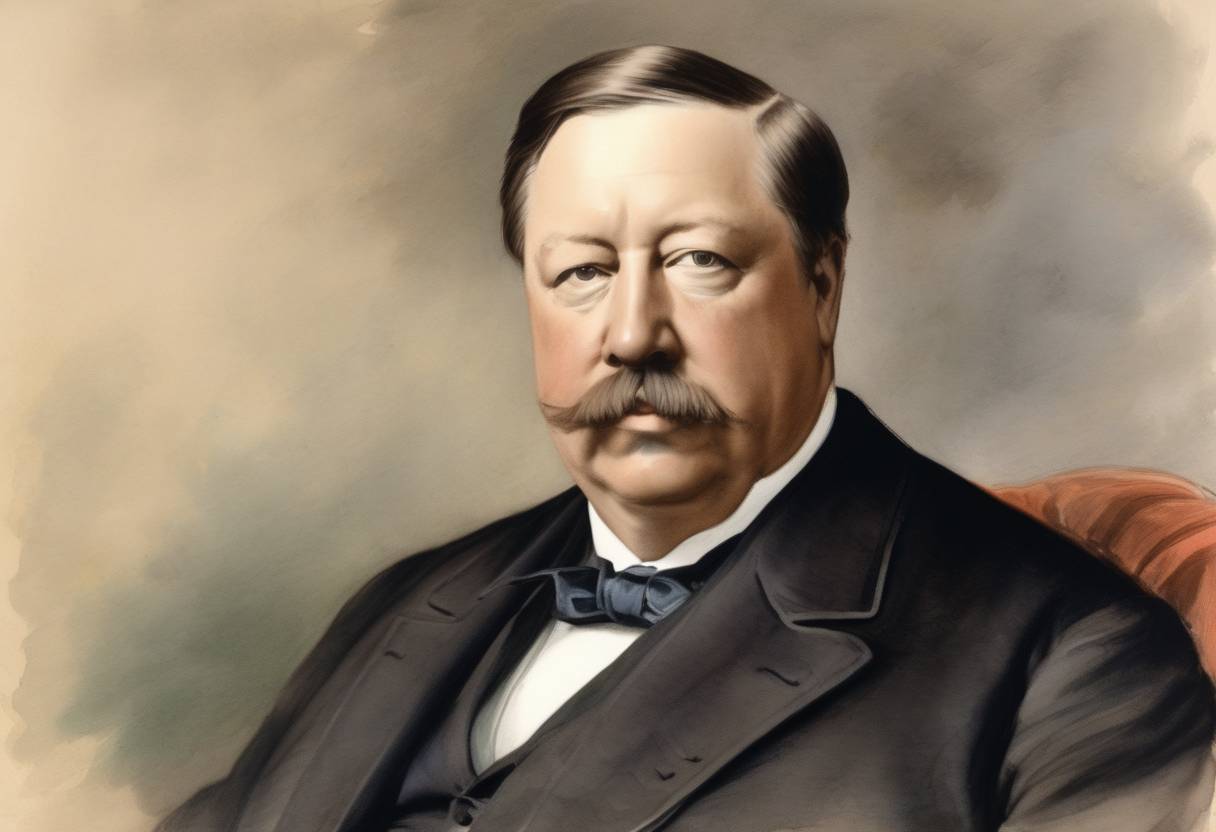
Birth of William Howard Taft
William Howard Taft was born on September 15, 1857, in Cincinnati, Ohio, into a prominent family with a rich political and legal heritage. His father, Alphonso Taft, served as Secretary of War and Attorney General under President Ulysses S. Grant, which provided young Taft with early exposure to politics and public service.
Early Life and Education
From a young age, Taft was known for his intelligence and diligence. He attended Woodward High School in Cincinnati and later entered Yale College, graduating second in his class in 1878. He then pursued legal studies at the University of Cincinnati Law School, earning his degree in 1880.
Career Achievements
Taft’s career was marked by a series of prominent roles within the United States government, reflecting a deep commitment to both political and judicial service:
27th President of the United States (1909-1913): Taft’s presidency is remembered for his efforts to continue Theodore Roosevelt’s Progressive reforms, though he faced challenges from both Progressive and conservative factions within his party.
10th Chief Justice of the United States (1921-1930): After his presidency, Taft achieved his longtime ambition of serving on the Supreme Court. Appointed by President Warren G. Harding, Taft remains the only individual to have held both the presidency and the position of Chief Justice. His tenure contributed significantly to the modernization and efficiency of the Court.
Historical Significance
Taft’s unique legacy as both a president and a chief justice highlights the interplay between the executive and judicial branches of the U.S. government during the early 20th century. His influence extended beyond policy and legal decision-making, playing a pivotal role in shaping the administrative functions of the Supreme Court and emphasizing a strong belief in judicial integrity and governance.
Conclusion
William Howard Taft’s life and career provide a fascinating insight into the workings of American political and judicial systems in the early 1900s. His contributions continue to be studied and respected for their impact on American legal and political history.