708 · Rome, Papal States
Sisinnius is elected as Pope, succeeding Pope John VII. His papacy is notably brief, lasting only around three weeks due to his poor health.
September 6, 1276
Pope John XXI was elected as the head of the Catholic Church, succeeding Adrian V. His brief papacy would later end with a tragic accident.
Viterbo, Papal States | Catholic Church
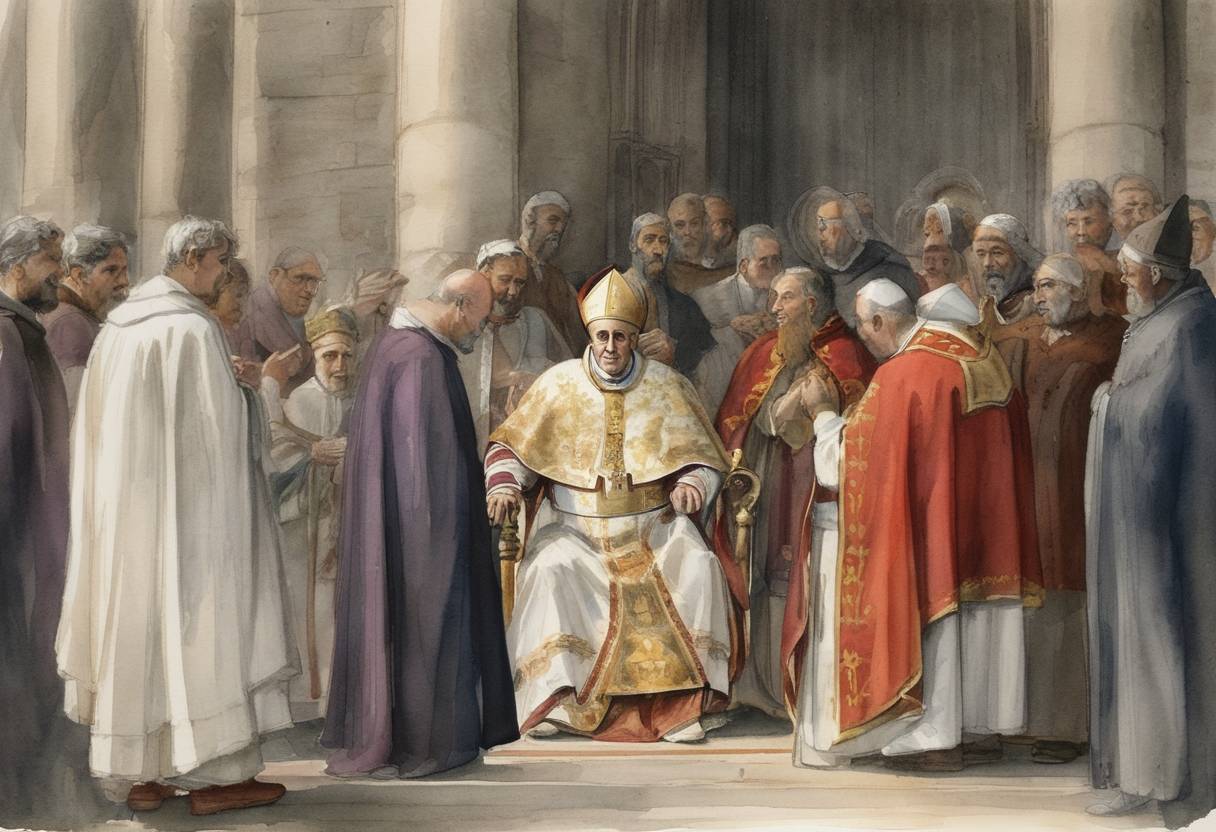
On September 6, 1276, Pedro Julião, better known as Pope John XXI, was elected as the head of the Catholic Church. He succeeded Pope Adrian V. Born around 1215 in Lisbon, Portugal, Pedro Julião was a renowned scholar and physician before ascending to the papacy. He studied medicine in Paris and later taught at the University of Siena, earning a reputation for his medical expertise and his scholarly works, particularly his treatise on logic, “Summulae Logicales.”
The election of Pope John XXI took place during a period of significant turmoil and swift changes in the papacy, marking the third election within a single year. Following the death of Pope Adrian V, who had a notably brief pontificate of just over a month, the cardinals convened in Viterbo, Italy, the location where the papal election was customarily held during this era.
Pope John XXI’s tenure was characterized by his intent to reform the Church administration and his focus on resolving disputes within the Church and with secular authorities. Despite the brevity of his papacy, he attempted to mediate in the political conflicts of the time and sought to assert papal authority.
Unfortunately, Pope John XXI’s papacy was cut short in a tragic accident. In May 1277, just a few months after his election, the ceiling of his study in the papal palace at Viterbo collapsed, severely injuring him. He succumbed to his injuries on May 20, 1277, marking one of the shortest papacies in history.
Despite the short duration of his time as pope, Pope John XXI remains a figure of interest due to his scholarly background and his abrupt death. His election reflects the turbulent nature of the papal succession during the late 13th century, a time marked by political instability and frequent changes in leadership within the Catholic Church.
Source: en.wikipedia.org