Algeria's Independence from France: July 3, 1962
1962 · Algiers, Algeria
The French President Charles de Gaulle declared Algeria independent from France, ending the Algerian War of Independence.
October 17, 1961
In Paris, a peaceful demonstration by Algerians requesting independence from France ended in tragedy as police responded with violence. The police crackdown resulted in the deaths of dozens of protestors, though the exact number remains disputed, with some estimates suggesting up to 200 deaths.
Paris, France | French Police
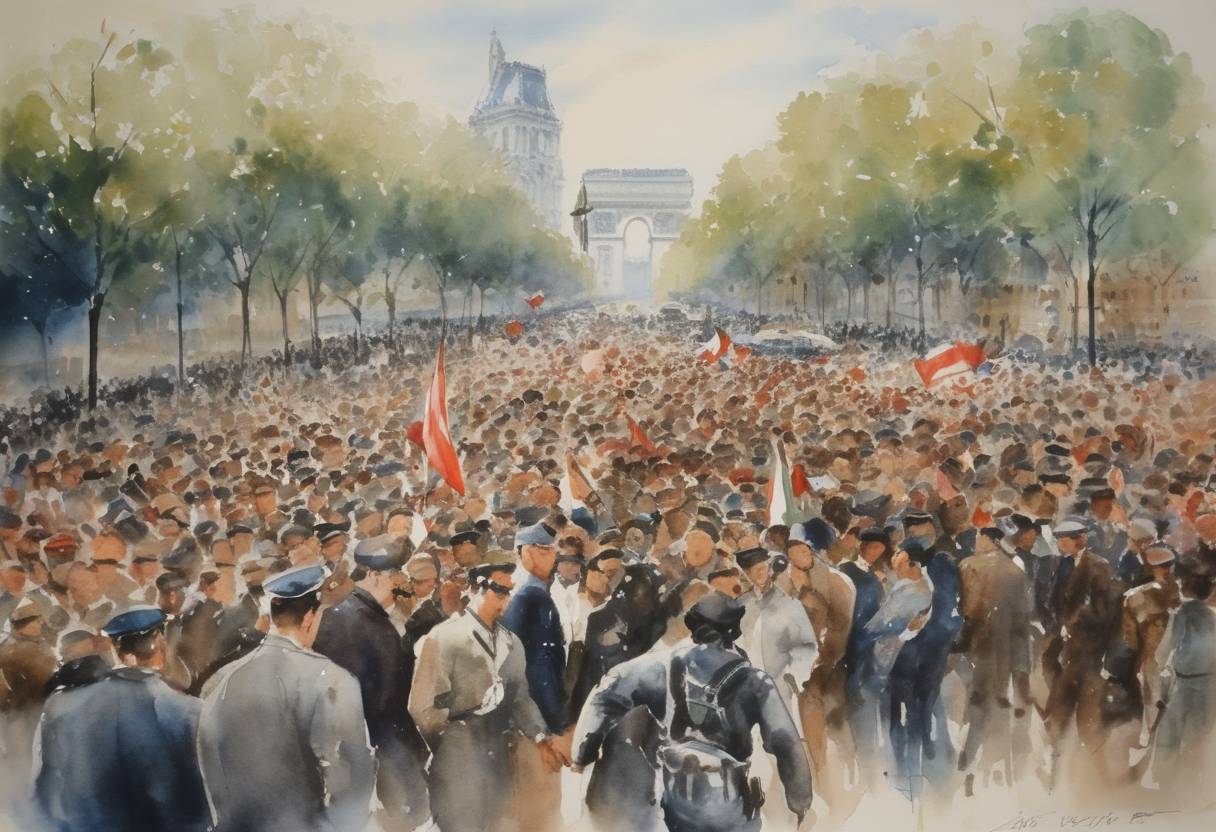
On October 17, 1961, in the heart of Paris, a peaceful demonstration organized by the Algerian National Liberation Front (FLN) turned tragically violent. Thousands of Algerians took to the streets to protest against a curfew imposed specifically on them amidst the Algerian War of Independence (1954-1962) between France and its colony, Algeria.
By 1961, the Algerian War of Independence was in full swing, with increasing violence and tensions on both sides. The FLN had been actively advocating for Algerian independence, using both political means and guerilla tactics to confront French colonial rule. In response to a series of attacks attributed to the FLN in France, the Paris police prefect Maurice Papon introduced a discriminatory curfew targeting the Algerian population in the Paris region.
The FLN called for a peaceful protest to oppose this curfew and demonstrate against broader issues of racial discrimination and colonial oppression. An estimated 20,000 to 30,000 Algerians, including men, women, and children, marched through the streets of Paris. They assembled in silence, reflecting their peaceful intentions and the vast support for their cause among the Algerian diaspora.
The police, ordered to suppress the demonstration, responded with unexpected ferocity. The peaceful protest quickly turned into a scene of violence as police resorted to physical force, including beatings and shooting. Protestors were chased down, arrested en masse, and in many harrowing instances, thrown into the river Seine.
The precise number of casualties from this crackdown remains disputed. Initial official reports attempted to downplay the scale of violence, acknowledging only a handful of deaths. However, subsequent investigations and testimonies have suggested a much higher death toll, with some estimates indicating that up to 200 demonstrators may have been killed either by direct police action or by drowning. The exact number remains a point of contention and a part of the broader narrative of France’s struggle with its colonial past.
The October 17 massacre was largely censored in the media at the time, with substantial details only emerging decades later. This event marked a significant moment in France’s colonial history, highlighting the brutal measures employed to maintain control and the escalating nature of the conflict. It also represents an ongoing struggle within France to reconcile with its colonial past and to acknowledge incidents where state violence was inflicted upon marginalized groups. The massacre has been the subject of various cultural and academic explorations, symbolizing the fight for acknowledgment and justice by the Algerian community in France.
This event underscored the profound tensions underlying French society during the decolonization era and was a pivotal point leading up to Algeria achieving independence in 1962.
Source: en.wikipedia.org