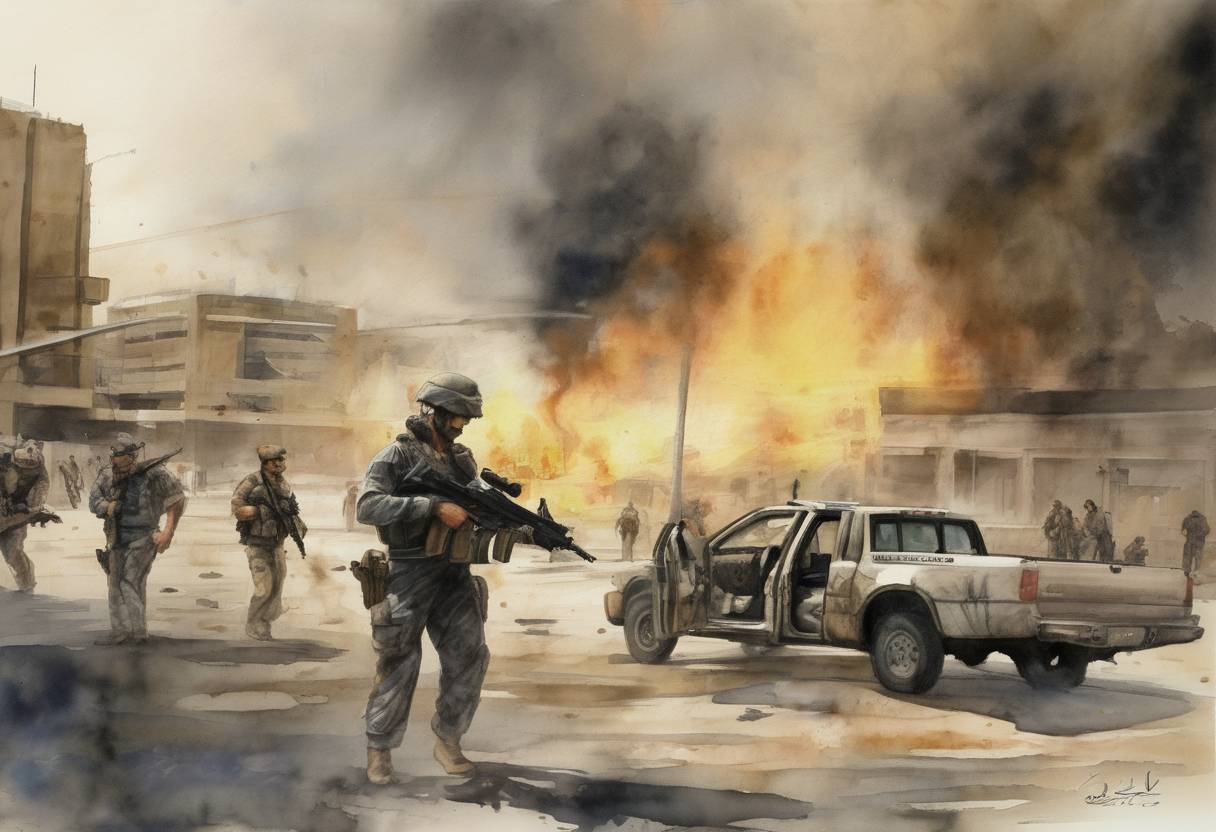
The Blackwater Baghdad Shootings: September 16, 2007
On September 16, 2007, a tragic and controversial incident unfolded in Nisour Square, Baghdad, involving employees of Blackwater Security Consulting, a private military company contracted by the United States government. This event resulted in the deaths of 17 Iraqi civilians and injuries to 20 others, significantly impacting U.S.-Iraq relations and sparking international outrage.
Context
Blackwater’s Role: Blackwater Security Consulting, founded by Erik Prince, was one of the most prominent private military companies operating in Iraq during the U.S. occupation. The firm was contracted to provide security services for U.S. diplomats and other officials in the volatile environment of post-invasion Iraq.
Security Environment: By 2007, Iraq was embroiled in sectarian violence and insurgency, creating a highly dangerous environment for both military personnel and civilians. Private security firms like Blackwater were employed to mitigate risks to U.S. personnel.
The Incident
Nisour Square: On the day of the incident, a Blackwater convoy was escorting a U.S. State Department official through Baghdad. As the convoy entered Nisour Square, a bustling area in the city, Blackwater guards opened fire on civilians.
Sequence of Events: The Blackwater personnel claimed they were responding to an attack, alleging that a car bomb threat and gunfire from insurgents prompted their actions. However, multiple eyewitness accounts and investigations contradicted this narrative, suggesting that the convoy fired indiscriminately without provocation.
Aftermath and Consequences
Immediate Reactions: The shootings drew immediate condemnation from the Iraqi government, which labeled the incident a “massacre” and demanded accountability. The event exacerbated tensions between Iraq and the United States, with calls for the expulsion of Blackwater from the country.
Legal Proceedings: The incident led to a series of legal battles in the United States. In 2014, four Blackwater guards were convicted on various charges, including murder and manslaughter. However, in December 2020, then-President Donald Trump issued pardons to the convicted guards, a decision that sparked widespread criticism.
Impact on Private Military Contractors: The Nisour Square shootings highlighted the controversial role of private military contractors in conflict zones. It raised questions about accountability, oversight, and the legal frameworks governing such entities, leading to increased scrutiny and calls for reform.
Broader Historical Significance
U.S.-Iraq Relations: The incident strained diplomatic relations and fueled anti-American sentiment in Iraq, complicating the U.S. mission in the region.
Policy Changes: In the aftermath, there were efforts to tighten regulations on private military companies, both in terms of operational conduct and legal accountability, though challenges remain in effectively implementing these measures.
The Blackwater Baghdad shootings remain a poignant reminder of the complexities and ethical dilemmas associated with the use of private military forces in conflict zones. The incident underscores the importance of accountability and the need for robust oversight mechanisms to prevent similar tragedies in the future.