Establishment of the Second Federal Republic of Mexico
1846 · Mexico City, Mexico
The Second Federal Republic of Mexico was established after the fall of the First Mexican Republic.
April 10, 1864
Archduke Maximilian of Austria accepted the offer from Napoleon III to become Emperor of Mexico, leading to the establishment of the Second Mexican Empire.
Miramar, Austria | Second Mexican Empire
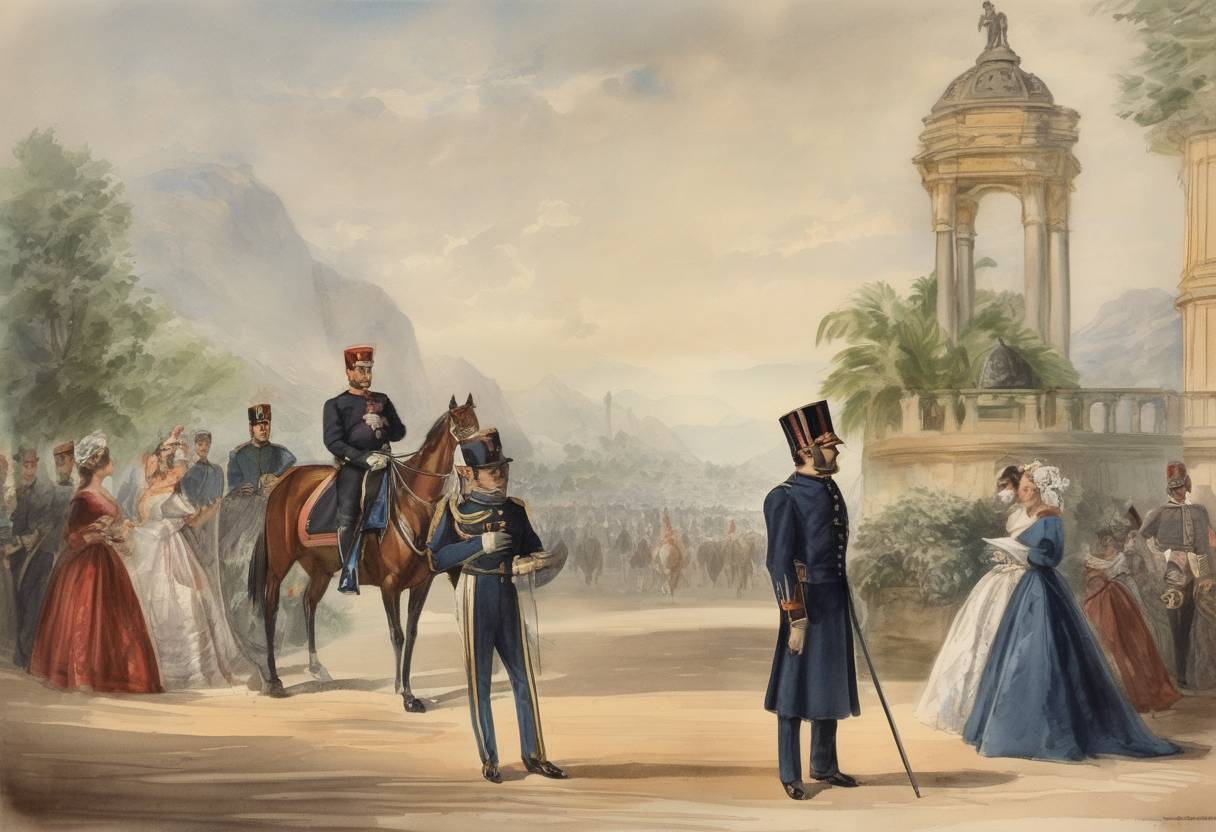
On April 10, 1864, Archduke Maximilian of Austria formally accepted the offer from Napoleon III of France to become the Emperor of Mexico, marking a pivotal moment in the establishment of the Second Mexican Empire. This event was a significant chapter in the complex interplay of European and American politics during the 19th century.
The roots of this event trace back to the political instability in Mexico following its independence from Spain in 1821. By the mid-19th century, Mexico was embroiled in financial difficulties and internal conflicts, including the Reform War (1857-1861) between liberals and conservatives. The liberal government of Benito Juárez suspended foreign debt payments, prompting France, along with Britain and Spain, to intervene militarily in 1861.
Napoleon III, seeking to expand French influence and establish a monarchy in the Americas, saw an opportunity to install a European ruler in Mexico. The French forces, after initial setbacks, captured Mexico City in 1863, paving the way for the establishment of a puppet regime.
Archduke Maximilian, a member of the Habsburg dynasty and brother to the Austrian Emperor Franz Joseph I, was approached by Mexican conservatives and Napoleon III to assume the throne. Despite initial reluctance and the condition that his rule be supported by a plebiscite, Maximilian accepted the offer on April 10, 1864. He was persuaded by the promise of support from the French military and the allure of establishing a modern, progressive monarchy.
Maximilian and his wife, Empress Carlota, arrived in Mexico in May 1864. The Second Mexican Empire was officially established, with Maximilian attempting to implement liberal reforms, including land redistribution and religious freedom, which alienated his conservative supporters. His reign was marked by efforts to modernize the country but was constantly undermined by ongoing resistance from republican forces loyal to Benito Juárez.
The Second Mexican Empire faced insurmountable challenges. The United States, adhering to the Monroe Doctrine, refused to recognize Maximilian’s rule and supported Juárez’s republican forces. The end of the American Civil War in 1865 allowed the U.S. to increase pressure on France to withdraw its troops from Mexico.
In 1866, facing mounting domestic opposition and international pressure, Napoleon III withdrew French military support. Isolated and unable to maintain control, Maximilian’s regime quickly crumbled. He was captured by republican forces in 1867 and executed on June 19, marking the end of the Second Mexican Empire.
Maximilian’s brief reign had lasting impacts on Mexican history, highlighting the dangers of foreign intervention and the resilience of republican ideals. His execution underscored the determination of the Mexican people to resist external domination and maintain sovereignty.
Source: en.wikipedia.org