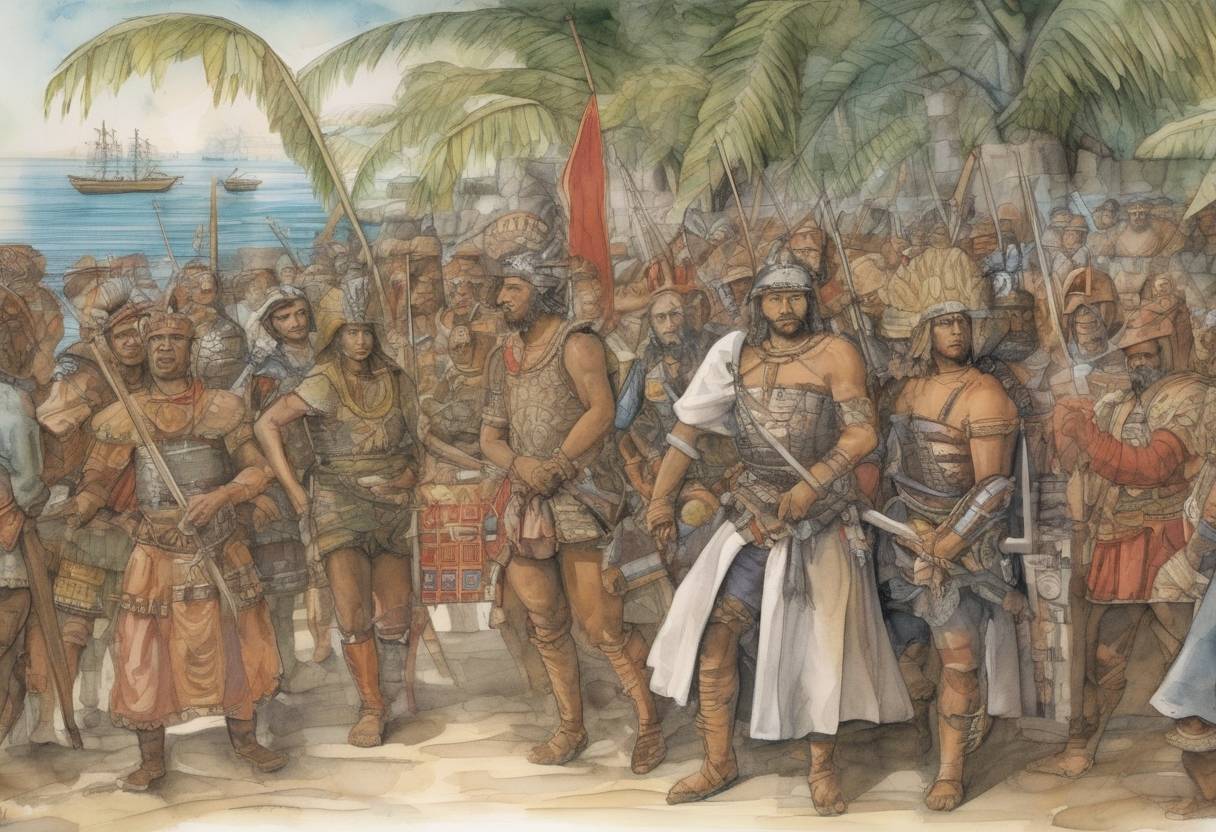
Hernán Cortés Arrives in Mexico: March 4, 1519
On March 4, 1519, Hernán Cortés, a Spanish conquistador, landed on the coast of what is now Mexico, marking the beginning of the Spanish conquest of the Aztec Empire. This event set in motion a series of encounters and conflicts that would dramatically alter the course of history in the Americas.
Context and Background
Spanish Exploration: By the early 16th century, Spain had established itself as a dominant maritime power, driven by the quest for new territories, wealth, and the spread of Christianity. The success of Christopher Columbus’s voyages had opened up the New World to European exploration and conquest.
Cortés’s Expedition: Hernán Cortés was appointed by the Governor of Cuba, Diego Velázquez, to lead an expedition to the mainland. Initially, Velázquez attempted to revoke Cortés’s command due to mistrust, but Cortés proceeded regardless, setting sail with a fleet of 11 ships, approximately 500 men, 13 horses, and a small number of cannons.
Arrival in Mexico
Landing at Cozumel: Cortés first made landfall on the island of Cozumel, where he began to gather intelligence about the mainland and the powerful Aztec Empire. He also acquired a Spanish castaway, Gerónimo de Aguilar, who had learned the local Maya language and would serve as an interpreter.
Establishing a Foothold: On March 4, 1519, Cortés and his men landed on the mainland near present-day Veracruz. This strategic location allowed him to establish a base for further exploration and conquest.
Key Events Following the Arrival
Alliance Building: Cortés quickly realized the importance of forming alliances with indigenous groups who were hostile to the Aztecs. He forged crucial alliances with the Totonac and Tlaxcalan peoples, who provided him with additional troops and support.
Encounter with Moctezuma II: Cortés’s arrival was reported to Moctezuma II, the Aztec emperor, who initially attempted to placate the Spaniards with gifts, hoping to avoid conflict. However, Cortés was determined to reach Tenochtitlán, the Aztec capital.
The March to Tenochtitlán: In November 1519, Cortés and his forces entered Tenochtitlán, where they were initially received as guests. Tensions eventually escalated, leading to the capture of Moctezuma and the eventual siege and fall of the city in 1521.
Aftermath and Historical Significance
Collapse of the Aztec Empire: The arrival of Cortés and the subsequent conquest led to the collapse of the Aztec Empire. The Spanish imposed their rule, culture, and religion on the indigenous populations, significantly altering the region’s social and political landscape.
Impact on Indigenous Populations: The conquest resulted in significant loss of life among indigenous peoples due to warfare, enslavement, and diseases brought by Europeans, to which they had no immunity.
Legacy of Colonization: The events initiated by Cortés’s arrival laid the foundation for Spanish colonization in the Americas, influencing the cultural and demographic makeup of the region for centuries to come.
Hernán Cortés’s arrival in Mexico on March 4, 1519, was a pivotal moment in history, marking the beginning of a dramatic and often tragic transformation of the Americas under European influence.