Abdication of Tsar Nicholas II: The End of the Romanov Dynasty
1917 · Pskov, Russia
Tsar Nicholas II of Russia abdicated the throne, marking the end of the Romanov dynasty.
November 1, 1894
Nicholas II becomes the last Tsar of Russia after the death of his father, Alexander III.
St. Petersburg, Russia | Russian Empire
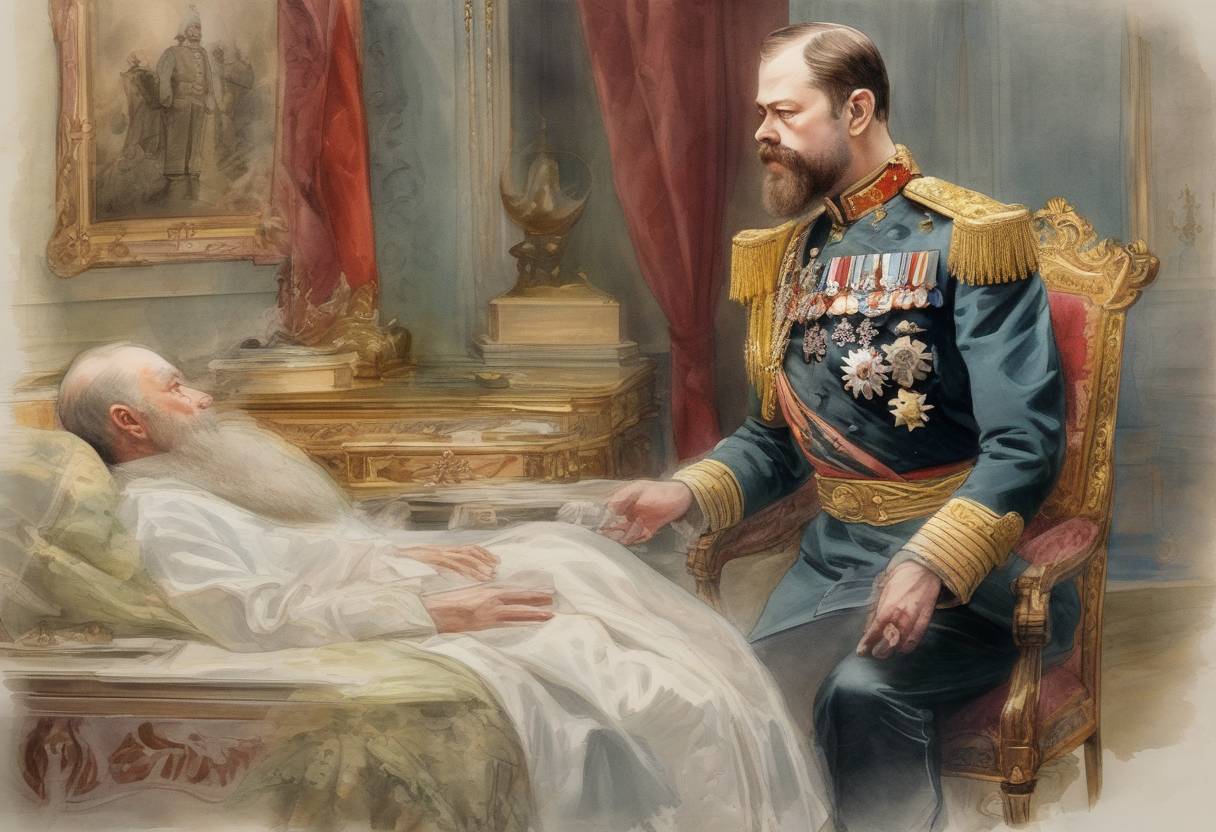
On November 1, 1894, Nicholas II ascended to the throne as the Emperor of Russia following the death of his father, Alexander III. This event marked the beginning of the final chapter in the history of the Russian monarchy, as Nicholas II would become the last Tsar of Russia.
Alexander III’s Reign: Alexander III, Nicholas’s father, ruled Russia from 1881 until his death in 1894. His reign was characterized by a return to conservative policies following the assassination of his father, Alexander II. Alexander III emphasized autocracy, orthodoxy, and nationalism, resisting political reforms and maintaining strict control over the empire.
Nicholas II’s Early Life: Born on May 18, 1868, Nicholas was the eldest son of Alexander III and Empress Maria Feodorovna. He was educated in military and political affairs, but his father did not involve him deeply in state matters, leaving Nicholas somewhat unprepared for leadership.
Death of Alexander III: Alexander III died on November 1, 1894, after suffering from kidney disease. His death thrust Nicholas into the role of Tsar at the age of 26.
Nicholas II’s Coronation: Nicholas was officially crowned Tsar on May 26, 1896, in a grand ceremony at the Uspensky Cathedral in Moscow. The event was marred by tragedy when a stampede occurred during the public celebrations, resulting in the deaths of over a thousand people.
Challenges and Reforms: Nicholas II’s reign faced numerous challenges, including political unrest, demands for reform, and the pressures of modernizing an empire. Despite his initial intentions to maintain his father’s autocratic policies, Nicholas was eventually forced to implement limited reforms, such as the creation of the Duma (a legislative assembly) after the 1905 Revolution.
World War I and the Fall of the Monarchy: The outbreak of World War I in 1914 placed immense strain on Russia. Military defeats, economic hardship, and widespread discontent led to the February Revolution of 1917. Nicholas II was forced to abdicate on March 15, 1917, ending over three centuries of Romanov rule.
The Romanov Family’s Fate: Following his abdication, Nicholas and his family were placed under house arrest. In July 1918, they were executed by Bolsheviks in Yekaterinburg, marking a brutal end to the Romanov dynasty.
Legacy: Nicholas II’s reign is often viewed as a period of missed opportunities for reform and modernization. His inability to effectively address the empire’s challenges contributed to the collapse of the Russian monarchy and the rise of the Soviet Union.
Nicholas II’s ascension to the throne on November 1, 1894, set the stage for a tumultuous period in Russian history, ultimately leading to the end of imperial rule and significant transformations in the country’s political landscape.
Source: en.wikipedia.org