The High Possil Meteorite Fall
1804 · Glasgow, Scotland
The High Possil meteorite fell in Glasgow, Scotland. This was the first recorded meteorite fall in Scotland.
November 7, 1492
The Ensisheim meteorite, the oldest meteorite with a known date of impact, struck a wheat field in the village of Ensisheim in Alsace, France.
Ensisheim, France
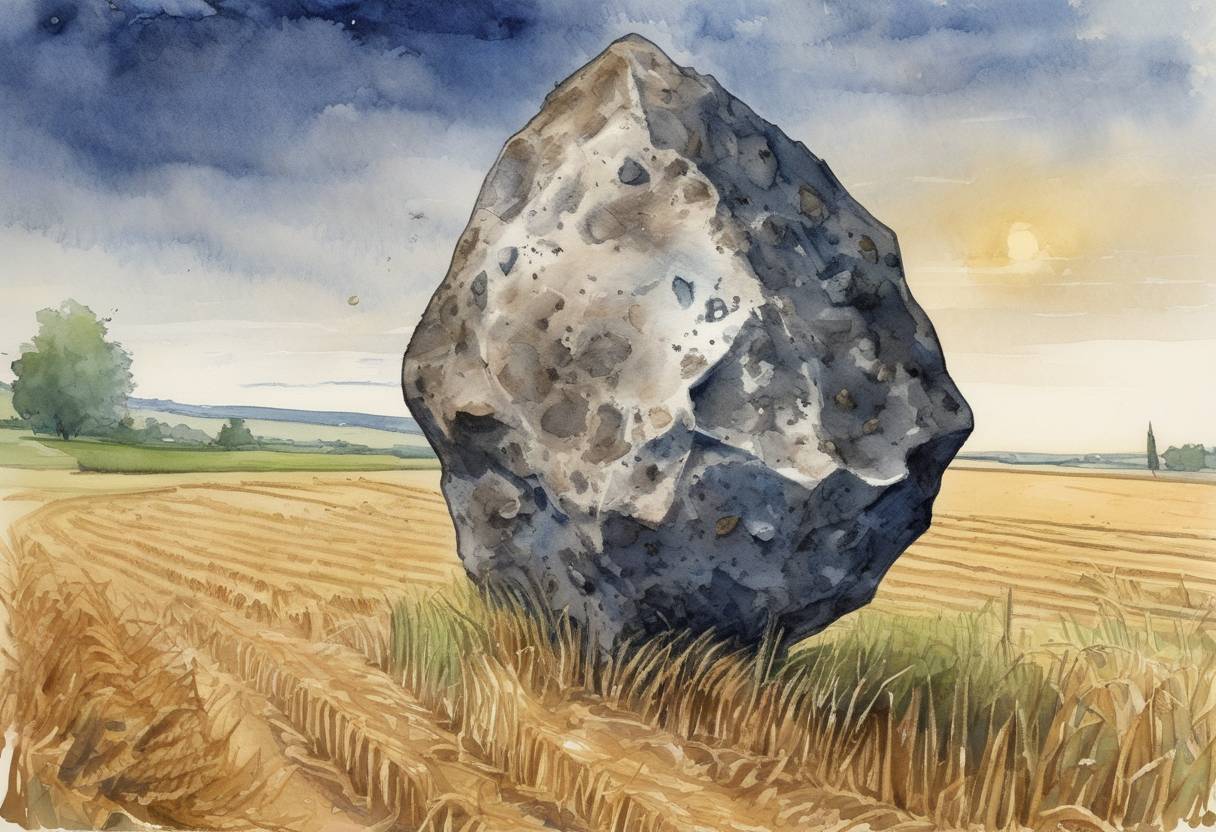
On November 7, 1492, a significant astronomical event occurred when a meteorite struck a wheat field in the village of Ensisheim, located in Alsace, France. This event is notable for being the oldest meteorite fall with a precisely recorded date in European history.
The meteorite’s fall was witnessed by numerous locals, who reported seeing a fiery object streak across the sky before it impacted the ground. The meteorite weighed approximately 127 kilograms (about 280 pounds) and created a considerable impression upon impact.
The Ensisheim meteorite holds a special place in history due to several factors:
The Ensisheim meteorite’s fall was documented by contemporary chroniclers, including the famous humanist Sebastian Brant, who wrote about the event in his work. The meteorite’s impact on both scientific thought and cultural perceptions of celestial events marks it as a significant historical occurrence.
In the broader context of history, the Ensisheim meteorite serves as an early example of humanity’s fascination with and study of extraterrestrial objects, laying groundwork for future scientific inquiry into meteorites and their origins.
Source: en.wikipedia.org