The Potsdam Declaration: July 26, 1945
1945 · Potsdam, Germany
The Potsdam Declaration was issued by the Allies, outlining the terms of surrender for Japan during World War II.
August 2, 1945
The Potsdam Conference concluded, where Allied leaders met to discuss the post-World War II order in Europe. The conference resulted in the Potsdam Agreement, which outlined the administration of Germany and the establishment of post-war order.
Potsdam, Germany | Allied Powers
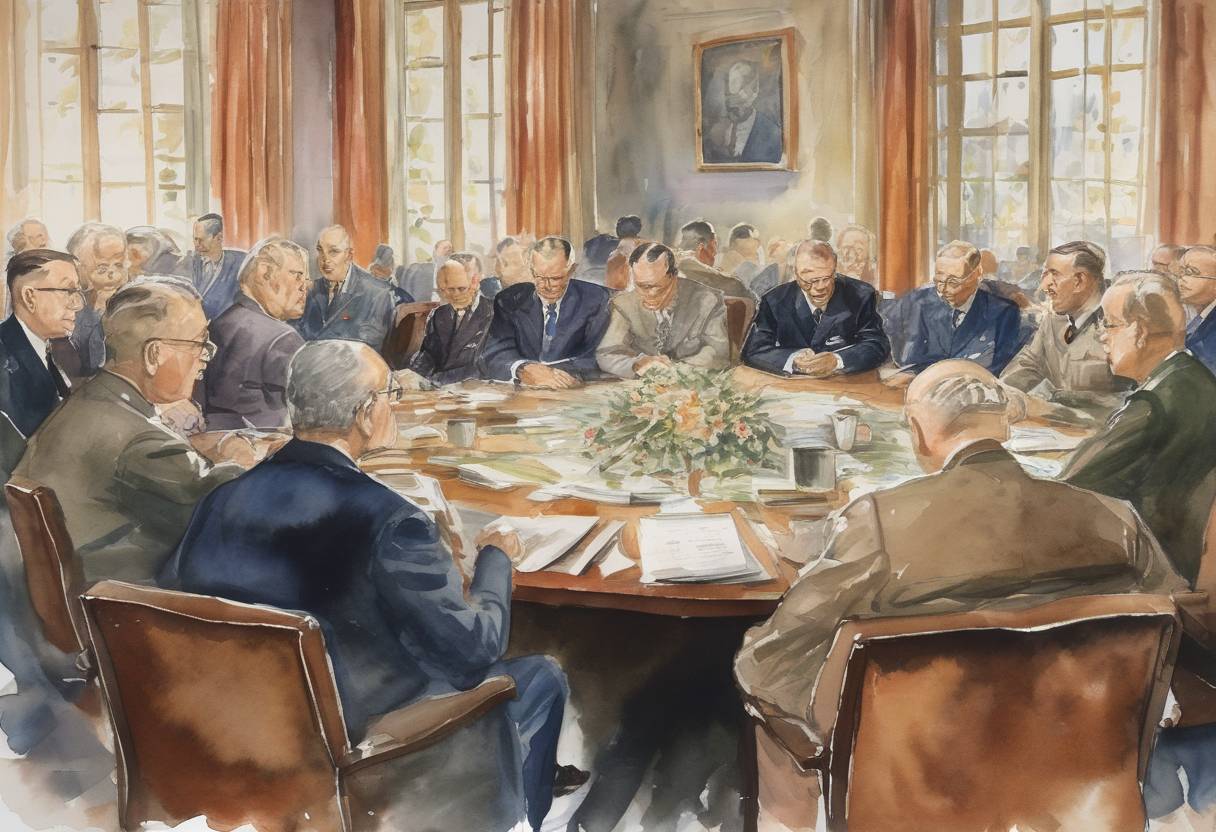
The Potsdam Conference, which took place from July 17 to August 2, 1945, marked a pivotal moment in shaping the post-World War II order in Europe. Held in Potsdam, Germany, this conference was attended by the major Allied leaders: Joseph Stalin of the Soviet Union, Harry S. Truman of the United States, and Winston Churchill, later replaced by Clement Attlee, of the United Kingdom following the British general election.
The conference was convened in the aftermath of Germany’s unconditional surrender on May 8, 1945, which ended the European conflict of World War II. The primary aim was to negotiate terms for the administration of defeated Germany and to address broader issues concerning the reorganization of Europe and the establishment of a lasting peace.
The conference culminated in the Potsdam Agreement, which laid out several critical decisions:
Division of Germany and Austria: Germany and Austria were divided into four occupation zones, each controlled by one of the Allied powers: the United States, the Soviet Union, the United Kingdom, and France. Berlin, the German capital, was similarly divided despite being located within the Soviet zone.
Demilitarization and Denazification: The Allies agreed on the complete disarmament and demilitarization of Germany. They also initiated a process of denazification to eradicate Nazi influence from German society and institutions.
Reparations: The conference established that reparations would be extracted from Germany, with each occupying power taking reparations from its zone. The Soviet Union, having suffered the most extensive destruction, was also granted additional reparations from the Western zones.
Territorial Adjustments: The conference confirmed the transfer of German territories east of the Oder-Neisse line to Poland and the Soviet Union, pending a final peace settlement. This decision resulted in significant population transfers and redrawing of borders.
Prosecution of War Criminals: The Allies agreed to prosecute Nazi war criminals, leading to the subsequent Nuremberg Trials.
The Potsdam Conference set the stage for the Cold War by highlighting the ideological differences between the Soviet Union and the Western Allies. The decisions made at Potsdam influenced the geopolitical landscape of Europe for decades, contributing to the division of Germany and the eventual establishment of the Iron Curtain.
The Potsdam Conference was the last of the major Allied summits of World War II, following the Tehran and Yalta Conferences. It marked the beginning of a new era in international relations, characterized by the rivalry between the United States and the Soviet Union. The agreements reached at Potsdam had long-lasting effects on the political and social fabric of Europe, shaping the continent’s post-war recovery and the global balance of power.
In conclusion, the Potsdam Conference was a critical juncture in 20th-century history, as it laid the groundwork for the reconstruction of Europe and the onset of the Cold War. The decisions made during this conference continue to influence international relations and historical discourse to this day.
Source: en.wikipedia.org