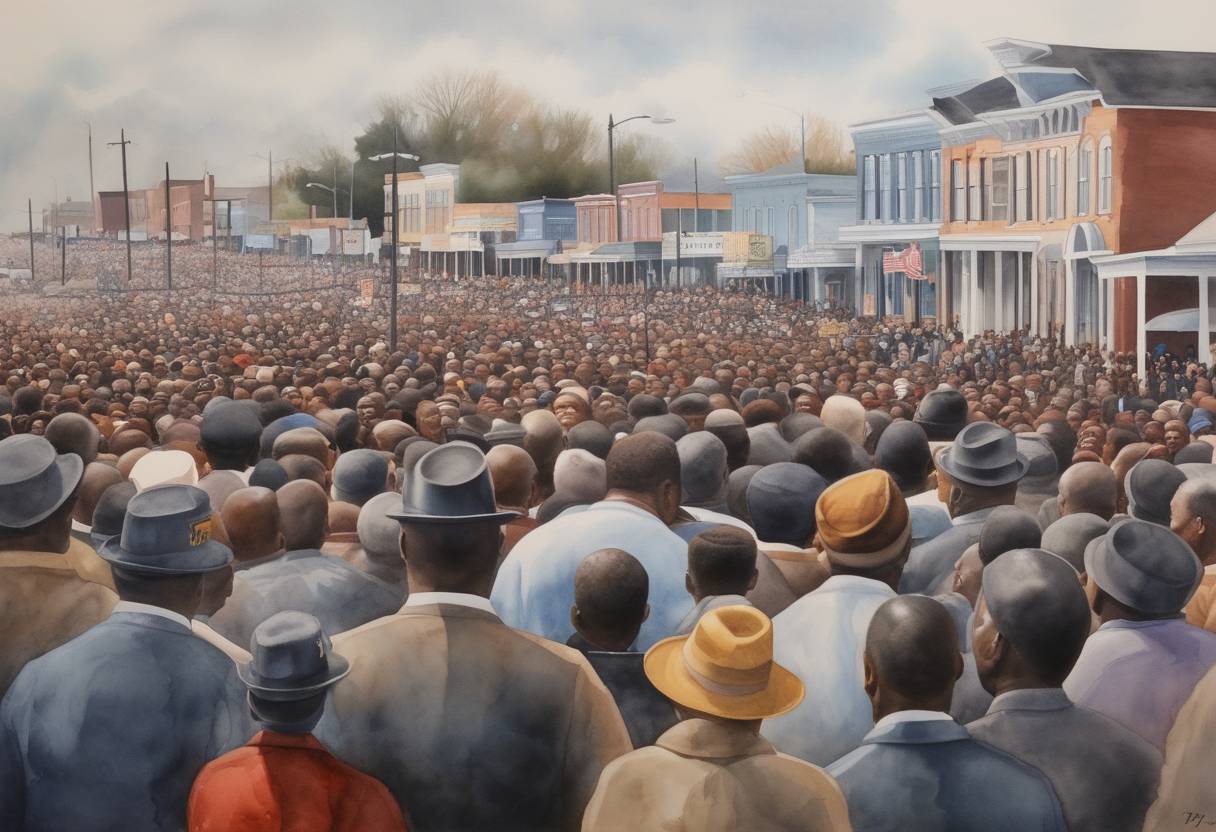
Commemoration of the 50th Anniversary of Bloody Sunday in Selma
On March 7, 2015, tens of thousands of people gathered in Selma, Alabama, to commemorate the 50th anniversary of “Bloody Sunday,” a pivotal event in the American Civil Rights Movement. The original Bloody Sunday occurred on March 7, 1965, when civil rights demonstrators attempted to march from Selma to Montgomery to protest racial discrimination in voter registration. As the marchers crossed the Edmund Pettus Bridge, they were brutally attacked by law enforcement officers. This event was instrumental in raising awareness about the civil rights struggles in the United States and ultimately contributed to the passing of the Voting Rights Act of 1965.
Commemorative Events
Participants: The 2015 commemoration drew a diverse crowd, including civil rights activists, politicians, and citizens from across the country. People gathered to honor those who participated in the original march and to reflect on the progress made since that time.
Speeches and Reflections: Numerous speeches were delivered during the commemoration, focusing on the legacy of the civil rights movement and ongoing struggles for racial equality. Notable speakers included then-President Barack Obama, former President George W. Bush, and Congressman John Lewis, who himself was a leader in the original march and sustained injuries on Bloody Sunday.
Bridge Crossing: A symbolic crossing of the Edmund Pettus Bridge was held, mirroring the route of the 1965 demonstrators. This moment served as a powerful reminder of the sacrifices made by activists in the quest for civil rights.
Historical Significance
The events of Bloody Sunday highlighted the severe racial injustices present in the United States and played a crucial role in galvanizing public support for civil rights reforms. The images and reports from that day were broadcast nationwide, drawing widespread condemnation and prompting federal action.
Legacy
The commemoration of Bloody Sunday’s 50th anniversary served not only as a reminder of past struggles but also as a call to action for addressing contemporary issues related to voting rights and racial equality. It reinforced the importance of remembering historical injustices to prevent their recurrence and highlighted ongoing challenges in achieving true equality and justice for all citizens.