1864 · The Wilderness, Virginia, United States
The Battle of the Wilderness, part of the American Civil War, came to an inconclusive end. It was one of the first clashes between General Ulysses S. Grant and General Robert E. Lee.
November 7, 1861
The Battle of Belmont was fought during the American Civil War, marking Ulysses S. Grant's first combat test as a general. Although the Union forces, led by Grant, were initially successful, they ultimately withdrew after encountering Confederate reinforcements.
Belmont, United States | Union Army
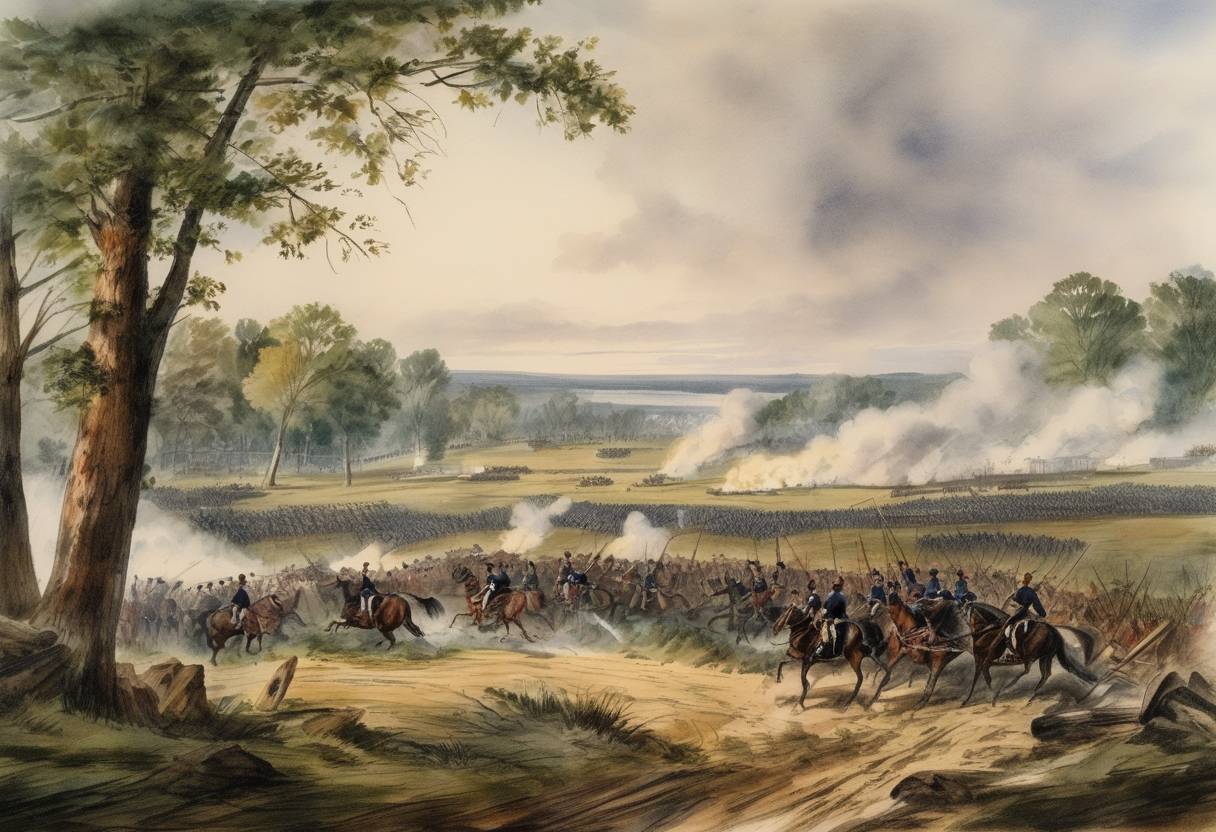
The Battle of Belmont took place on November 7, 1861, during the American Civil War. This engagement marked the first combat test for Ulysses S. Grant as a Union general, setting the stage for his future military career characterized by bold and decisive actions.
In the early stages of the Civil War, the Union sought to secure control over strategic points along the Mississippi River, which was crucial for transportation and supply routes. The Confederate forces had established a significant stronghold at Columbus, Kentucky, under the command of General Leonidas Polk.
Grant, then a Brigadier General, aimed to disrupt Confederate movements and create a strategic diversion. His target was the Confederate camp located at Belmont, Missouri, directly across the river from Columbus. The plan was also meant to prevent Confederate troops from reinforcing other critical positions in Kentucky.
On the morning of November 7, Grant led approximately 3,100 Union troops in transports across the Mississippi River to Belmont. The Union forces landed unopposed and attacked the Confederate camp, initially achieving success. The Confederates, commanded by Major General Gideon J. Pillow, were caught off guard but quickly regrouped.
Union forces quickly overran the Confederate camp, capturing artillery and setting fire to the supplies. This initial victory demonstrated Grant’s aggressiveness and willingness to take decisive action in battle.
Despite the initial Union success, their momentum was short-lived. Confederate forces from Columbus, including reinforcements led by General Polk, crossed the river to Belmont. The Union troops, now under heavy fire and facing organized resistance, were forced into a retreat.
Grant’s forces managed to make a fighting withdrawal, reboarding their transports and escaping across the river to Illinois. Though the battle itself ended in a tactical withdrawal for Grant, it was seen as a strategic success in disrupting Confederate plans and asserting Union presence in the region.
While not a major battle in terms of scale, the Battle of Belmont was significant as Ulysses S. Grant’s debut in combat leadership. His leadership during the fight established his reputation for aggressive tactical maneuvers, a characteristic that would define his later campaigns. The battle also exposed the strengths and weaknesses of the Union Army early in the war, providing valuable experience for future engagements.
Source: www.battlefields.org