1914 · Belfast, United Kingdom
HMHS Britannic, the third and largest Olympic-class ocean liner of the White Star Line, was launched. It was intended to be a transatlantic passenger ship but was instead used as a hospital ship during World War I.
April 1, 1873
The British White Star Line's ship, RMS Oceanic, was launched from the dock at Stephen's Yard in Belfast.
Belfast, United Kingdom | White Star Line
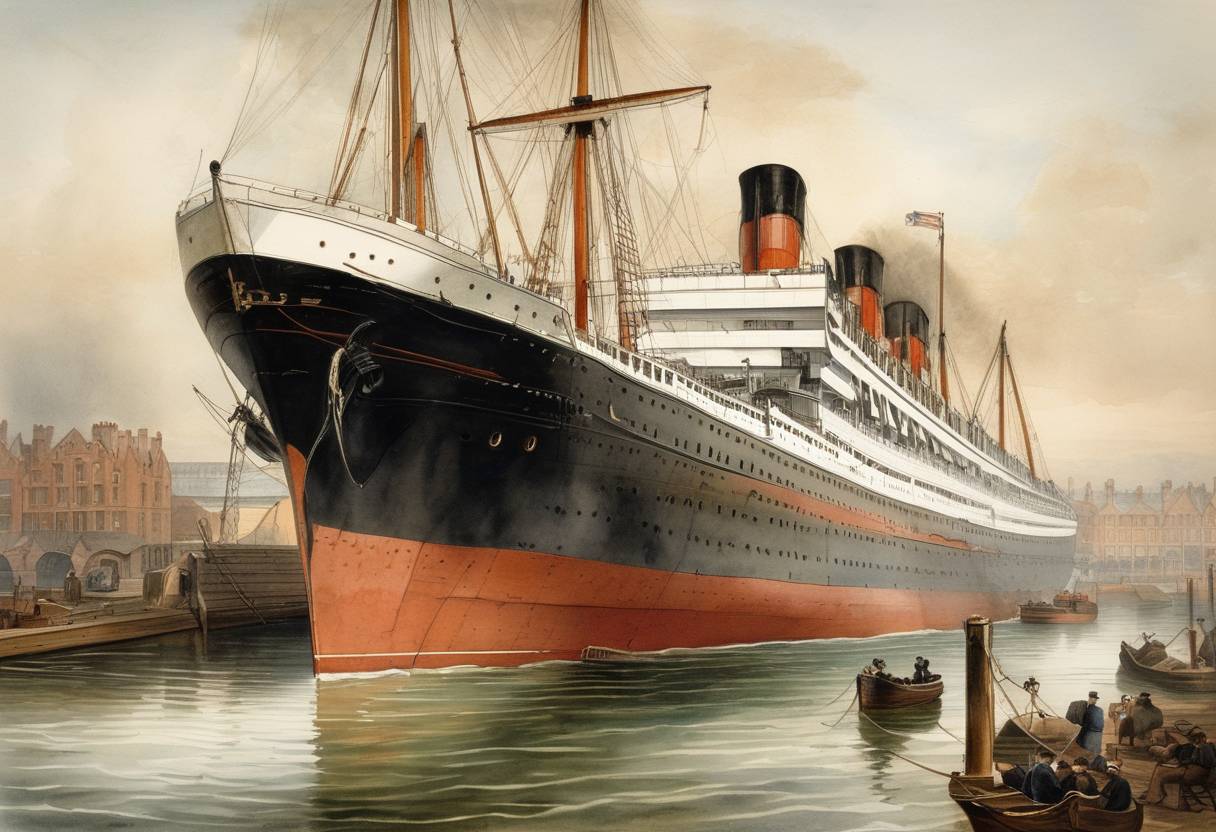
On January 4, 1873, the RMS Oceanic, a flagship of the British shipping company White Star Line, was launched from Harland and Wolff’s shipyard, known as Stephen’s Yard, in Belfast, Ireland. The event marked the introduction of one of the era’s most luxurious and advanced passenger liners, designed to set new standards in transatlantic travel.
The RMS Oceanic was commissioned during a period marked by burgeoning transatlantic travel and competition among shipping companies. Established by Thomas Henry Ismay in 1869, the White Star Line sought to compete with major rivals by focusing on passenger comfort rather than sheer speed. Oceanic represented a pivotal step in this strategy.
Builder: Harland and Wolff, a prominent shipbuilding company with a strong reputation for constructing ocean liners.
Dimensions: The Oceanic stretched approximately 420 feet in length with a width of 41 feet.
Capacity: Designed to carry a total of 1,620 passengers—120 in first class and 1,500 in steerage.
Features: Emphasized luxury, featuring advanced accommodations and refocusing on onboard comfort. Innovations included:
The Oceanic also boasted significant technological enhancements:
The successful launch of the RMS Oceanic set a precedent for White Star Line’s future endeavors, including iconic liners such as the RMS Titanic. It reinforced the company’s image as a provider of luxurious and safe ocean travel, reshaping notions of passenger experience during a booming era for maritime commerce.
The design philosophies and technologies pioneered by the Oceanic influenced subsequent generational shipbuilding practices, marking it as a notable predecessor in a long line of celebrated vessels.
Source: www.britannica.com