Fall of Tenochtitlán - August 13, 1521
1521 · Tenochtitlán, Mexico
Tenochtitlán, the capital of the Aztec Empire, falls to Spanish conquistadors led by Hernán Cortés, marking the end of the Aztec Empire.
June 30, 1520
The Spanish conquistadors, led by Hernán Cortés, experienced La Noche Triste (The Night of Sorrows) as they attempted to escape from Tenochtitlán, the Aztec capital, facing heavy resistance and suffering significant losses.
Tenochtitlán, Mexico | Spanish Conquistadors
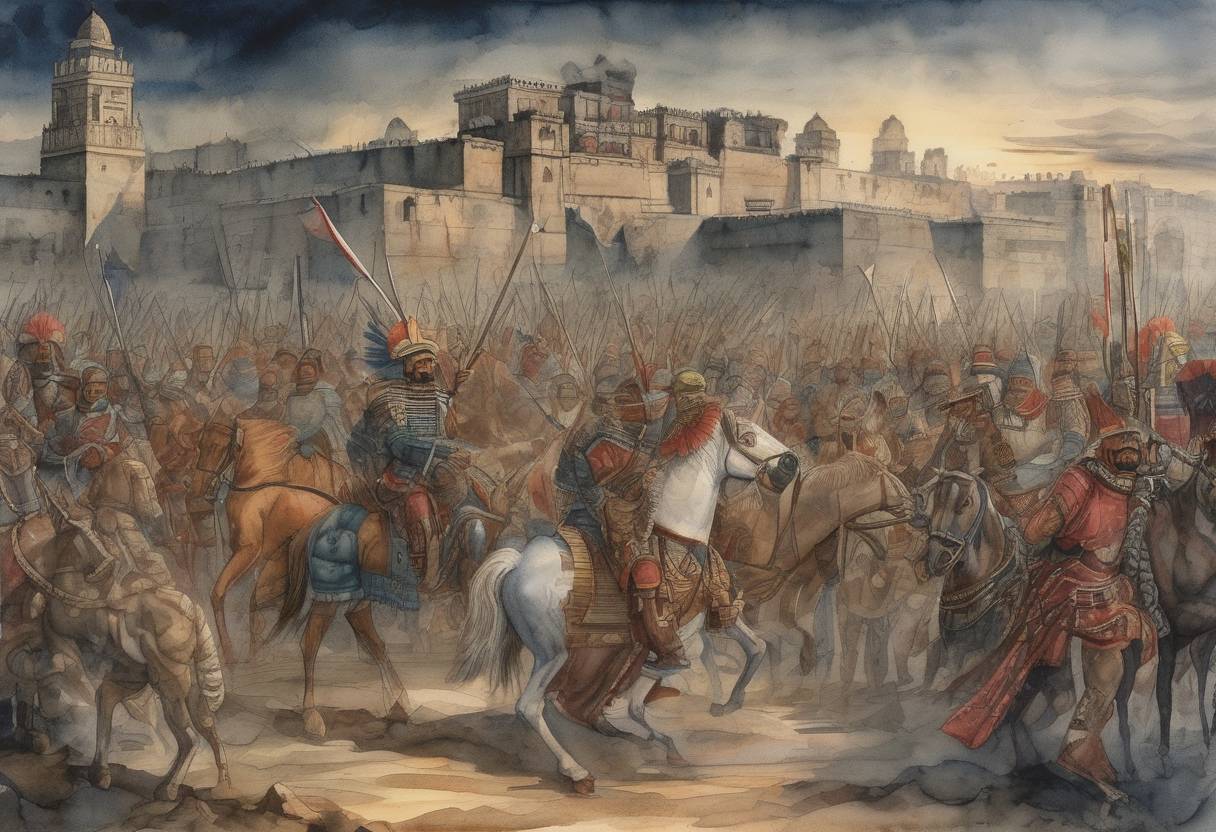
On the night of June 30, 1520, the Spanish conquistadors, led by Hernán Cortés, experienced a devastating defeat known as La Noche Triste (The Night of Sorrows) as they attempted to escape from Tenochtitlán, the capital of the Aztec Empire.
Hernán Cortés arrived in the Aztec Empire in 1519 with ambitions to conquer the vast and wealthy civilization. Initially, he was welcomed by the Aztec emperor, Moctezuma II, who believed Cortés might be the god Quetzalcoatl returning as prophesied. However, tensions quickly escalated as the Spaniards’ intentions became clear.
Cortés took Moctezuma hostage, hoping to control the Aztec people through their emperor. Meanwhile, back in Cuba, the Spanish governor, Diego Velázquez, sent an expedition led by Pánfilo de Narváez to arrest Cortés for insubordination. Cortés left Tenochtitlán to confront Narváez, leaving Pedro de Alvarado in charge.
During Cortés’ absence, Alvarado ordered a massacre during a religious festival, igniting a rebellion among the Aztecs. Cortés returned to a city in turmoil, and Moctezuma was killed under uncertain circumstances, further inflaming the situation.
Realizing their precarious position, Cortés decided to retreat from Tenochtitlán. On the rainy night of June 30, 1520, the Spaniards and their Tlaxcalan allies attempted a stealthy escape across the causeways that connected the island city to the mainland.
The Aztecs, however, were prepared. They launched a fierce attack on the retreating forces, using canoes to assault the causeways and cutting off the Spaniards’ escape routes. The narrow causeways became a deadly trap, with many Spaniards and their allies falling into the waters of Lake Texcoco, weighed down by armor and loot.
The losses were catastrophic for Cortés. Estimates suggest that hundreds of Spaniards and thousands of Tlaxcalan allies were killed. The Spaniards lost much of the treasure they had accumulated, and their morale was severely shaken.
Despite the heavy losses, Cortés regrouped and eventually mounted a successful campaign to recapture Tenochtitlán. By August 1521, the city fell to the Spanish, marking the end of the Aztec Empire and the beginning of Spanish dominance in the region.
La Noche Triste is a pivotal moment in the history of the Spanish conquest of the Americas. It highlighted the resilience and military prowess of the Aztecs and underscored the challenges faced by the conquistadors. The event also set the stage for the eventual fall of Tenochtitlán and the dramatic transformation of the region under Spanish rule.
This night remains a significant symbol of resistance and loss in Mexican history, reflecting the complex and often tragic interactions between indigenous peoples and European colonizers.
Source: en.wikipedia.org