United States Congress Relocation on December 8, 1790
1790 · Washington, D.C., United States
United States Congress moves from New York City to the new federal capital of Washington, D.C.
July 16, 1790
The Residence Act is signed into law, establishing a site along the Potomac River as the District of Columbia and the future capital of the United States.
Washington, D.C., United States | United States Congress
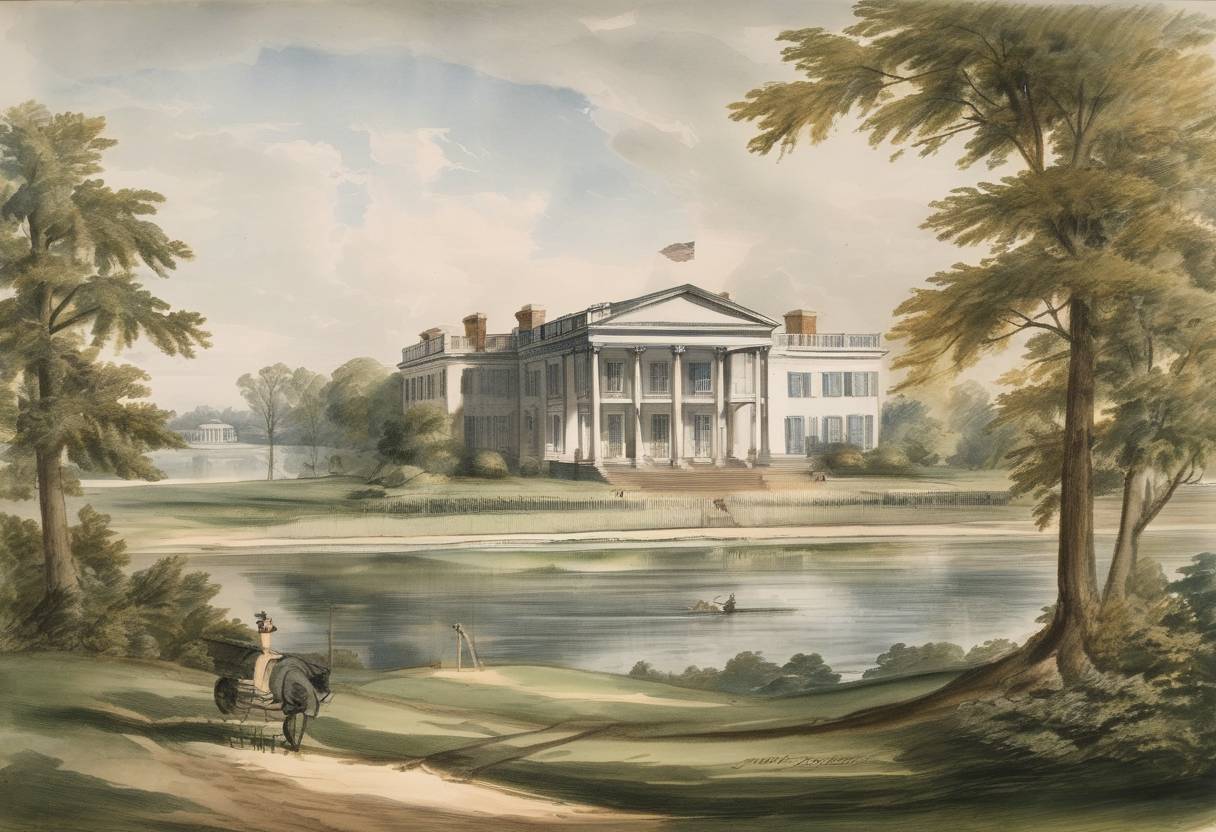
On July 16, 1790, the Residence Act was signed into law by President George Washington, marking a pivotal moment in the establishment of the United States’ capital. This legislation designated a site along the Potomac River as the location for the new federal district, which would later become known as the District of Columbia.
Debate over the Capital’s Location: Following the American Revolution, there was significant debate over where the nation’s capital should be located. Northern and Southern states had differing preferences, with economic and political interests influencing their positions.
Compromise of 1790: The decision to place the capital along the Potomac River was part of a larger compromise between key figures such as Alexander Hamilton, Thomas Jefferson, and James Madison. This agreement also involved the federal government assuming state debts, a move favored by Hamilton to stabilize the national economy.
Location: The Act authorized the President to select a site for the capital along the Potomac River, between the Eastern Branch (now the Anacostia River) and Conococheague Creek, encompassing an area not exceeding ten square miles.
Temporary Capital: Until the new capital was ready, the Act designated Philadelphia as the temporary capital of the United States from 1790 to 1800.
Commissioners: The Act provided for the appointment of commissioners to oversee the planning and development of the federal city.
Development of Washington, D.C.: The signing of the Residence Act set in motion the planning and construction of Washington, D.C. Pierre Charles L’Enfant, a French engineer, was commissioned to design the city, laying out a plan that included wide avenues and significant public spaces.
Political Implications: The decision to place the capital in the South was seen as a victory for Southern states, balancing the economic power of the Northern states. It also reflected the political acumen of leaders who managed to broker a deal that addressed both regional and national interests.
Legacy: The establishment of Washington, D.C., as the nation’s capital has had lasting implications for American political life, serving as the center of federal government operations and a symbol of the country’s democratic ideals.
The Residence Act of 1790 was a foundational moment in American history, reflecting the complex interplay of regional interests and the vision for a unified national government.
Source: en.wikipedia.org