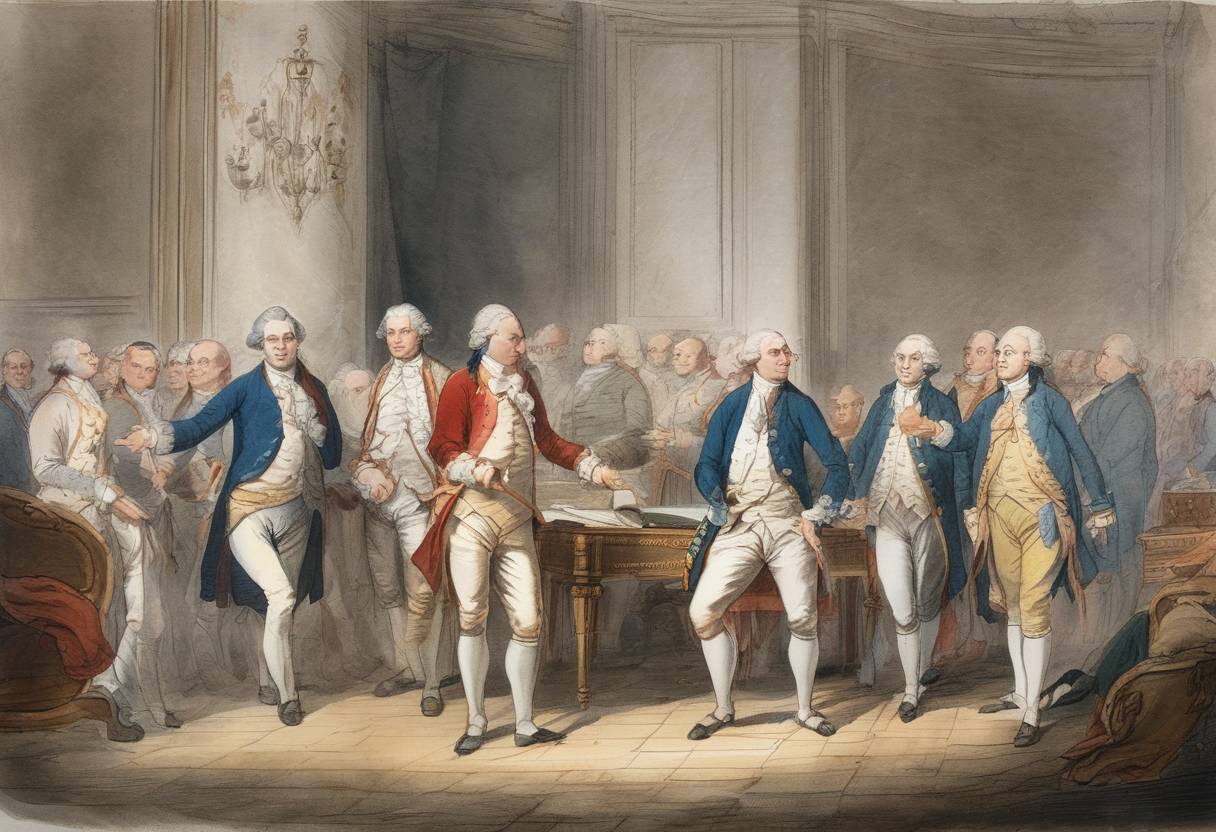
Dismissal of Jacques Necker on July 11, 1789
On July 11, 1789, Jacques Necker, the finance minister of France, was dismissed by King Louis XVI. This event significantly escalated tensions in France, contributing to the outbreak of the French Revolution.
Background
Jacques Necker, a Swiss banker, was appointed as the Director-General of Finance in France in 1777. Known for his financial acumen, Necker attempted to reform France’s financial system, which was burdened by debt from costly wars and extravagant royal expenditures. His efforts included advocating for increased transparency in royal finances and proposing the reduction of court expenses.
Necker’s popularity among the common people stemmed from his attempts to involve the Estates-General in financial decisions, which was seen as a move towards more representative governance. However, his reforms were met with resistance from the nobility and the court, who were wary of losing their privileges.
Events Leading to the Dismissal
By 1789, France was in a state of financial crisis, and Necker’s position was precarious. The Estates-General had been convened in May 1789 to address the financial issues, but it quickly became a platform for broader political grievances. The Third Estate, representing the common people, declared itself the National Assembly, challenging the traditional power structure.
Necker was seen as a moderate who could bridge the gap between the monarchy and the reformist factions. However, his influence waned as tensions rose. King Louis XVI, under pressure from conservative elements at court, decided to dismiss Necker, hoping to reassert royal authority.
The Dismissal and Its Consequences
Necker’s dismissal on July 11, 1789, was perceived as a royal attempt to suppress the burgeoning reform movement. The news of his removal reached Paris, where it was met with outrage and fear that the king was planning to dissolve the National Assembly by force.
This event acted as a catalyst for the revolutionary fervor in Paris. It contributed directly to the storming of the Bastille on July 14, 1789, a pivotal moment in the French Revolution. The fall of the Bastille symbolized the collapse of royal authority and the rise of popular power.
Historical Significance
Necker’s dismissal highlighted the deep divisions within French society and the monarchy’s inability to effectively address the financial and political crises. It underscored the growing power of public opinion and the demand for political reform.
In the broader context of the French Revolution, Necker’s removal is seen as a turning point that accelerated the collapse of the Ancien Régime. It demonstrated the volatility of the situation in France and the potential for rapid and radical change.
Necker was briefly recalled to office after the storming of the Bastille, but by then, the revolutionary momentum was irreversible. His initial dismissal remains a key moment in the narrative of the French Revolution, illustrating the complex interplay of financial mismanagement, political reform, and popular unrest.