Discovery of Eris: A Dwarf Planet in the Scattered Disc
2005 · San Diego, United States
Eris, a dwarf planet in the scattered disc region of the Solar System, was discovered by a team led by Mike Brown at the Palomar Observatory.
July 29, 2005
Astronomers announced the discovery of Eris, a dwarf planet in the scattered disc beyond Neptune, which led to the reclassification of Pluto as a dwarf planet.
Pasadena, United States | California Institute of Technology
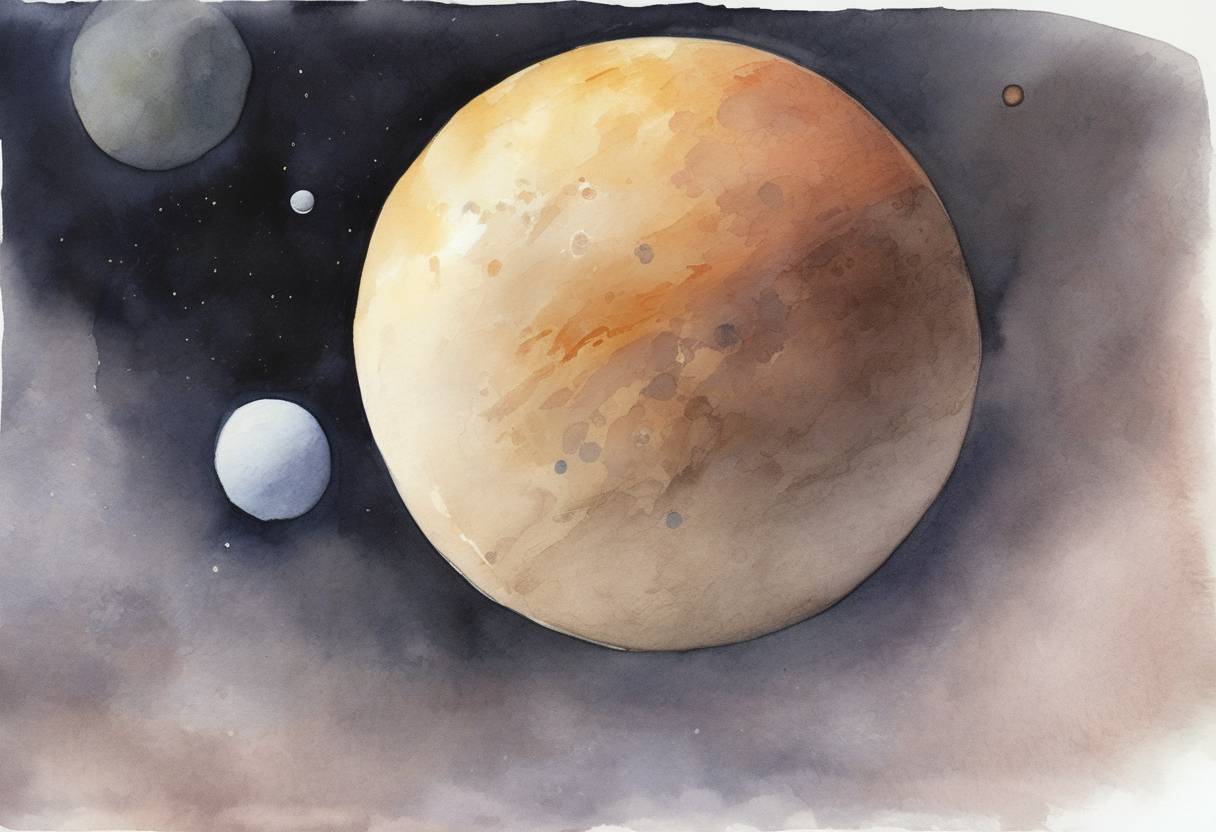
On July 29, 2005, a team of astronomers led by Mike Brown announced the discovery of Eris, a dwarf planet located in the scattered disc region beyond Neptune. This significant astronomical finding played a crucial role in the reclassification of Pluto as a dwarf planet.
Prior to the discovery of Eris, Pluto was considered the ninth planet in our solar system since its discovery in 1930. However, advancements in telescopic technology and a better understanding of the Kuiper Belt—a region of the solar system beyond Neptune filled with small icy bodies—led astronomers to question Pluto’s status as a planet.
The discovery of Eris, which was initially thought to be larger than Pluto, sparked a debate within the astronomical community about what constitutes a planet. This debate culminated in the International Astronomical Union (IAU) redefining the criteria for planet classification in 2006.
Pluto failed to meet the third criterion, as it shares its orbital zone with other objects in the Kuiper Belt. Consequently, Pluto was reclassified as a “dwarf planet,” a category that also includes Eris, Haumea, Makemake, and Ceres.
The reclassification of Pluto marked a significant shift in our understanding of the solar system. It highlighted the dynamic and evolving nature of astronomical science and the importance of continuous observation and discovery. The debate and subsequent decision also underscored the need for clear definitions in scientific classification.
The discovery of Eris and the reclassification of Pluto continue to influence the study of planetary science and the exploration of the outer solar system, prompting further research into the characteristics and origins of dwarf planets and other trans-Neptunian objects.
Source: www.nasa.gov