The Ratification of the United States Bill of Rights
1791 · Richmond, United States
The United States Bill of Rights becomes law when ratified by the Virginia General Assembly.
June 12, 1776
The Virginia Declaration of Rights was adopted by the Virginia Convention, serving as a model for the United States Bill of Rights.
Williamsburg, United States | Virginia Convention
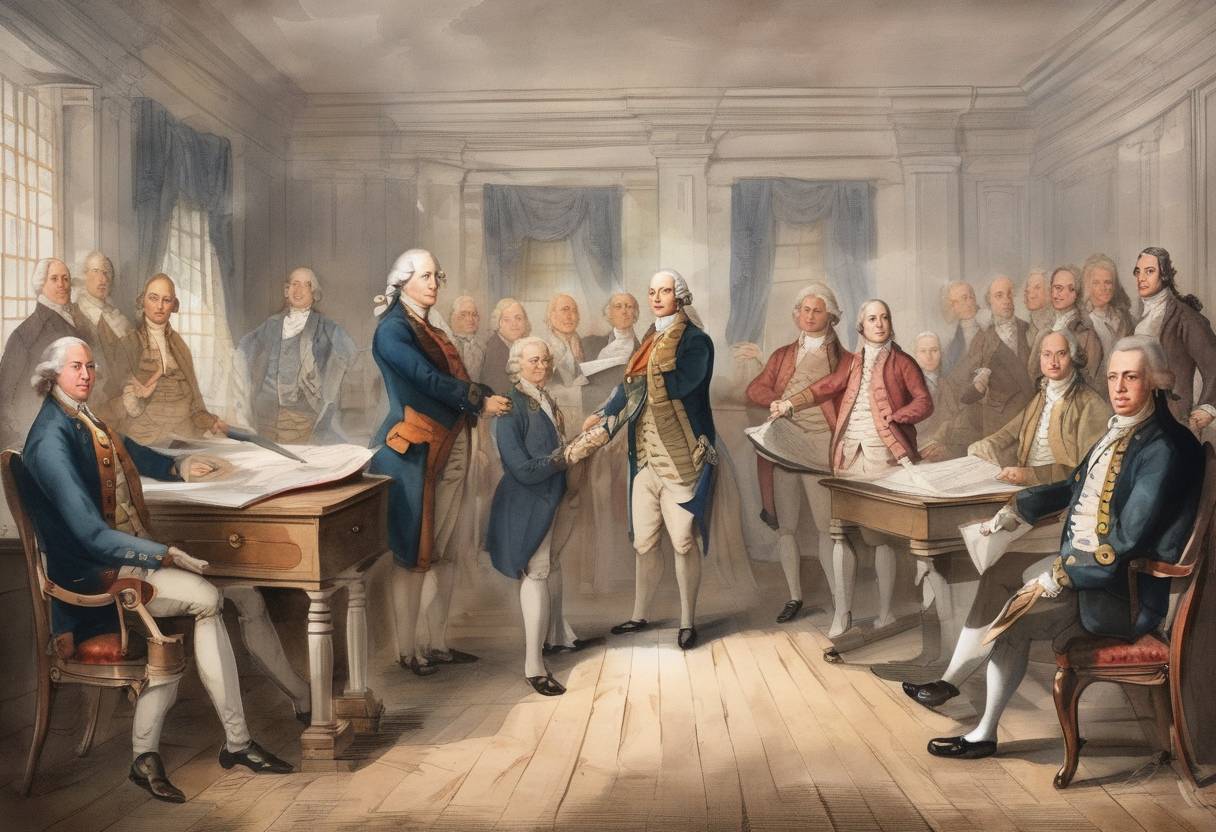
On June 12, 1776, the Virginia Convention adopted the Virginia Declaration of Rights, a seminal document in American history that laid the groundwork for the United States Bill of Rights. Drafted primarily by George Mason, this declaration was a bold assertion of individual liberties and a significant step in the American colonies’ quest for independence from British rule.
The Virginia Declaration of Rights emerged during a period of escalating tensions between the American colonies and Great Britain. The colonies were increasingly dissatisfied with British policies, including taxation without representation and other infringements on their rights. As the movement for independence gained momentum, there was a growing need to articulate the fundamental rights and freedoms that the colonies sought to protect.
The Virginia Declaration of Rights consists of 16 sections, each outlining specific rights and principles. Some of the most notable provisions include:
Equality and Inherent Rights: It begins with the assertion that all men are by nature equally free and independent and have certain inherent rights, including the enjoyment of life and liberty, with the means of acquiring and possessing property, and pursuing and obtaining happiness and safety.
Government Accountability: It emphasizes that government is, or ought to be, instituted for the common benefit, protection, and security of the people, nation, or community.
Separation of Powers: The declaration advocates for the separation of legislative, executive, and judicial powers to prevent abuse and ensure a balanced government.
Freedom of the Press and Religion: It underscores the importance of freedom of the press and the exercise of religion according to one’s conscience.
Rights of the Accused: It includes provisions for fair trials, protection against self-incrimination, and the prohibition of excessive bail and cruel and unusual punishments.
The Virginia Declaration of Rights had a profound impact on the development of American constitutional law. It served as a model for the United States Bill of Rights, which was ratified in 1791. Many of the principles articulated in the Virginia Declaration were echoed in the first ten amendments to the U.S. Constitution, ensuring the protection of individual liberties at the national level.
Furthermore, the declaration influenced other state constitutions and declarations of rights, contributing to a broader movement toward recognizing and institutionalizing human rights. Its emphasis on natural rights and the role of government in safeguarding these rights resonated with Enlightenment ideals and helped shape the philosophical foundation of the United States.
The adoption of the Virginia Declaration of Rights on June 12, 1776, marked a pivotal moment in American history. It not only articulated the fundamental rights and freedoms that would become central to American identity but also set a precedent for the protection of individual liberties that continues to influence democratic societies around the world.
Source: en.wikipedia.org