The Battle of Rignano - October 30, 1137
1137 · Rignano Garganico, Italy
The Battle of Rignano takes place, where Roger II of Sicily defeats Ranulf II of Alife's forces.
December 25, 1130
Roger II was crowned as the first King of Sicily in Palermo, consolidating the island's independence and initiating a prosperous reign.
Palermo, Kingdom of Sicily | Monreale Cathedral
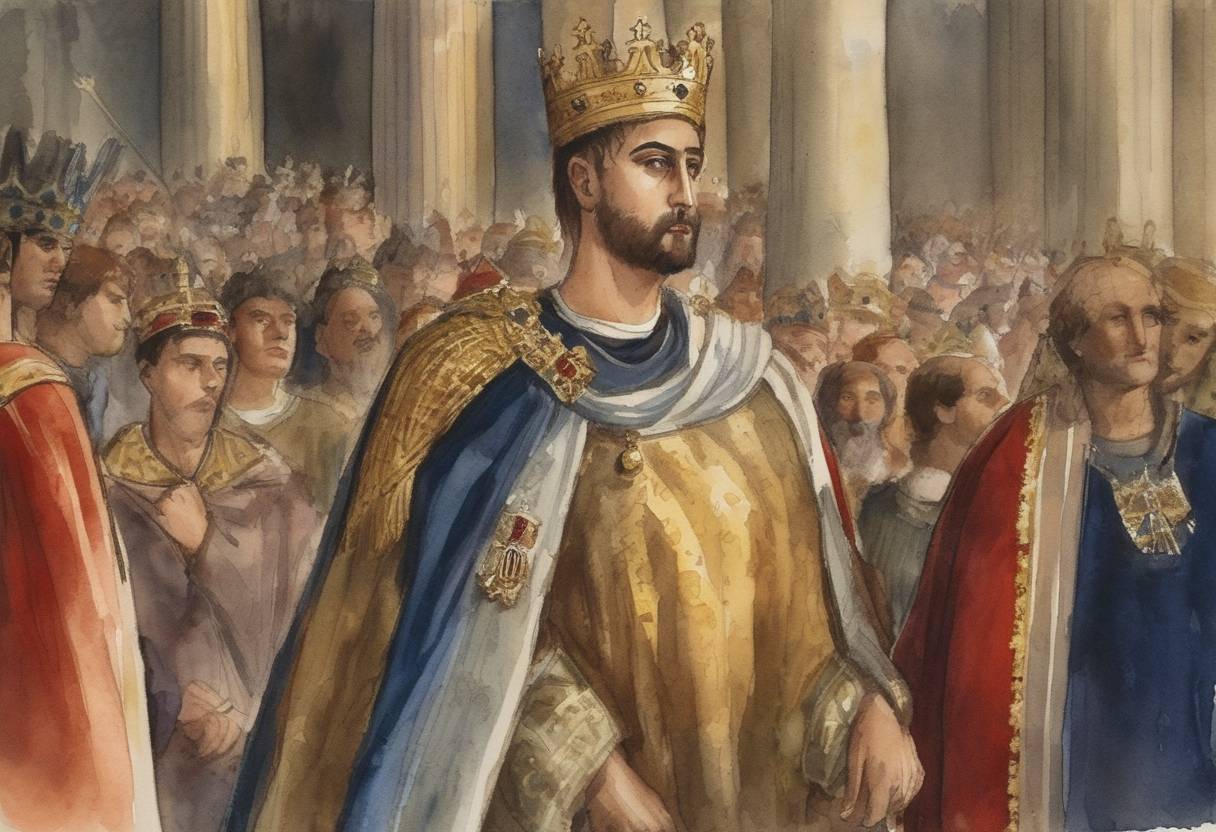
On December 25, 1130, in Palermo, Roger II was crowned as the first King of Sicily, marking a pivotal moment in the island’s history. This coronation took place under the auspices of Pope Anacletus II and represented both a consolidation of power and an assertion of independence for Sicily.
Roger II was born into the powerful Hauteville family, known for its prominent Norman adventurers. His father, Roger I of Sicily, and his uncle, Robert Guiscard, had earlier solidified Norman control in Southern Italy and Sicily. Upon his father’s death, Roger II inherited the title of Count of Sicily in 1105 and began his rule during a formative period for the island.
In the preceding years, Sicily had seen a series of political and religious transformations, characterized by the combination of Latin, Greek, Arab, and Norman influences. Roger II’s early administration was focused on unifying these diverse cultures under a central authority.
Roger II’s path to kingship involved strategic diplomacy and military campaigns. By earning the favor of certain cardinals and leveraging the Regency of Pope Anacletus II, a disputed pontiff in the Papal Schism of 1130, Roger was able to secure a royal title. His support for Anacletus, in opposition to Pope Innocent II, paved the way for his formal recognition as king.
The coronation was not only a symbolic act but also a definitive political maneuver that affirmed the sovereignty of the Sicilian kingdom, separate from Byzantine and North African interests.
The establishment of the Kingdom of Sicily under Roger II ushered in a period of unmatched cultural flourishing and economic prosperity. His court at Palermo became a vibrant center for artistic expression, scientific advancement, and architectural achievement. The kingdom’s legal framework, encapsulated in the “Assizes of Ariano,” laid the groundwork for one of the earliest examples of centralized governance in Europe.
Roger’s reign also saw the expansion of his domain, extending his influence over parts of Southern Italy and keeping key strategic holdings throughout the Mediterranean. This expansionist policy bolstered Sicily’s role as a vital link between the Christian and Muslim worlds.
Roger II’s legacy extended well beyond his death in 1154. His establishment of the Kingdom of Sicily ensured that the island remained a powerful and autonomous state for centuries. His successors, particularly under the House of Hohenstaufen, continued to build on his policies, further entrenching Sicily’s status as a major Mediterranean power.
The cultural and legislative advancements introduced during Roger’s reign had long-lasting impacts, shaping the region’s historical trajectory and underlining the importance of cultural synthesis in political governance.
Source: en.wikipedia.org