Winston Churchill's Second Term as UK Prime Minister
1951 · London, United Kingdom
Winston Churchill became Prime Minister of the United Kingdom for the second time, after his Conservative Party won the general election.
October 20, 1924
Stanley Baldwin, leader of the Conservative Party, becomes Prime Minister of the United Kingdom for the second time, succeeding Ramsay MacDonald.
London, United Kingdom | Conservative Party
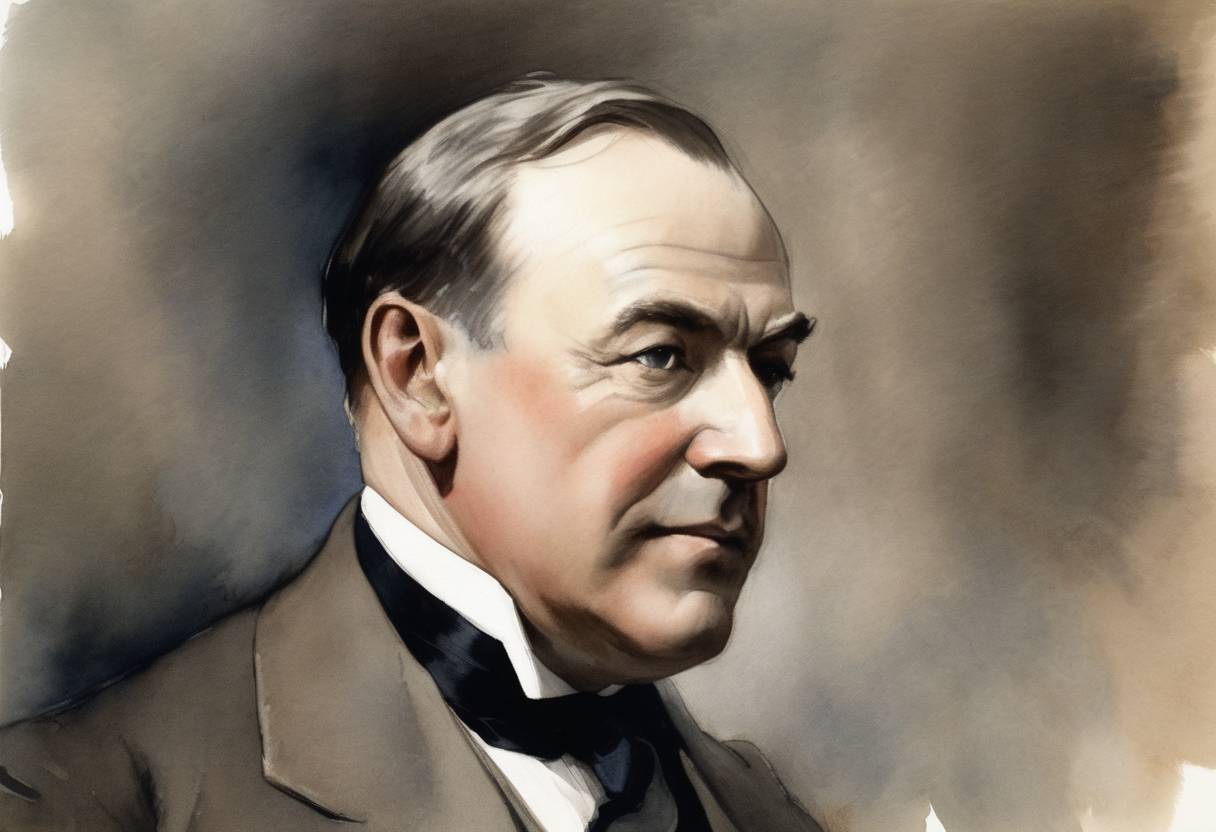
On October 20, 1924, Stanley Baldwin officially became the Prime Minister of the United Kingdom for the second time, following the resignation of Ramsay MacDonald. Baldwin was the leader of the Conservative Party, and his return marked a pivotal moment in UK politics during the interwar period.
The First Labour Government: Before Baldwin’s second term, Ramsay MacDonald led the first Labour government, which came into power in January 1924. However, MacDonald’s government was unstable, largely because it did not have an outright majority and relied on the support of the Liberals.
The Campbell Case and the “Red Scare”: Tensions had been rising as the Conservative Party, along with the daily press, accused MacDonald’s government of being too lenient towards communism. The situation escalated with the Campbell Case where MacDonald’s government was accused of interfering in the prosecution of a communist newspaper editor. This event fueled fears of socialism—a narrative Baldwin’s Conservatives capitalized on.
Vote of No Confidence: The Campbell Case led to MacDonald’s government facing a vote of no confidence, which they lost, prompting his resignation. This effectively ended the first Labour government, making way for Baldwin’s return.
1924 General Election: Following MacDonald’s resignation, a general election was called. During this election, Baldwin’s Conservative Party ran a successful campaign, focused heavily on restoring stability and combating socialism—messages that resonated with a large portion of the electorate.
Election Outcome: The Conservatives achieved a significant victory, gaining a strong majority in Parliament. This victory facilitated Baldwin’s appointment as Prime Minister for the second time.
Baldwin’s return to power marked a shift back to Conservative policies after a brief period of Labour governance. His leadership style was characterized by a commitment to moderate and pragmatic governance, balancing economic recovery post-World War I and addressing social concerns.
This second term was significant in shaping British politics, particularly in reaffirming the Conservative Party’s stature in the face of rising Labour influence.
Baldwin’s second tenure saw a reinforced Conservative leadership which impacted British domestic and foreign policies during the 1920s. He continued to serve as Prime Minister until June 1929.
His legacy includes managing the sensitive balance between maintaining traditional Conservative values while adapting to the social changes of the time, something that influenced UK political strategy for years to come.
Source: en.wikipedia.org