The Incorporation of the Baltimore and Ohio Railroad
1827 · Baltimore, United States
The Baltimore and Ohio Railroad is incorporated, becoming the first U.S. company to be granted a charter for the transportation of passengers and freight.
December 21, 1829
The Baltimore and Ohio Railroad, one of the first common carrier railroads, was chartered by the Maryland legislature.
Baltimore, United States | Baltimore and Ohio Railroad
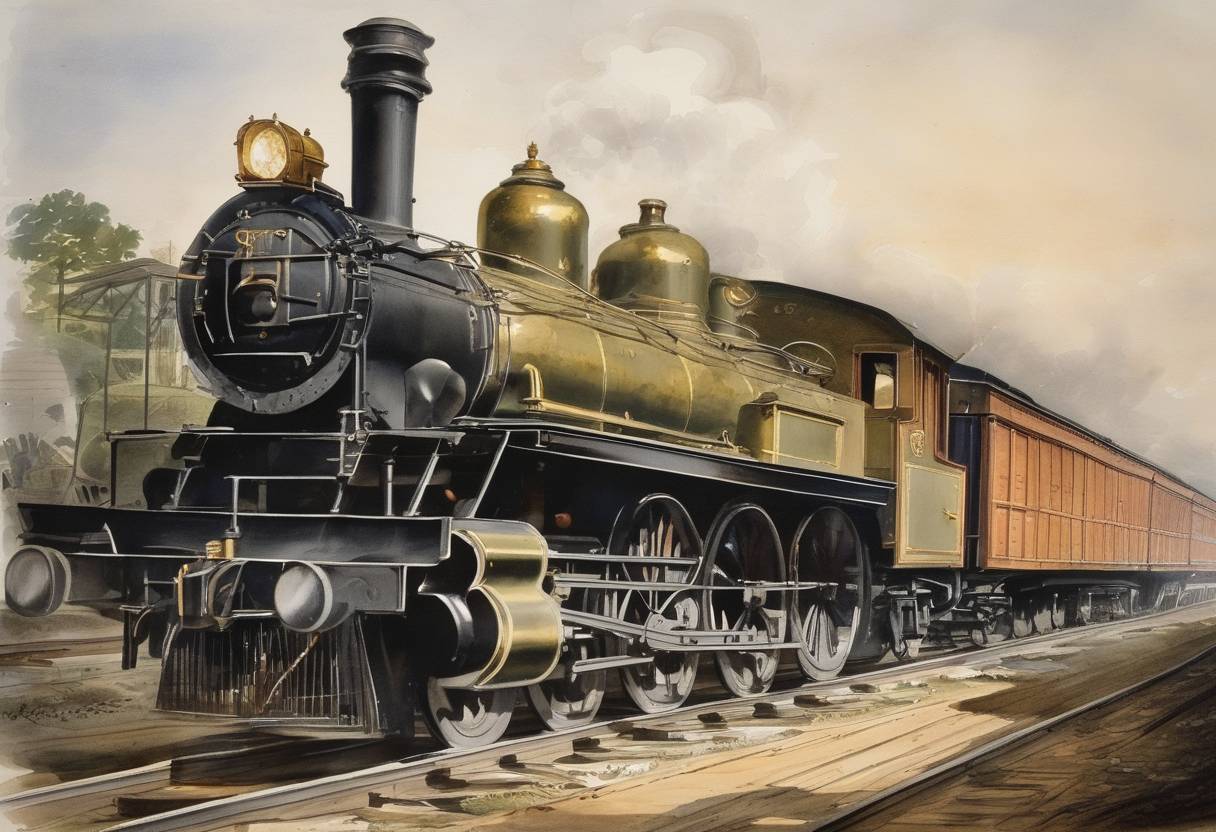
On December 21, 1827, the Baltimore and Ohio Railroad (B&O Railroad), one of the first common carrier railroads in the United States, was chartered by the Maryland Legislature. The chartering of the B&O Railroad marked a significant step in American transportation history, leading to the foundation of a groundbreaking mode of transport that would revolutionize economic and social landscapes across the nation.
In the early 19th century, Baltimore was a bustling port city facing economic competition from New York’s Erie Canal and Philadelphia’s expanding transportation networks. To maintain its status as a prominent trading hub, Baltimore needed an innovative solution to connect efficiently with the western markets beyond the Appalachian Mountains.
Investors and promoters in Baltimore recognized the potential of railroads, a nascent technology employed in England. The concept of a “rail-road” was initially proposed by Philip E. Thomas and George Brown, who garnered support from Baltimore’s business communities. They pushed for the establishment of a company that could build and operate a streamlined transportation link to the Ohio River and beyond.
The Maryland Legislature granted the charter for the B&O Railroad on December 21, 1827. This charter provided the legal framework for constructing a rail line from Baltimore to the Ohio River. The B&O Railroad was established as a corporation with the authority to raise capital through stock sales to fund its construction and operations, and it marked the first time a railroad company was chartered in the United States as a common carrier intended for public use.
The B&O Railroad’s charter was pivotal in setting standards for the burgeoning railroad industry in the United States. It demonstrated the feasibility and benefits of rail transport, fostering technological innovation and infrastructure development nationwide. The railroad played a critical role in westward expansion by facilitating the movement of people and goods, contributing substantially to economic growth and regional integration.
Furthermore, the B&O Railroad served as a model for subsequent rail projects, shaping the regulatory and operational frameworks within which future railroads would operate. Its successful establishment illustrated the potential of public-private partnerships in advancing infrastructure and spearheading national development.
The construction of the B&O Railroad officially began on July 4, 1828, with the ceremonial laying of the first stone by Charles Carroll of Carrollton, the last living signatory of the Declaration of Independence. Over time, the railroad expanded progressively, overcoming geographical challenges and adversities to complete its initial route to the Ohio River, further solidifying its economic importance.
The B&O Railroad became famously known for initiatives in transportation innovation, including the development of the “Tom Thumb,” the first American-built steam locomotive, which symbolized technological breakthroughs in the railroad industry.
The chartering of the Baltimore and Ohio Railroad on December 21, 1827, signified a transformative moment in U.S. history. It heralded a new age of transportation that would drive the nation’s industrial growth, set the stage for expansive rail networks, and contribute to the United States’ emergence as a global economic powerhouse.
Source: www.history.com