Excommunication of Queen Elizabeth I by Pope Pius V
1570 · Rome, Italy
Pope Pius V excommunicated Queen Elizabeth I of England through the papal bull 'Regnans in Excelsis', declaring her a heretic and releasing her subjects from allegiance to her.
December 12, 1574
The Spanish Version of the Catholic Church's Holy Office in Peru was established under Phillip II, marking a significant extension of the Catholic Church's efforts to enforce religious orthodoxy in the New World. This Inquisition was part of broader efforts by the Spanish Crown and the Catholic Church to consolidate control over its colonies.
Lima, Peru | Catholic Church
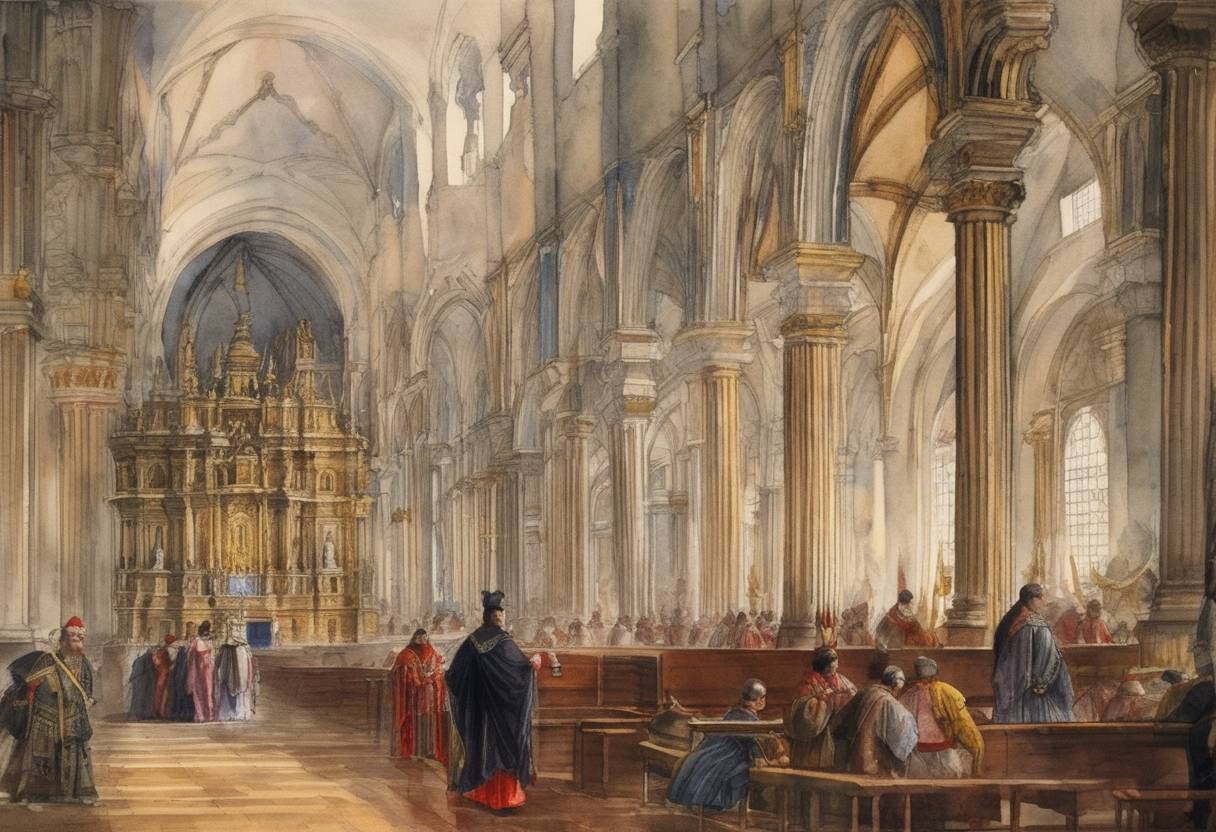
On December 12, 1574, under the reign of King Philip II of Spain, the Spanish version of the Catholic Church’s Holy Office of the Inquisition was established in Peru. This marked a pivotal moment in the efforts to enforce religious orthodoxy in the Spanish colonies of the New World. The inception of the Inquisition in Peru was part of a broader strategy by both the Spanish Crown and the Catholic Church to maintain control over their colonial territories and ensure the purity of Catholic faith among the colonists and indigenous populations.
The Spanish Empire, at this time, was expansive, with Peru serving as a central hub due to its wealth, particularly with the extensive silver mines. The establishment of the Holy Office was not just a religious initiative but had a political dimension, aiming to consolidate Philip II’s authority by suppressing any potential dissent against Catholic orthodoxy, possibly arising from Protestant Reformation influences or native religious practices.
The Inquisition in Peru was tasked with identifying, investigating, and prosecuting cases of heresy, religious disobedience, and blasphemy. Its jurisdiction extended over various Christian and non-Christian groups, including Old Christians, New Christians (converts from Judaism and Islam), and indigenous peoples. The tribunal sought to eliminate any practices or beliefs that diverged from established Catholic doctrine, using methods ranging from rigorous interrogation to punishment by imprisonment or execution.
The establishment of the Holy Office in Peru had several significant impacts:
This event is emblematic of the wider European colonial endeavors, where religious conformity was a tool for ensuring political stability and dominance. The Peruvian Inquisition was part of a global network of religious oversight that extended from Spain to its colonies, illustrating how religious and imperial objectives were intertwined in the Spanish colonial enterprise.
In summary, the establishment of the Holy Office in Peru on December 12, 1574, served as a fundamental mechanism for upholding the power of the Catholic Church and the Spanish Crown, significantly influencing the religious and cultural development of the region.