Alaska's Admission as the 49th U.S. State
1959 · Juneau, United States
Alaska was admitted as the 49th U.S. state.
May 31, 1977
The Trans-Alaska Pipeline System is completed, allowing oil to be transported from the North Slope of Alaska to the port of Valdez.
Valdez, United States | Alyeska Pipeline Service Company
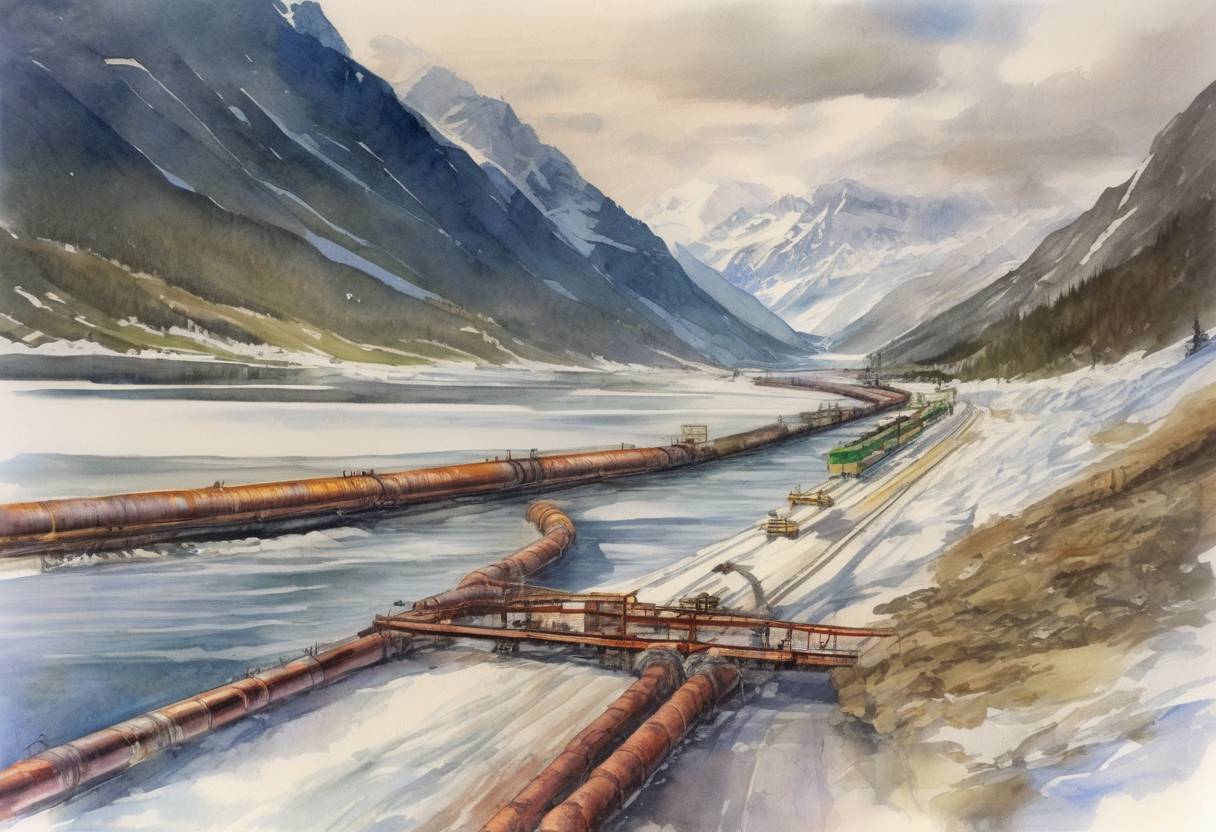
On May 31, 1977, the Trans-Alaska Pipeline System (TAPS) was completed, marking a significant milestone in the transportation of oil from the North Slope of Alaska to the port of Valdez. This engineering feat was crucial in addressing the energy needs of the United States and had substantial economic and environmental implications.
The discovery of oil at Prudhoe Bay in 1968 prompted the need for an efficient means to transport crude oil from the remote North Slope of Alaska to markets where it could be refined and distributed. The Trans-Alaska Pipeline was conceived as a solution to this logistical challenge. The project faced numerous hurdles, including environmental concerns, legal battles, and the harsh Alaskan terrain.
Since its completion, the Trans-Alaska Pipeline has transported billions of barrels of oil, playing a critical role in the U.S. energy landscape. It remains a symbol of engineering prowess and a focal point in discussions about energy policy, environmental protection, and indigenous rights.
The pipeline’s completion on May 31, 1977, marked the beginning of a new era in Alaskan and American energy history, illustrating the complex interplay between technological advancement, environmental stewardship, and economic necessity.
Source: www.alyeska-pipe.com