Death of Pepin of Herstal and the Subsequent Power Struggle
714 · Jupille-sur-Meuse, Frankish Kingdom
Pepin of Herstal, the Frankish mayor of the palace of Austrasia, dies. His death leads to a power struggle in the Frankish kingdom.
December 23, 0679
King Dagobert II of Austrasia is assassinated, possibly at the instigation of Pepin of Herstal, leading to significant changes in the power dynamics of the Frankish territories.
Stenay, France | Merovingian Dynasty
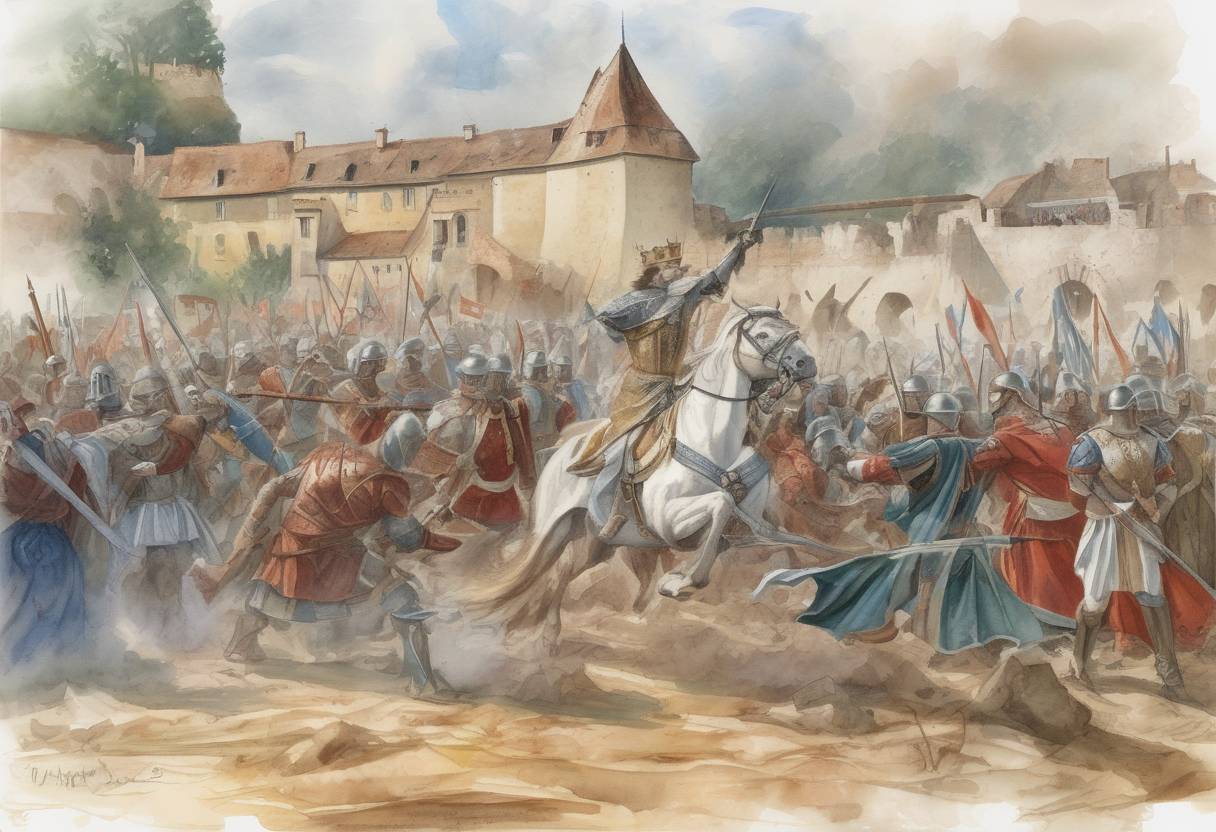
On December 23, 679, King Dagobert II of Austrasia was assassinated, an event that significantly altered the power dynamics within the Frankish territories. This assassination is often attributed to the machinations of Pepin of Herstal, a powerful Frankish nobleman and the Mayor of the Palace of Austrasia.
Dagobert II was a member of the Merovingian dynasty, which had ruled the Frankish kingdoms since the 5th century. He became king of Austrasia, a northeastern Frankish kingdom, in 675 after being recalled from exile in Ireland. His return was orchestrated by the influential Bishop Wilfrid of York and other nobles who sought to restore Merovingian authority.
Austrasia was one of the three main divisions of the Frankish realm, alongside Neustria and Burgundy. The Merovingian kings, known as the “long-haired kings,” were seen as the legitimate rulers, but their power had been waning due to the increasing influence of the mayors of the palace, who were originally chief administrators but gradually became the real power behind the throne.
Dagobert II’s reign was short-lived. On December 23, 679, he was assassinated while hunting in the forest of Woëvre, near Stenay in present-day northeastern France. The exact circumstances of his death remain unclear, but it is widely believed that Pepin of Herstal, the Mayor of the Palace, was involved in orchestrating the assassination.
Pepin of Herstal was a member of the Arnulfing family, which later became known as the Carolingians. His ambition was to consolidate power and diminish the influence of the Merovingian kings. By eliminating Dagobert II, Pepin strengthened his position and paved the way for his descendants to eventually replace the Merovingians as the ruling dynasty of the Franks.
The assassination of Dagobert II marked a turning point in Frankish history. It effectively ended the Merovingian attempt to reassert royal authority in Austrasia and allowed the Arnulfing family to consolidate their power. This shift set the stage for the eventual rise of the Carolingian dynasty, which would come to dominate Western Europe under the leadership of figures like Charles Martel and Charlemagne.
The events surrounding Dagobert II’s assassination highlight the declining power of the Merovingian kings and the rise of the mayors of the palace as the true power brokers in the Frankish kingdoms. This transition laid the groundwork for the Carolingian Empire, which would play a crucial role in shaping medieval European history.
In summary, the assassination of King Dagobert II was a pivotal moment that underscored the shifting power dynamics within the Frankish territories, leading to the eventual emergence of the Carolingian dynasty and the transformation of European political landscapes.
Source: en.wikipedia.org