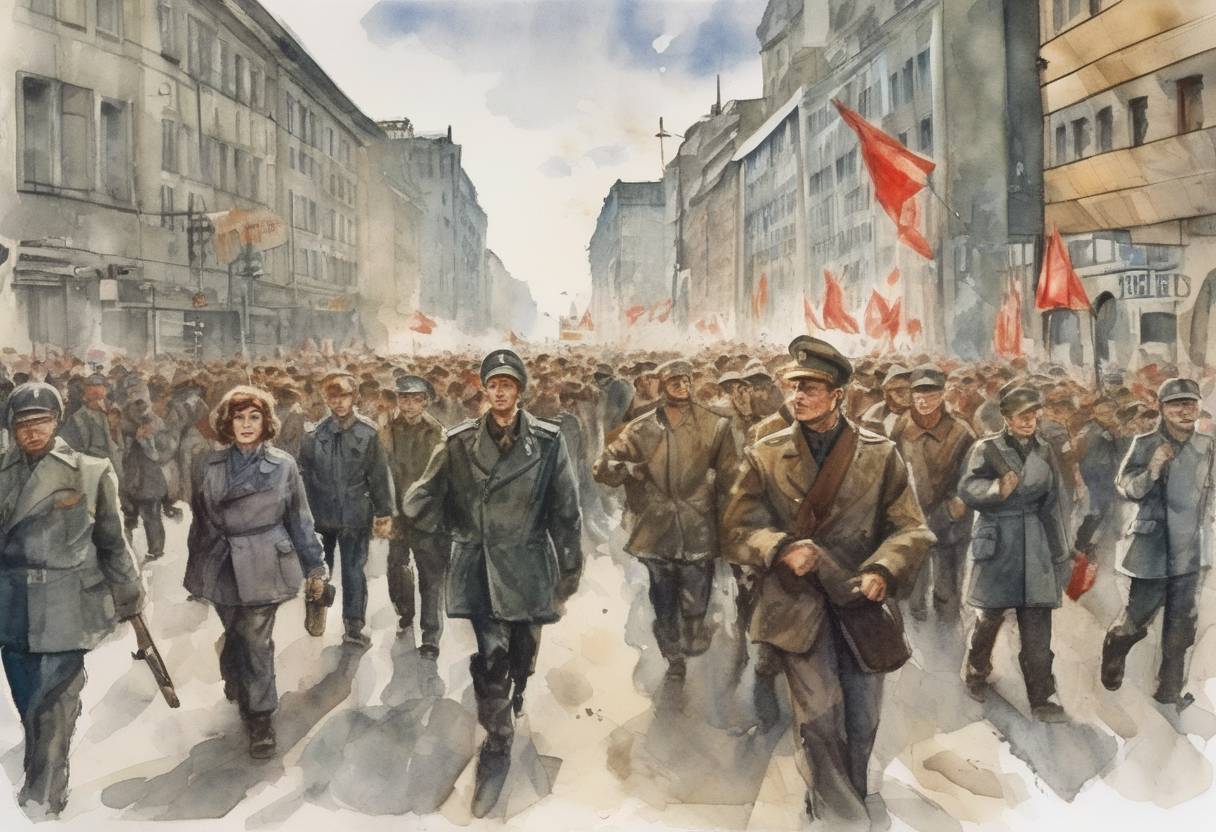
The East German Uprising of June 17, 1953
On June 17, 1953, a significant uprising occurred in East Germany, marking a pivotal moment in Cold War history. This event was primarily driven by widespread discontent among workers and citizens against the Socialist Unity Party (SED) government and its policies, which were heavily influenced by the Soviet Union.
Context and Causes
The roots of the uprising can be traced back to the post-World War II division of Germany and the establishment of the German Democratic Republic (GDR) in 1949. The GDR, under the influence of the Soviet Union, implemented a socialist regime that focused on rapid industrialization and collectivization. This led to increased workloads, poor living conditions, and a lack of political freedoms.
In May 1953, the East German government, under Walter Ulbricht, announced a series of economic reforms that included increased production quotas for workers without corresponding wage increases. This decision exacerbated the already growing dissatisfaction among the working class.
The Uprising
The unrest began on June 16, 1953, when construction workers in East Berlin went on strike to protest the increased work quotas. Their demands quickly escalated to include calls for political reforms, free elections, and the resignation of the government.
By June 17, the protests had spread across East Germany, with an estimated half a million people participating in demonstrations in over 500 towns and cities. The protesters were a diverse group, including workers, students, and intellectuals, all united in their demand for change.
Soviet Intervention
The East German government, unable to control the situation, requested assistance from the Soviet Union. In response, Soviet military forces intervened, deploying tanks and troops to suppress the uprising. Martial law was declared, and the protests were violently crushed. Official reports indicated that approximately 55 people were killed, although the actual number may have been higher. Thousands were arrested, and many were sentenced to long prison terms.
Aftermath and Significance
The East German uprising of 1953 had several significant consequences:
Repression and Control: The immediate aftermath saw a tightening of political control in East Germany. The SED government, with Soviet backing, intensified its surveillance and repression of dissent.
Policy Revisions: In response to the unrest, the East German government made some concessions, such as rolling back the increased work quotas and improving living conditions, in an attempt to placate the population.
Cold War Tensions: The uprising highlighted the fragility of Soviet control in Eastern Europe and underscored the potential for unrest in other satellite states. It also served as a precursor to later uprisings in Hungary (1956) and Czechoslovakia (1968).
Symbol of Resistance: June 17 became a symbol of resistance against oppression in East Germany and was commemorated in West Germany as the “Day of German Unity” until reunification in 1990.
The East German uprising of 1953 remains a significant event in the history of the Cold War, illustrating the challenges faced by communist regimes in maintaining control over their populations and the lengths to which they would go to suppress dissent.