1421 · , Netherlands
A storm in the North Sea creates the St. Elizabeth's flood in the Netherlands, killing thousands.
December 14, 1287
The St. Lucia's flood, one of the most catastrophic floods in recorded history, struck the Netherlands and Northern Germany, resulting in the deaths of approximately 50,000 people.
N/A, Netherlands | N/A
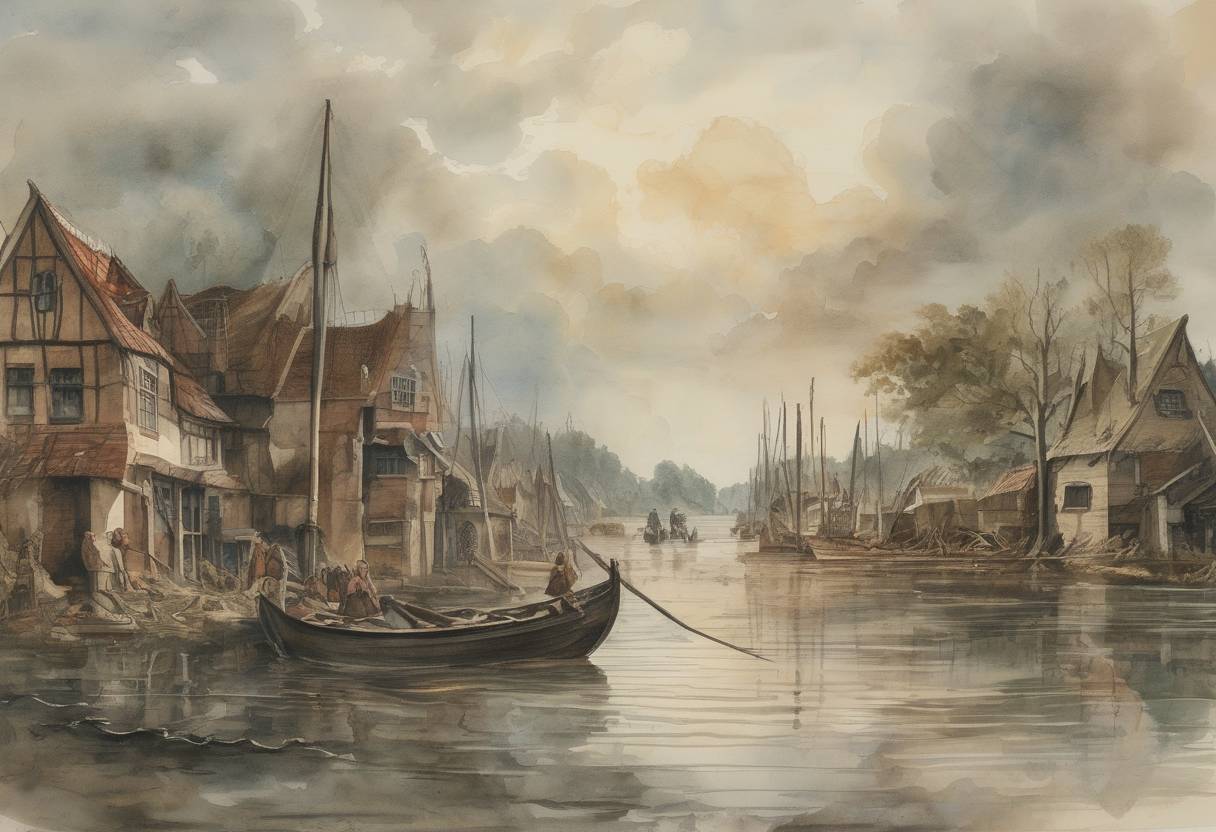
The St. Lucia’s Flood, which occurred on December 14, 1287, stands as one of the most catastrophic floods in recorded history. This devastating event primarily affected the regions of the Netherlands and Northern Germany, leading to significant loss of life and altering the landscape of the area.
The late 13th century was a period marked by climatic instability, often referred to as the Medieval Warm Period. This era saw fluctuating weather patterns, which contributed to the vulnerability of low-lying regions in Europe. The Netherlands and Northern Germany, with their extensive coastlines and reliance on dikes for protection against the sea, were particularly susceptible to flooding.
The St. Lucia’s Flood was triggered by a powerful storm surge in the North Sea. This surge coincided with high tides, overwhelming the existing dike systems. The combination of these natural forces led to the breaching of dikes and inundation of vast tracts of land.
Casualties and Damage: The flood resulted in the deaths of approximately 50,000 people, making it one of the deadliest floods in European history. The sheer scale of the disaster had a profound impact on the population, with entire communities being swept away.
Geographical Changes: The flood significantly altered the geography of the affected regions. In the Netherlands, it led to the formation of the Zuiderzee, a large inland sea that remained until the 20th century when it was transformed into the IJsselmeer through land reclamation projects.
Economic and Social Effects: The destruction of farmland and infrastructure had long-lasting economic repercussions. The loss of arable land and the displacement of populations disrupted local economies and necessitated extensive rebuilding efforts.
The St. Lucia’s Flood underscored the vulnerability of human settlements to natural disasters, particularly in regions dependent on man-made structures for protection against the sea. It highlighted the need for improved flood defenses and contributed to the development of more sophisticated dike systems in the Netherlands, a country that would become renowned for its water management expertise.
The flood also serves as a historical reminder of the impact of climate variability on human societies, a theme that resonates with contemporary concerns about climate change and its potential to exacerbate natural disasters.
In summary, the St. Lucia’s Flood of 1287 was a pivotal event in the history of the Netherlands and Northern Germany, with enduring effects on the landscape, population, and infrastructure of the region. Its legacy is reflected in the ongoing efforts to manage and mitigate the risks of flooding in these low-lying areas.
Source: en.wikipedia.org